When Every Minute Counts: The Plumber's Role in Water Damage Recovery
According to restoration professionals, the first hour after a plumbing failure often determines whether damage remains a relatively straightforward cleanup, or escalates into mold remediation, structural repairs and the permanent loss of furniture, electronics and irreplaceable family heirlooms.
A burst pipe, a failed water heater, a leaking supply line hidden behind a wall. For plumbing contractors, these emergencies often begin with a phone call that demands an immediate response. Your first priority is straightforward: stop the water, identify the source of the failure and prevent additional water from entering the building. But, what happens during the time that follows can have just as much impact on the outcome as the repair itself.
According to restoration professionals, the first hour after a plumbing failure often determines whether damage remains a relatively straightforward cleanup, or escalates into mold remediation, structural repairs and the permanent loss of valuables. While homeowners understandably focus on stopping the leak, water continues to migrate into flooring, drywall and framing, while rising humidity begins affecting areas that may not have come into direct contact with the water at all. Within as little as 24 to 48 hours, mold can begin to develop, and materials that initially appeared salvageable may become significantly more difficult — or even impossible — to restore.
That reality is changing the way many restoration professionals view the plumber's role during a water-loss event. Rather than simply making the repair and moving on, strong partnerships between plumbing contractors, water mitigation specialists and restoration teams are helping property owners recover more quickly, preserve valuable belongings and reduce the cost of damage.
Plumbing & Mechanical spoke with John Otero, Regional Business Coach for 1-800 WATER DAMAGE, and Mike Case, Director of Operations for Blue Kangaroo Packoutz, about the importance of partnerships between plumbing and restoration professionals, and how they can make all the difference in ensuring that property owners recover quickly and preserve their valuable belongings.
Why Speed Matters
Once the source of a leak has been stopped, the clock doesn't stop. According to restoration professionals, every hour that passes increases the likelihood that a relatively straightforward plumbing repair could become a much larger restoration project.
"The speed of your response determines whether an item can be restored or must be replaced," said Case. "The first 24 hours is the best opportunity for minimal-impact restoration." During that critical window, contents restoration specialists can begin moving salvageable belongings (like furniture, electronics and important documents) to a dry environment while water mitigation teams focus on extracting standing water from the structure.
John Otero, regional business coach for 1-800 WATER DAMAGE, says that urgency begins the moment a homeowner discovers the plumbing failure.
"The first hour after a plumbing failure is critical," he explained. "Homeowners are often very stressed and will immediately seek professional help." While the plumber's immediate responsibility is addressing the failed pipe or fixture, Otero emphasizes that contractors should also "coordinate with restoration partners during this timeframe to ensure a fast, seamless response."
That early coordination can significantly reduce the overall scope of damage.
"Delays allow damage to escalate, whereas a quick arrival facilitates immediate assessments," Otero said. "Strong plumber partnerships are essential because they are often first on site and can confidently introduce a trusted mitigation team to address damage before it worsens."
For property owners, that rapid response isn't just about drying a wet floor — though that certainly does help!
Case notes that immediate action helps prevent or at least contain mold growth and stop secondary damage due to high humidity or water physically migrating to initially unimpacted areas." It can also reduce restoration costs, since "drying contents immediately is far more cost effective than mold remediation or reconstruction." In some cases, delaying action can even affect insurance coverage, as many policies require homeowners to take "reasonable steps" to mitigate damage.
The Damage You Don't See
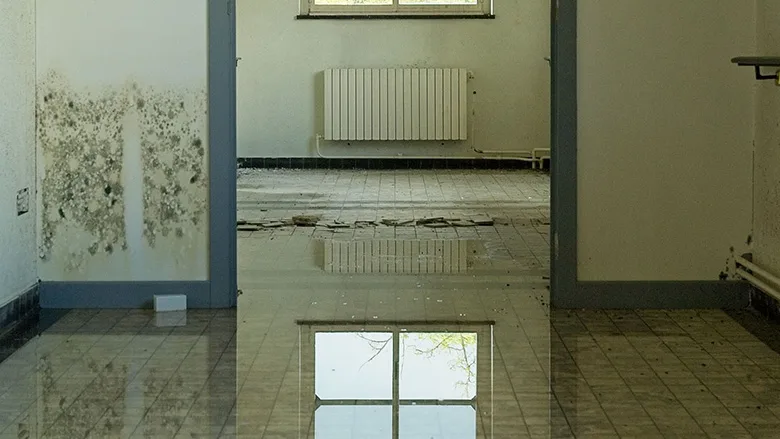
One of the biggest challenges following a plumbing failure is that much of the damage isn't immediately visible. While homeowners naturally focus on standing water, restoration professionals say the greater threat often lies behind walls, beneath flooring and inside belongings that appear untouched.
"There are many hidden risks that can be overlooked after a leak or burst pipe," said Otero. "In most cases, mold growth can start within 24–48 hours. Mold thrives in dark, unventilated spaces — like the cavities behind drywall or underneath flooring — and can go unnoticed until it becomes a significant health and remediation issue."
Water also doesn't stay where it first lands.
"We also need to remember that water doesn't just sit on surfaces; it's absorbed," Otero says. "Excess moisture can quietly jeopardize the structural integrity of wood framing, drywall and subfloors. Over time, this saturation can lead to warping, rotting or a loss of load-bearing strength that isn't immediately visible from the outside." That's why professional mitigation relies heavily on moisture meters and thermal imaging cameras to locate hidden moisture that the naked eye simply can't see.
Case says homeowners often make matters worse by trying to handle the cleanup themselves.
"The biggest, and most expensive, mistake property owners make is hesitation," he says. "Many owners wait for an insurance adjuster to arrive or hope the area will 'air out' on its own."
Another common mistake is assuming a few household fans are enough. "Property owners often leave heavy furniture, rugs or boxes exactly where they were when the leak occurred, thinking a few fans will do the trick," Case explains. "This allows water to get trapped between the bottom of the item and flooring, leading to wood rot, permanent staining and rapid mold growth." Likewise, shop vacuums simply don't provide the extraction power of commercial equipment. "Commercial extractors, dehumidifiers, air scrubbers and air movers provide the best results when used by trained technicians."
He also cautions homeowners against trying to salvage everything. "Trying to save porous items, especially in Category 3 water loss, can lead to mold and bacteria contamination. Generally speaking, porous items cannot be safely sanitized and should be disposed of."
"Strong partnerships allow [plumbers] to confidently introduce a trusted mitigation team immediately," Otero said. "Early collaboration helps protect customers' homes from prolonged moisture exposure and potential contamination... It also protects the plumber's reputation by ensuring customers receive high-quality, comprehensive care during a stressful emergency."
What Contractors Can Tell Customers
For plumbing contractors, the conversation doesn't have to end once the leak is repaired.
Otero recommends encouraging homeowners to act quickly but safely. If conditions permit, they should shut off the home's main water supply to stop additional water from entering the structure. They should avoid standing water whenever electrical hazards or sewage contamination may be present, photograph the damage thoroughly and move valuables to a dry location whenever it can be done safely.
Most importantly, homeowners shouldn't assume they need to wait for the insurance company before beginning mitigation efforts. "You don't need adjuster approval to move salvageable items to a dry area," Case says. Delaying those actions can allow mold to develop and may even affect reimbursement, since many insurance policies require homeowners to take "reasonable steps" to minimize damage.
As Otero puts it, "A fast, seamless response within the first hour is vital to control these loss situations and provide peace of mind to the home or property owner."
Today's plumbing professionals do far more than repair broken pipes. By connecting homeowners with trusted restoration partners early in the process, they can help minimize structural damage, preserve irreplaceable belongings and guide customers through one of the most stressful events they may ever experience.
Looking for a reprint of this article?
From high-res PDFs to custom plaques, order your copy today!