PFAS and the plumbing contractor: what to know as regulations tighten
April 13, 2026
PFAS and the plumbing contractor: what to know as regulations tighten
April 13, 2026PFAS have become a growing concern for homeowners and building owners.

Not long ago, most conversations about drinking water quality started and ended at taste, hardness, or maybe chlorine. Today, a different kind of question is showing up on job sites and in customer conversations: Does this water have PFAS in it?
Per- and polyfluoroalkyl substances (PFAS), have become a growing concern for homeowners and building owners who are learning that these substances don’t easily break down in the environment. As testing improves, they’re being detected in more water systems and at lower levels, fueling both public awareness and unease. What was once largely out of sight, is now front of mind.
That shift is being accelerated by regulation. The EPA’s move to establish enforceable limits for several PFAS compounds has brought in a new sense of urgency to the issue, signaling that water quality standards are entering a new phase. Evolving compliance timelines and aging infrastructure also mean that treatment may not stop at the municipal level. Increasingly, responsibility is moving closer to the point of use: inside homes, commercial buildings and facilities.
For plumbing contractors, that change is already starting to reshape the job. Customers are asking more questions. Systems are becoming more complex. And water treatment — once an add-on or afterthought — is becoming a central part of plumbing design and installation. As PFAS continues to dominate headlines and regulations tighten, contractors are finding themselves on the front lines of a rapidly evolving water quality landscape.
PFAS 101
So, what are PFAS, and why are they a concern?
PFAS are a large group of man-made chemicals that have been used since the 1940s in a wide range of industrial and consumer products; everything from nonstick cookware and food packaging to firefighting foams and water-resistant materials. Their unique chemistry — built around extremely strong carbon-fluorine bonds — makes them resistant to heat, water and oil. That powerful composition makes them incredibly useful, but just as incredibly difficult to break down in the environment.
Because of this persistence, PFAS are often referred to as “forever chemicals.” That term has also helped drive public awareness. As Jennifer Covin, senior manager of product management – water quality at Watts, notes, “Americans are now familiar with the concept of PFAS by its consumer-friendly name, ‘forever chemicals,’ and are asking about it.” Increased testing and reporting have revealed how widespread contamination has become, pushing the issue into the spotlight across the plumbing and water treatment industries.
Once released, PFAS can eventually make their way into drinking water. In fact, according to the US EPA, PFAS have been detected in water, air, and soil across the globe, and even in the blood of both humans and animals. Exposure to these chemicals is widespread.
Looking for a reprint of this article?
From high-res PDFs to custom plaques, order your copy today!
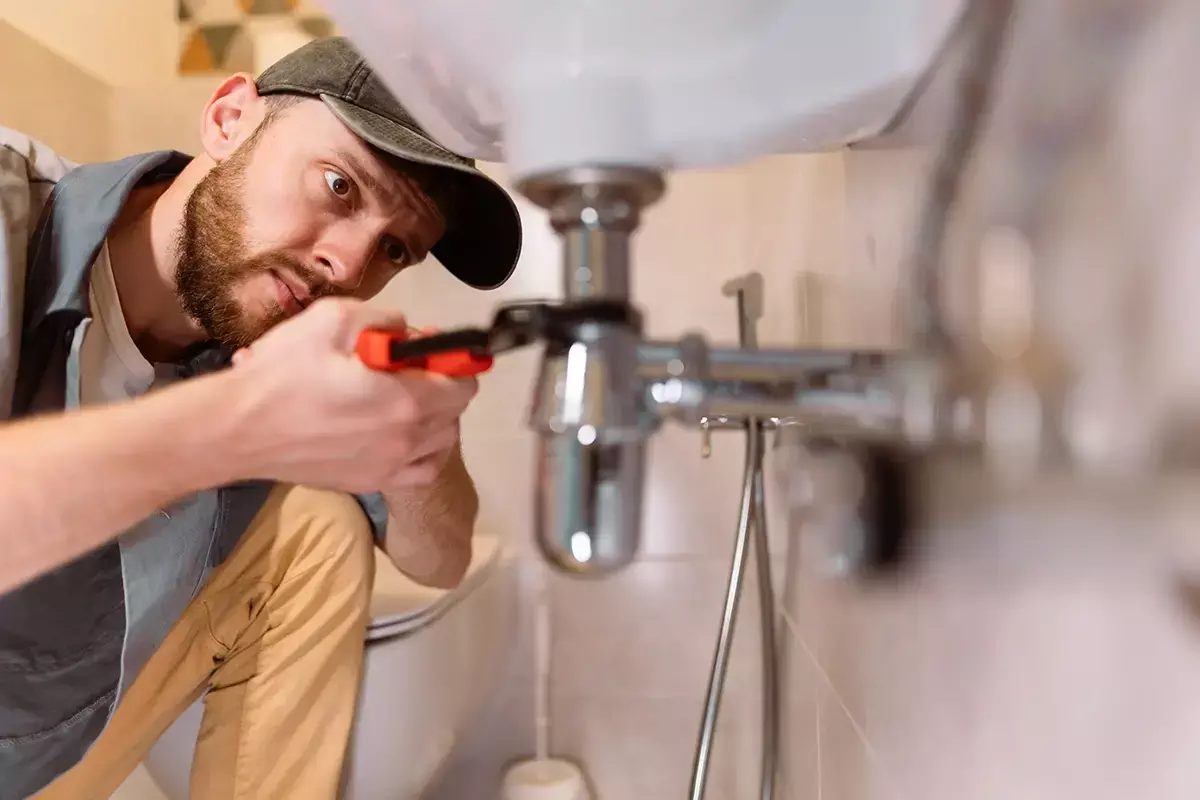
Water treatment is moving from an optional add-on to a core component of plumbing system design and installation. Photo © Nazar Rybak / E+ / Getty Images
Over time, these chemicals can travel long distances and persist for years, creating long-term challenges for water systems and treatment providers.
The primary concern driving regulatory action is the potential impact on human health and the environment. Scientific studies have linked exposure to certain PFAS compounds to a range of health effects, including immune system impacts, developmental issues, hormone disruption, increased risk of some cancers and a reduction in fertility. Their ability to accumulate in the body over time, even at low levels, has raised additional concerns about long-term exposure.
Complicating matters further is the sheer scale of the issue. Thousands of different PFAS compounds exist, making them more difficult to regulate and treat than traditional contaminants. Recent regulatory action reflects the urgency. As Navien’s Business Unit Manager - Water Treatment, Ernie Lee, points out, “The EPA’s April 2024 finalization of the first-ever National Primary Drinking Water Regulation for six PFAS compounds has been a turning point for our industry,” establishing enforceable limits that affect millions of Americans.
According to Justin Mest, A.O. Smith product applications specialist, "The delay and potential scaling back of EPA drinking water regulations for PFAS represent an increased window of opportunity to treat municipal water customers’ water. The EPA's decisions also don’t seem to be slowing many states' implementation of their own regulations, driving regional increases in awareness and need for point of entry (POE) and point of use (POU) treatment solutions. Fortunately, a number of states are stepping up to help lessen the financial burden of treatment by implementing PFAS testing and treatment rebate programs."
For water professionals, one of the biggest challenges is that PFAS do not respond well to conventional treatment methods. Their chemical stability requires more advanced approaches such as granular activated carbon, ion exchange, or membrane filtration to effectively reduce concentrations in drinking water.
As awareness grows and regulations tighten, PFAS are shifting from an emerging contaminant to a central concern in water quality — one that is reshaping how water systems are designed, treated, and maintained.
Why contractors should be paying attention
As mentioned earlier, the EPA’s establishment of enforceable MCLs for several PFAS compounds marked a major turning point, setting clear expectations for water quality and compliance. With these standards in place and compliance timelines still evolving, contractors are increasingly being pulled into conversations about how water is treated beyond the municipal level.
In many cases, responsibility for water quality is shifting closer to the building. According to Covin, “Municipal standards are evolving, with some EPA compliance timelines being extended. This extension means that responsibility will be transferred to building owners and operators, or homeowners.” As a result, treatment is no longer viewed as a one-time, centralized solution. Instead, it may require multiple layers of filtration within a system.
That shift is directly fueling demand for treatment solutions in homes and buildings.
Property owners are asking more questions about what is in their water, and expecting answers. Lee notes that this growing awareness is already changing buying behavior: “Homeowners and building owners are asking harder questions about their water. That shift in consumer awareness is translating directly into demand for Point-of-Entry (POE) and Point-of-Use (POU) treatment solutions.”
Another important reason to stay informed: homeowners are increasingly aware of PFAS. According Mest, "We can see growth in knowledge and awareness in consumer survey data. In 2025, around 82% of U.S. adults were at least somewhat concerned with PFAS, a 2% increase from 2024." According to a consumer survey report by Aquasana, PFAS rose to the #3 spot in a list of top contaminant concerns amongst adults in the U.S.
"While customers are looking for PFAS treatment solutions for their water, the inherently greater cost of most PFAS reduction systems, compared to more commonplace treatment for aesthetic contaminants, can be a significant barrier to POE treatment," Mest continued. "Fortunately, numerous NSF/ANSI 53- and 58-certified POU solutions are available on the market. Typically, drinking and cooking water are the primary uptake pathways, however, this can vary by specific PFAS compound. Some homeowners also want an extra layer of protection to ensure every tap in the house is safeguarded."
For contractors, this demand represents a significant opportunity. Water treatment is moving from an optional add-on to a core component of plumbing system design and installation. Forward-thinking professionals are already adapting their approach. “The most forward-thinking contractors are now conducting water quality assessments before installation, not after a problem arises,” Lee says.
This evolution opens the door to new services: from system specification and installation to ongoing maintenance and water quality testing. It also positions contractors as trusted advisors, capable of addressing both regulatory requirements and customer concerns.
Treatment technologies
PFAS concerns are officially moving from awareness to action, and contractors are encountering new treatment technologies designed to reduce these contaminants in drinking water. While no single solution fits every application, several approaches have emerged.
Among the most common is granular activated carbon (GAC), which uses highly porous carbon media to adsorb PFAS compounds from water. GAC systems are often considered one of the more accessible options for both residential and commercial applications. “Water filtration systems with granulated activated carbon filters are the most affordable option,” Covin says, noting their role as a practical entry point for PFAS treatment.
Reverse osmosis (RO) systems are another widely used solution. These systems rely on semi-permeable membranes to remove a broad range of contaminants, including PFAS, at the point of use. “Reverse osmosis systems are also an effective option,” Covin adds. Because of their high level of filtration, RO systems are commonly installed at faucets or under sinks where drinking water quality is a primary concern.
Ion exchange (IX) systems are also recognized as an option for PFAS treatment, particularly in larger or more complex systems. Along with GAC and RO, they are identified by the EPA as effective approaches for reducing PFAS concentrations in water. These systems work by exchanging PFAS ions with other, less harmful ions, offering another pathway for removal in both building-scale and municipal applications.
Where these technologies are installed is just as important as how they function. Increasingly, PFAS treatment is being implemented at multiple points within a system. Point-of-entry (POE) systems treat all water entering a building, helping address contamination before it moves through the plumbing network. Point-of-use (POU) systems, on the other hand, provide targeted filtration at specific outlets, such as kitchen sinks or drinking fountains.
"The big three technologies for PFAS treatment are activated carbon, anion exchange resins and R.O. membranes. There are also specialty adsorbents that are typically used in combination with activated carbon or anion exchange resin, especially for the reduction of short-chain PFAS, " According to Mest.
Anion exchange resins are widely used for PFAS because they:
- Bind strongly to PFAS molecules
- Work quickly and efficiently
- Can be tailored for specific contaminants
They’re especially valuable in systems where performance, speed, and selectivity matter.
In many cases, a combination of multiple approaches is recommended. “PFAS may need to be treated at multiple points in a system, not just once at point-of-use,” Covin explains. “To maintain high water quality, filtration at point-of-entry systems in addition to point-of-use is ideal.” This layered strategy reflects the reality that water quality can change as it travels through aging infrastructure and building plumbing systems.
For contractors, understanding these technologies – and where they are best applied – is becoming essential. As treatment systems become more integrated into overall plumbing design, the ability to specify, install, and maintain them correctly will play a growing role in delivering safe, compliant water systems.
Installation and maintenance considerations
As PFAS treatment systems become more common, contractors need to approach these installations with a different level of planning and precision than traditional filtration projects. While many of the components may look familiar, the performance expectations and regulatory implications are significantly higher.
One of the first considerations is proper system selection and sizing. Unlike standard filtration systems designed for taste or sediment, PFAS treatment systems must be carefully matched to the building’s water demand and contaminant levels. “System sizing is key to maintaining water quality,” says Covin. “Capacity is also a consideration, as the rate of water filtered may decrease with more stringent standards.” Undersized systems may fail to meet performance expectations, while oversized systems can add unnecessary cost and complexity.
Contractors must also be mindful of system configuration. Because PFAS may require treatment at multiple points, installations often go beyond a single filter unit. Point-of-entry and point-of-use systems may be used together, requiring coordination within the overall plumbing layout. This layered approach differs from more straightforward filtration installs, and may require additional space planning, pressure considerations and integration with existing infrastructure.
Another key distinction is verification. With PFAS, performance claims matter, and not all products on the market deliver equally. “Plumbing contractors must also be wary of unsubstantiated claims,” Covin notes. “Third-party certifications can help verify that water filtration systems remove PFAS and other contaminants and should be considered when selecting a system.” Certifications such as NSF/ANSI standards can provide an important benchmark for both contractors and customers.
Maintenance is equally as critical. PFAS treatment systems are far from “set it and forget it” solutions. Components like activated carbon and ion exchange resins have finite capacities, and must be replaced or regenerated on a regular schedule. If maintenance is delayed, system performance can drop off significantly, potentially allowing contaminants to pass through.
“Plumbing contractors must also communicate the importance of adhering to an appropriate maintenance schedule…to ensure the system is working consistently and effectively,” Covin says.
Lifecycle considerations also come into play. Filters may need more frequent replacement under tighter regulatory limits, and disposal of spent media – particularly when it contains concentrated PFAS — can introduce additional handling requirements. Over time, these factors can affect operating costs and system performance, making it essential for contractors to set clear expectations with customers from the outset.
Opportunities and challenges for the industry
The rise of PFAS as a major water quality concern is creating both new opportunities and new complexities for plumbing professionals. As demand for treatment solutions grows, so does the need for contractors who understand how to design, install, and maintain these systems effectively.
One of the most immediate opportunities is the expansion of services. Water treatment is no longer a niche offering: it is becoming a core part of plumbing system design. As Lee explains, “Water treatment [is] moving…from a peripheral add-on to a core part of how we think about building infrastructure.” Contractors who can integrate water quality considerations into their work are increasingly differentiating themselves in a competitive market.
This shift also opens the door to deeper customer relationships. By offering water quality assessments, system recommendations and ongoing maintenance services, contractors can position themselves as long-term partners rather than one-time installers. Integrated solutions — combining water heating, filtration and conditioning — are becoming more common, creating opportunities for more comprehensive projects.
However, these opportunities come with challenges. One of the biggest is the need for education and training. PFAS treatment involves new technologies, evolving regulations, and a more complex understanding of water chemistry than many contractors have traditionally needed. Covin emphasizes the importance of staying informed: “Plumbing contractors must stay agile and informed to maintain compliance with regulations, and to ensure they communicate these standards to their customers.”
Manufacturers and industry organizations are beginning to fill this gap with training programs and certifications, but contractors will need to invest time in building this knowledge base to remain competitive.
There are also communication challenges. PFAS is a highly visible and sometimes alarming topic for customers, and contractors may find themselves navigating difficult conversations about health risks, regulatory uncertainty, and system performance. Establishing clear expectations is critical; not only about what a system can do, but also about maintenance requirements and limitations.
Finally, liability considerations are likely to grow alongside regulation. As standards become more defined and enforcement increases, contractors may face greater responsibility for specifying and installing systems that meet performance requirements. Verifying product certifications, documenting installations, and following best practices will be essential steps in managing that risk.
In many ways, PFAS represents a turning point for the plumbing industry. It is pushing water quality to the forefront and challenging contractors to expand their expertise. Those who adapt will find new opportunities for growth—while those who do not may find themselves left behind as the industry continues to evolve.
PFAS may have entered the industry as an emerging contaminant, but it is quickly becoming a defining issue for water quality, and even for the plumbing profession itself. As regulations tighten and public awareness continues to grow, the expectation that water is not only available, but also safe and clean, is shifting squarely onto the built environment..
The path forward will require adaptability: technologies will continue to evolve, standards will continue to change and customer expectations will only increase. But, for contractors willing to invest in knowledge, training and new capabilities, PFAS represent far more than a challenge. It represents a chance to expand their expertise, strengthen customer relationships, and take a more central role in the future of water management.