
How legacy is built in industrial manufacturing
Why continuity, vertical integration, and specification trust matter more than disruption in building industrial valve brands that endure across generations
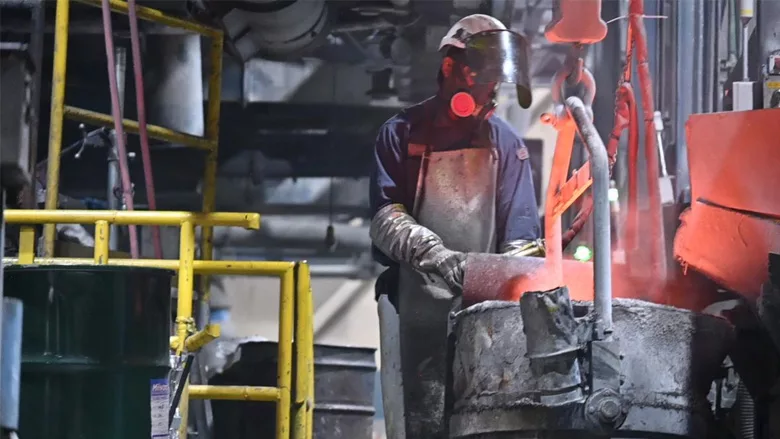
For much of the twentieth century, industrial manufacturing in the United States was shaped by regional foundries, family-owned operations and equipment manufacturers whose products evolved through constant exposure to real-world use. Valves, fittings and flow control components were not designed in isolation, but refined over decades through feedback from contractors, engineers and maintenance teams working in environments where reliability mattered more than novelty.
The brands that endured were rarely defined by a single breakthrough or moment of disruption. Instead, they built credibility over time through manufacturing depth, disciplined reinvestment and a consistent relationship with the people who used their products every day. In the valve industry especially, legacy is earned slowly through performance in the field, specification trust and the ability to scale without losing control of quality. Examining how longstanding manufacturing brands are built reveals several common threads. While strategies differ by market and era, enduring equipment manufacturers tend to share a core set of principles that shape their trajectory across generations.
A manufacturing lineage anchored in continuity
Legacy manufacturers rarely emerge fully formed. Most begin with narrow product offerings, serving local or regional markets before expanding in response to customer demand and operational opportunity. Over time, organizational and geographic continuity becomes a strategic asset. Facilities evolve, footprints expand, and capabilities deepen, but the foundational knowledge embedded in the organization must persist.
This continuity allows manufacturers to adapt without abandoning what works. Product lines grow from basic components to more specialized, engineered solutions. Materials diversify. Processes become more automated. Yet, the underlying understanding of how products behave in real applications remains intact, carried forward by both documentation and the people within the company. Crucially, this lineage also shapes how companies approach risk. Expansion tends to be incremental rather than speculative, guided by feedback from the field rather than short-term market signals. This approach leads to steady and deliberate growth, which is a crucial advantage in industries where a single misstep can trigger serious downstream consequences.
Vertical integration as a foundation for control
As manufacturing has globalized, many equipment producers have fragmented their operations across suppliers and regions. Legacy brands that maintain relevance often move in the opposite direction, deepening control over critical processes rather than relinquishing it. Vertical integration becomes less about efficiency alone, and more about accountability.
When design, casting, machining, heat treatment, assembly and testing are closely coordinated and integrated within a single facility, manufacturers gain vital visibility into every variable that influences performance. Lead times shorten as reduced handoffs eliminate delays, rather than through lower labor costs. Quality improves when process deviations are identified early and corrected at their source, with inspection serving as support instead of the primary safeguard.
This level of integration also enables more agility and responsiveness. When customers request modifications or installation efficiencies, manufacturers with internal process control can adapt more quickly than those reliant on external suppliers. Over time, this agility becomes part of the brand’s reputation, reinforcing trust among engineers and specifiers.
Defining “American-made” through investment, not slogans
In contemporary manufacturing discourse, “American-made” is often treated as a marketing distinction. For legacy brands, it serves as an operational philosophy that demands ongoing investment in facilities, equipment, and workforce development. Maintaining domestic manufacturing capacity means continually reinvesting in tooling, automation, and safety systems, even when offshore alternatives appear more economical in the short-term. It also means accepting that not every product can or should be manufactured domestically. Practicing strategic restraint, by focusing domestic production where it truly adds value, is just as important as maintaining commitment.
Workforce continuity is equally significant, especially with today’s workforce challenges. Long-tenured employees carry institutional knowledge that cannot be easily codified or replaced. Their experience can, and should, inform everything from process optimization to informal quality checks that never appear on a specification sheet. Over decades, this continuity becomes a competitive advantage, supporting consistency and reliability that customers come to expect.
How specification trust turns products into benchmarks
The true measure of a legacy brand lies in the confidence engineers place in its specifications, not in how widely its name is recognized. When products are written into specifications, they move beyond preference and into expectation. Engineers and owners stake system performance on the assumption that the specified component will behave as intended, often for decades.
Achieving this status takes time. It requires consistent field performance, responsiveness when issues arise and a willingness to prioritize long-term reliability over short-term pricing strategies. Over time, certain brands transition from being evaluated alongside competitors to serving as reference points against which others are compared.
Visual identifiers such as logos, colors and form factors often emerge as shorthand for this trust. But, these cues only carry meaning because of the performance history behind them. In this way, brand recognition becomes a byproduct of operational discipline rather than a goal in and of itself.
Behind many legacy manufacturing brands, specification trust is often reinforced by a family lineage that translates long-term values into day-to-day decisions. In the case of the “Apollo” Valves brand, the Mosack family played a central role in shaping how manufacturing discipline, product integrity and relationships with the field were prioritized over decades. Leaders such as Cal Mosack, who has spent more than four decades with the organization, have consistently emphasized that valves are not abstract products, but components entrusted with real operational responsibility, often operating unseen, yet essential to safety, reliability and system performance. That perspective influenced everything from reinvestment in domestic manufacturing to a willingness to stand behind products when issues arose. Rather than treating valves as interchangeable commodities, the Mosack family approach framed them as long-term commitments to the people who specify, install, and rely on them, reinforcing the idea that manufacturing legacy is built through accountability as much as innovation.
A case study in legacy manufacturing: the “Apollo” brand
Values like manufacturing continuity, vertical integration, disciplined domestic investment and specification-driven trust are anything but abstract. They are visible in the evolution of specific legacy brands that have shaped the valve industry over the last century. One of the clearest examples is the “Apollo” Valves brand, part of Aalberts integrated piping systems (IPS).
Originating from a manufacturing lineage that dates back to the early twentieth century, the “Apollo”® brand emerged during a period when American engineering ambition was closely tied to national identity. Introduced in the late 1960s, “Apollo”® ball valves entered the market with a focus on practical performance. Early adoption was driven by contractors and end users, with specification acceptance following as products proved themselves in the field.
Over time, the product portfolio expanded from small diameter bronze valves to stainless steel, carbon steel and large diameter engineered solutions, including top entry valves designed for demanding industrial environments. This growth was supported by reinvestment in tooling, automation and domestic manufacturing capacity rather than reliance on outsourced production.
At facilities in South Carolina, “Apollo” casting, machining, heat treatment, assembly and quality assurance are managed in close coordination, with physical metallurgical samples retained to ensure traceability. Critical components such as seats and seals are manufactured internally, reinforcing control over tolerances and performance. These capabilities enable shorter lead times and allow for specialized solutions when customers require them.
Today, under Aalberts, continued investment in U.S.-based manufacturing, including expanded domestic production of “Apollo” PowerPress technology, reflects the same long-term orientation that has defined the brand for decades.
Legacy as an outcome of discipline
In industrial manufacturing, legacy takes shape through decades of decisions: where to invest, which capabilities to retain, and how closely to stay connected to the realities of the field. Brands that endure do so because they resist shortcuts, choosing consistency over convenience and control over scale for its own sake.
This discipline shows up in unglamorous places. It appears in capital expenditures that prioritize long-term process stability over short-term margins. It appears in the decision to maintain domestic manufacturing capacity even when global alternatives promise lower costs. It appears in the willingness to listen to contractors, engineers, and maintenance teams whose feedback may complicate production but ultimately strengthens performance in the field. Over time, these decisions compound, shaping not just products, but organizational identity.
Legacy manufacturers also understand that reputation cannot be separated from accountability. When products are expected to operate reliably for decades, the distance between design intent and real-world performance matters. Vertical integration, workforce continuity and specification trust are not abstract ideals; they are mechanisms for closing that distance. They ensure that when something goes right, or wrong, responsibility is clear and corrective action is possible.
Viewed through this lens, the success of legacy valve manufacturers is less about history and more about discipline. Longevity is achieved by applying the same rigor to each generation of decisions as the last. In an industry driven by constant pressure to optimize, outsource, and accelerate, relevance comes to manufacturers that act with intention and recognize that trust, once earned, must be reinforced over time.
Looking for a reprint of this article?
From high-res PDFs to custom plaques, order your copy today!


