Editorial Opinion | Kristen Bayles
Beyond the classroom: finding fulfillment in the trades
A personal look at the lessons today’s plumbing apprentices teach us about skill, pride, and opportunity.

Oftentimes, the pressure to attend a 4-year college dissuades those who could have a lucrative career in the trades.
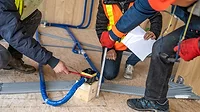
This month, I spoke with several plumbing apprentices for my article on apprenticeship. Naturally, they were all young, and still very new to the industry. Seeing their passion and skill in the industry reminded me of seeing my younger brother decide to pursue a career in the trades, despite the pressure to pursue a college degree. It was inspiring to see that spark in him — a willingness to build, solve problems, and learn hands-on — mirrored now in these apprentices.
I have three siblings: an older sister, an identical twin sister and my younger brother. Other than my twin and I (who are a whopping 59 seconds apart!), we were all born 5 years apart from each other. My twin and I were born when my older sister was five years old, and five years after that, our brother came along! And, yes, my parents were trying for a boy; tale as old as time!
Despite only being five years apart, my brother and I received pretty different upbringings. For example, smartphones were really only just beginning to become commonplace in high schools when I was going through. Personally, I was the proud owner of a Razor flip phone in my early years of high school, but I was a late-joiner to the cellphone trend – half because I lived in a rural community where things were always just a couple of years behind, and half because I was more of a reader than a tech girl.
By contrast, when my brother hit high school, social media and constant connectivity were the norm. Instagram, Vine, and Facebook competed for attention in ways my generation hadn’t experienced. But, there were a lot of similarities in our school experiences, too – especially when it came to the pressure to go to college.
Both of us felt the weight of expectation to attend college, the often-repeated rule that success equated to a four-year degree. Choosing a trade meant rejecting a well-trodden path, yet my brother embraced the hands-on world with curiosity and determination.
My brother was very gifted in ways that I wasn’t. He was great with math, while I excelled with words. He liked building and finding out how things worked, which was something that I never really connected with. Most of all, he was incredibly gifted when it came to welding. We both made good grades, but his passions were very different from mine. I knew that I wanted to be a writer since I was young, but he wasn’t quite sure what he wanted out of life until his senior year.
Despite his aforementioned skills, it was his math abilities that were often highlighted and praised by his teachers. They saw his aptitude for numbers as a clear indicator of future potential, something that could translate into a college degree, a professional career or even business success. Yet, looking back now, it’s so clear that the combination of his mechanical curiosity and dexterity were just as important. In the trades, these talents are absolutely invaluable: the ability to visualize a complex piping system, calculate measurements quickly, and execute precise, repeatable work are exactly the skills that modern apprentices need to thrive.
Both of us felt the weight of expectation to attend college, the often-repeated rule that success equated to a four-year degree. Choosing a trade meant rejecting a well-trodden path, yet my brother embraced the hands-on world with curiosity and determination.
His strengths taught me an important lesson early on: traditional academics and standardized measures of “success” don’t always capture the breadth of a person’s potential. Math grades may have gotten the nod from teachers, but his hands-on skills, his problem-solving mindset and his natural comfort with tools ultimately shaped his career path. And it’s those same qualities that today’s apprentices are developing alongside new technologies.
I’m grateful that the men in my family helped show my brother the advantages that the trades could allow him. My great-grandfather had owned a successful plumbing and sewage tank business years and years ago, but when he passed away while my dad was too young to take over the business, it unfortunately closed down. But, my dad remained in the trades as a welder, and he taught my brother everything he knew. There were countless afternoons where the two of them were outside working on interesting projects in my dad’s workshed. There’s no doubt that he was passing on incredible knowledge – not unlike that of an apprentice learning from a master.
Seeing my brother’s journey, as well as the apprentices I met this month, reminds me that the plumbing and mechanical trades are about more than just tools or techniques. Tools and methods may change over time, but the ability to think critically, work with your hands and take pride in precise, quality work remains absolutely irreplaceable.
Finally, seeing my brother’s path and talking with new apprentices reinforces that success isn’t one-size-fits-all. Choosing a trade is not a fallback — it’s a deliberate pursuit of meaningful work. The industry needs people who are willing to invest their time, energy, and creativity into something tangible. These careers offer independence, growth, and the pride of creating lasting, functional work — a type of fulfillment that is rare in many professions.
Looking for a reprint of this article?
From high-res PDFs to custom plaques, order your copy today!