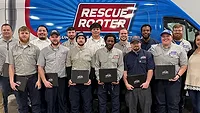
Six ways to build and keep the next generation of plumbing and mechanical pros
Kit Dickinson, Industry Executive at ADP, sheds a light on the younger workforce joining the plumbing and mechanical industry.

If your crew looks younger than it did a few years ago, you’re not imagining things.
According to ADP Research’s Today at Work 2025 Issue 3 report, the median age of electricians, plumbers, carpenters and HVAC professionals has dropped by as much as five years since January 2020. Among plumbers, the median age has dropped from 40 to 36 years old over the same period. Comparatively, across the U.S. workforce overall, the downshift in age is only one year.
That’s a big change for the trades. As veterans retire, they take decades of know-how and problem-solving experience with them. Meanwhile, new hires often bring enthusiasm but little field experience. The question now facing owners and managers is how to turn that youthful energy into dependable skill and loyalty.
Here are six ways plumbing and mechanical contractors can adapt to a younger workforce and set their businesses up for long-term success.
1. Make skill-building part of the job
Younger workers learn fast, but they need structure. A formal training plan helps bridge the gap between classroom learning and real-world performance. Start by taking stock of your team’s strengths and where experience is leaving gaps.
Many companies struggle to find time for training when every hour counts toward project deadlines. Technology can help. Mobile learning platforms and HR systems can allow employees to access videos, guides, and certification modules anytime. That flexibility helps them sharpen their skills without pulling them off the jobsite.
2. Pair experience with enthusiasm
Nothing replaces on-the-job learning from a seasoned professional. A structured mentorship program gives your veterans a clear way to pass down their knowledge while helping younger employees feel supported and valued.
Encourage your most experienced plumbers or techs to share practical lessons—how to handle difficult customers, troubleshoot under pressure, or keep projects profitable. Even informal “ride-along” days can make a lasting impact. When knowledge transfer becomes part of the routine, you preserve institutional wisdom that would otherwise walk out the door.
3. Offer benefits that fit different life stages
Today’s workforce spans four generations, from seasoned pros nearing retirement to new apprentices fresh out of trade school. Each group values different things. Older employees tend to prioritize health insurance and retirement savings, while younger ones often look for student loan help, mental health resources, or financial guidance.
Offering a modular benefits package with options lets employees choose what matters most to them. This flexibility sends a clear message that your company values everyone’s needs—not just one generation’s.
4. Use mobile tools to simplify work
For many younger workers, smartphones are the default tool for getting things done. Paper-based timecards, scheduling spreadsheets, and manual payroll processes feel outdated and inefficient. Modern workforce management software makes it easy for employees to clock in, check schedules, and manage HR information right from their phones.
This convenience matters more than it might seem. When new hires see that your business runs on efficient systems, not paperwork, it builds trust and helps them focus on the work itself.
5. Connect the job to a bigger purpose
Younger professionals want more than a paycheck. They want to feel proud of where they work and what the company stands for. For plumbing and mechanical contractors, that purpose can take many forms: helping families live comfortably, supporting sustainability initiatives, or giving back to the community through volunteer work.
Talk openly about what your business values and back it up with action. Sponsor a local build, support training programs for high school students, or recognize employees who go above and beyond for customers. When people feel connected to the company’s purpose, they’re more likely to stick around.
6. Stay competitive on pay and transparency
No matter the generation, fair pay drives retention. ADP Research’s Today at Work data shows construction wages have climbed nearly 15% since 2020, reaching a median of about $66,400 by mid-2025.
Keeping up with pay benchmarks helps your business stay competitive when skilled labor is scarce. Just as important, being open about how pay is structured and reviewed builds credibility with younger employees, who value honesty as much as dollars.
The future of the trades depends on how we train today
The next generation of plumbers, pipefitters, and mechanical technicians isn’t just replacing the old guard—they’re redefining how the trades operate. Businesses that embrace new tools, structured learning, and open communication will not only attract talent but keep it.
Investing in your people now ensures that when today’s apprentices become tomorrow’s foremen, they’ll carry your company’s reputation for quality and reliability forward. That’s how you build a workforce—and a business—that lasts.
After spending six years at Accenture leading technology and strategy projects, Kit Dickinson moved on to IDI where he
was president and responsible for managing strategic partnerships, product innovation, sales, marketing and overall company leadership. Dickinson led IDI to a successful acquisition by ADP where he was responsible for overseeing integrating IDI’s capabilities into ADP technology. Dickinson recently moved into ADP’s Business Development organization as an industry executive to help lead ADP’s industry-focused efforts.
Looking for a reprint of this article?
From high-res PDFs to custom plaques, order your copy today!