Cautious growth through critical change: 2026 Plumbing Industry Outlook
December 5, 2025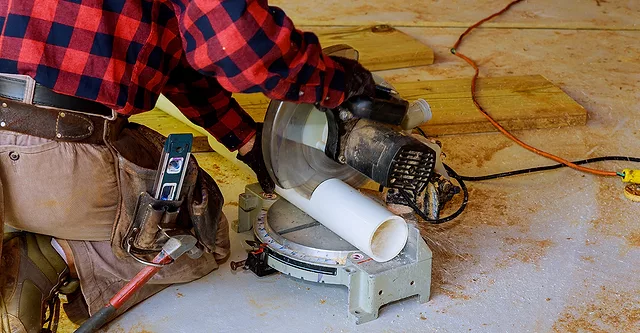
Cautious growth through critical change: 2026 Plumbing Industry Outlook
December 5, 2025
After several years marked by inflation, supply-chain disruption, energy volatility, and shifting construction patterns, the plumbing industry heads into 2026 with cautious optimism. Many of the market’s structural fundamentals—aging buildings, chronic labor shortages, heightened awareness of water efficiency, and accelerating decarbonization mandates—continue to fuel steady demand for skilled plumbing and mechanical professionals.
Contractors and engineers see a marketplace that is stabilizing, even if margins remain tight. "We remain cautiously optimistic about plumbing industry market conditions in 2026," says Jason Pritchard, president of the Plumbing-Heating-Contractors—National Association (PHCC). He notes that while uncertainty remains, moderate growth is expected for plumbing and HVAC contractors, though high prices driven by tariffs and inflation will continue to shape consumer behavior.
Broader economic indicators support this tempered outlook. According to the American Supply Association’s (ASA) Monthly Economic Report, U.S. GDP growth is expected to remain modest but positive, while energy prices and freight volatility continue to influence operating costs across the PHCP-PVF channel. ASA’s forecasts also suggest that distributor sales trends should hold steady after flattening in late 2025, signaling stabilization rather than contraction.
Residential demand is showing signs of life as well. The National Association of Home Builders (NAHB) reports that after a decline in 2025, single-family housing starts are expected to edge upward in 2026, aided by gradual improvements in mortgage rates and consumer confidence. NAHB also notes that remodeling now represents a structurally larger share of residential construction—a significant driver for service, repair, and retrofit plumbing work.

Image source: photovs / iStock / Getty Images Plus
On the nonresidential side, the Dodge Construction Network indicates that total construction starts remain up mid–single digits year-over-year, with data centers, healthcare, education, and warehouse construction continuing to outperform. Dodge’s 2026 outlook highlights strengthening institutional construction and resilient infrastructure spending—important indicators for mechanical contractors and engineers serving commercial and municipal markets.
Within this landscape, contractors and engineers are preparing for another year defined by rapidly evolving technology, regulatory pressure, shifting customer expectations, and the ongoing challenge of building a skilled workforce. As Billy Smith, CEO of the American Society of Plumbing Engineers (ASPE), puts it, "2026 may be a cautiously optimistic, steady-to-positive growth year driven by retrofit and modernization, but tight margins and skilled labor shortages remain real headwinds."
» Market Sectors: Residential vs. commercial outlook
Residential plumbing demand in 2026 will be influenced heavily by interest-rate movement and consumer spending power. PHCC’s Pritchard notes that residential sales opportunities are expected to improve as housing markets stabilize, particularly in regions where mortgage rates ease back into the 5–6% range. This aligns with NAHB’s forecast, which predicts moderate single-family gains and continued strength in remodeling—a crucial revenue stream for plumbers doing replacement, service, and water-heating work.
Multifamily construction, however, may soften. PMI’s 2026 Market Outlook projects that multi-unit housing starts will likely be in recession through 2026, with a return to growth expected in 2027. Contractors working with engineers on larger residential developments may need to diversify into retrofit and rehabilitation projects as new multifamily activity cools.
Commercial plumbing and mechanical activity offers stronger tailwinds. Plumbing Manufacturers International’s (PMI) CEO Kerry Stackpole notes that "accelerated growth [is expected] in retail, office, data centers, warehouse, education, and health care," while cautioning that private manufacturing, public water, and sewer facilities may face recessionary conditions. This uneven mix echoes Dodge’s 2026 sector forecasts, which show high demand for data centers, hospitals, and higher education, fueled by digital infrastructure expansion and demographic shifts.
From the engineering side, ASPE’s Smith anticipates a higher proportion of retrofit and service work over new construction, especially in aging institutional and commercial buildings. He points to healthcare, multifamily rehabilitation, and efficiency upgrades as key growth areas for 2026—segments where performance-based design and holistic system evaluation are increasingly valued.
Overall, the market picture is one of sectoral divergence: resilient nonresidential work, modest residential improvement, and a growing emphasis on modernization rather than ground-up construction.
Looking for a reprint of this article?
From high-res PDFs to custom plaques, order your copy today!
» State of labor: Talent shortages and workforce development
Few issues loom larger heading into 2026 than the chronic shortage of skilled plumbing professionals. According to a report by John Dunham & Associates, commissioned by PMI member LIXIL, the U.S. faces a shortage of more than 500,000 plumbers, costing the national economy over $38 billion annually and driving up construction timelines and project costs.
"Skilled labor shortages, supply volatility, and evolving code requirements remain key headwinds," says ASPE’s Smith, who emphasizes that apprenticeships, certifications, and tech-based field training are essential for retaining talent and boosting productivity.
Contractors are responding with a renewed focus on leadership development and upskilling. PHCC’s Pritchard reports strong engagement with the PHCC Academy®, including rising enrollments in financial management, soft skills, service sales, and refrigerant certification preparation. The organization’s new OnDemand video platform is expected to play a major role in helping contractors train employees efficiently in 2026.
Manufacturers are also adapting their workforce strategies. At A. O. Smith, Commercial Portfolio Director Matt Baranuk notes a decisive shift toward a more technologically advanced workforce. "Education in controls, automation, data, and systems thinking is now essential for every role," he says, emphasizing that understanding end-to-end system impacts is critical in a digitalized manufacturing environment.
At Lochinvar, Portfolio Director Dustin Wiggins echoes this sentiment, noting that employees are encouraged to contribute ideas to improve safety, efficiency, and production processes before issues arise. Continuous improvement and cross-functional awareness, he says, are becoming central to employee development.
In short, building talent pipelines—through vocational programs, apprenticeships, leadership courses, and digital training—is no longer optional. It is the backbone of the industry’s ability to meet demand.
» Technology, AI & automation
Technology adoption has accelerated dramatically, reshaping expectations for contractors, engineers, and building owners alike. While smart plumbing, remote monitoring, and connected systems once felt like premium add-ons, 2026 will be the year many of these tools become standard practice.
"2025 was a big year for AI integration in business and field operations, and we expect that momentum to continue into 2026," says PHCC’s Pritchard. Contractors are now using AI-driven platforms for quoting, dispatching, customer communication, demand forecasting, and back-office efficiency.
On job sites and in design rooms, ASPE’s Smith sees prefabrication, BIM, digital quoting, and remote monitoring shifting from "nice-to-have" to essential. He notes that in past years, BIM and prefab were options—but today, they are required to deliver speed, transparency, and predictable performance.
Manufacturers are driving tech adoption as well. Baranuk expects smart controls to become standard, not premium features, across water-heating technologies. He also anticipates continued growth in hybrid systems and heat pump water heaters as decarbonization policies take hold.
At the higher end of the market, luxury homeowners increasingly expect digital integration. Jeff MacDowell of Luxury Products Group (LPG) highlights that "water intelligence—such as leak detection, digital showering, and smart water conditioning—will define the next wave of innovation." Contractors working in remodeling and high-end residential spaces will encounter more circadian lighting, integrated air and water purification, and digital steam systems.
Across all segments, technology serves the same purpose: reducing labor strain, enhancing safety and reliability, and improving overall system performance.
» Tariffs, supply chain resilience & geopolitics
Economic pressure—from tariffs to freight volatility to geopolitical conflict—will continue shaping material availability and costs in 2026.
Contractors remain watchful of tariffs. PHCC warns that if tariffs remain elevated, contractors should expect continued product availability challenges and higher material costs, making real-time price monitoring and flat-rate pricing adjustments essential.
Global instability also contributes to supply-chain unpredictability. According to ASA’s economist commentary, geopolitical risk continues to influence commodity pricing, shipping timelines, and energy costs, all of which ultimately affect project bids and margins.
Manufacturers have taken significant steps toward resilience. A. O. Smith has embraced dual sourcing, reshoring where appropriate, and automating repetitive tasks to ensure agility. "Agility beats prediction every time," Baranuk emphasizes.
Lochinvar similarly stresses the importance of supplier partnerships, internal capabilities, and communication, noting that relationships remain key to weathering volatility.
Stackpole points to broader macro trends shaping manufacturing and distribution. "Many manufacturers are reshoring production lines, diversifying suppliers, and using smarter digital tools to keep inventory lean yet responsive," he says. He also notes that the industry remains global in nature, requiring free trade and cross-border collaboration to sustain product innovation and affordability.
Supply-chain resiliency has evolved from a crisis response to a long-term strategic priority.
» Sustainability & regulatory pressures
Sustainability, water conservation, and decarbonization are no longer peripheral considerations—they drive design decisions, product specification, and customer expectations.
ASPE’s Smith captures the shift succinctly: "Sustainability is no longer an add-on—it drives the business model." Performance-based designs, retrofit efficiency packages, and electrification strategies are becoming standard requests from building owners and facility managers.
Upcoming federal and state mandates are accelerating this transformation. The DOE’s 2026 water-heater efficiency standards and the EPA’s ongoing water-conservation regulations are prompting manufacturers to redesign core product lines. At the same time, states such as California are implementing new climate risk reporting requirements and expanding PFAS mitigation rules, which will influence design, materials, and system selection.
On the decarbonization front, many manufacturers are taking bold steps. Stackpole notes that companies such as Kohler, Viega, TOTO, and Duravit have invested in net-zero goals, climate-neutral manufacturing facilities, and LEED-certified operations, demonstrating that sustainability and innovation increasingly go hand in hand.
Hydronic systems, heat pump technologies, low-flow fixtures, and smart water-management tools will play a growing role in project design—and contractors and engineers who invest in training and code literacy will be best positioned to lead.
» Mergers & acquisitions across the value chain
Consolidation remains a defining force in the plumbing market. Private equity continues its aggressive interest in plumbing, HVAC, and multi-trade service companies, thanks to the steady, recession-resilient nature of the work.
"We expect continued private equity interest in plumbing and HVAC companies," says PHCC’s Pritchard, adding that broader diversification across plumbing, HVAC, and electrical trades will likely continue into 2026.
Engineers are witnessing changes in the design landscape as well. According to ASPE’s Smith, multi-trade firms are expanding into plumbing and plumbing-system design, creating opportunities for independent design specialists to differentiate through expertise and speed.
These shifts require thoughtful strategic planning from contractors considering mergers, acquisitions, or ownership transitions. Evaluating risks, cultural fit, succession planning, and customer impact will be critical.
» Action items for success in 2026
Across all interviews and data sources, several themes surface as essential for thriving in 2026.
Contractors and engineers must invest deeply in training, technology, and customer experience. Digital quoting, AI-enhanced dispatch, transparent pricing, remote monitoring, and strong internal leadership development will set high-performing firms apart.
"Maximize technology in your operations while preserving the human factor that makes your company stand out," Pritchard advises. Smith echoes the sentiment, urging firms to cultivate recurring-revenue service lines and maintain strong customer relationships: "Consistent success comes from being available when the phone rings or the email comes in."
From supply chain agility to decarbonization compliance to workforce development, the most successful firms will embrace a mindset of continuous learning and proactive adaptation.
And above all, industry collaboration will define the year ahead. As Stackpole emphasizes, "The real opportunity in 2026 is for manufacturers, distributors, and contractors to win as one team. Collaboration is our competitive edge."
For contractors and engineers navigating a changing 2026 landscape, that spirit of partnership, innovation, and resilience may be the most important outlook of all.