
Project Profile
Radiant roots: preserving history while powering modern comfort
Elaborate plan delivers efficiency for former Amish barn built in 1838.

Garett Selestow of Emerson Swan found a blank canvas in which to design and install the heating and hot water system for a recently completed project. The frame in which his team developed the radiant system, however, was more than 170 years old.
The venue, White Oak 1838, is a 9,500 square-foot wedding facility in Morgantown, West Virginia that opened in 2025. The Amish-built, 50-by-100-foot hand-hewn, white oak, timber-framed barn was originally constructed in Navarre, Ohio, in 1838. It has been meticulously relocated, reassembled and enhanced in the form of a celebration venue that can accommodate up to 250 guests. The building includes a large prep/catering kitchen, bride and groom suites, indoor/outdoor bar and covered verandas.
Planning, designing and installing a system for such a unique venue presented a challenging opportunity that required extreme attention to detail and timely coordination. The system needed to accommodate the needs of the visitors but also had to blend in with the distinctive motif.
“The building’s size, construction style and rustic character made it difficult to introduce modern mechanical systems without disrupting its historic charm,’’ Selestow said.
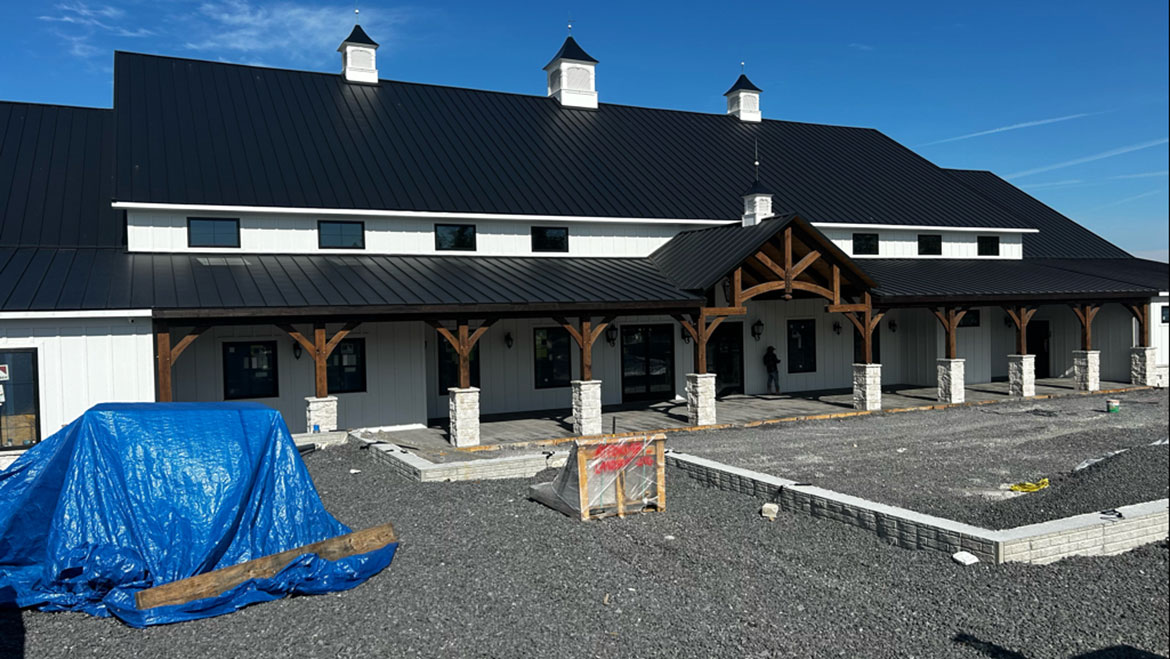
White Oak 1838, a new wedding and events venue in Morgantown, West Virginia, includes a radiant heating system that delivers heat and hot water to a 9,500 square foot building. Photo by Garett Selestow
Rooted in romance
From start to finish, the construction of White Oak 1838 required attention to detail. Much like the wedding celebrations that will occur in the building, every material selection needed careful consideration.
Cindy and David Rosiello, the owners, started with the idea of tackling a woodworking project. When they discovered the barn in Navarre, they thought it could be something more in Morgantown, nearly 180 miles away. They found the perfect spot in a secluded five-acre location that offers mountain views and idyllic sunsets.
“I saw the building on Facebook marketplace, on a site that offers old barns,’’ David said. “I just wanted to go see it. It’s pretty impressive, it’s not something that you can duplicate. We didn’t need a new house, but I thought people would enjoy seeing this type of structure from the 1800s.”
Piece by piece, workers disassembled the barn and transported it to the new location. The location extends a piece of romantic history that reaches back to the mid-1900s, when Pastor William Fichtner married Etta Mae Wright on a farmhouse on the hill where the building is now located.
Fichtner, who owned the property, served as a pastor at several churches in the Morgantown area. A long-time resident of the area, Fichtner died in 2013 at age 85, well before the area he once inhabited would become a premier wedding venue. White Oak 1838 held its grand opening in October, just one year after the barn frame was disassembled and relocated.
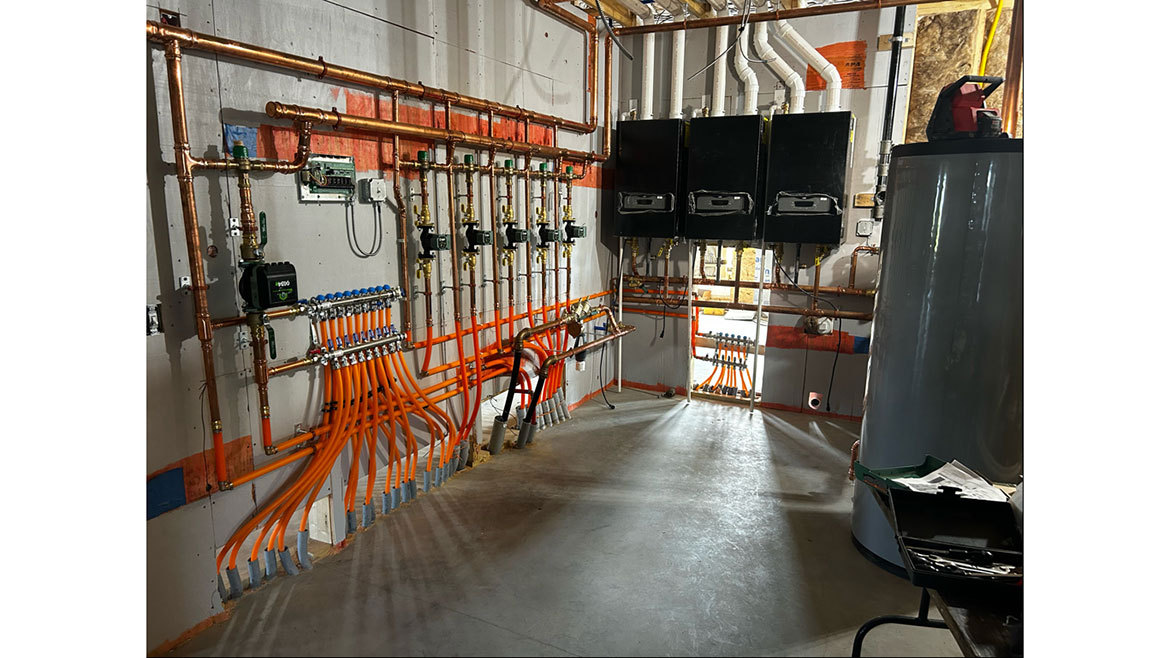
The system includes three HTP Elite Ultra boilers and an HTP Superstor Ultra Max indirect hot water heater. Photo by Garett Selestow
Radiant system design
Selestow worked with Rosiello and Gus Denali of Denali Contracting to develop a radiant heating system as the core solution for heating and hot water.
“Radiant offered two key advantages,’’ Selestow explained. “It provided consistent, comfortable heat across the wide-open spaces while also helping to preserve the barn’s aesthetic. We wanted to ensure the system could be embedded discreetly without the bulky equipment interfering with the architecture.”
The spacious venue includes several restrooms, dressing areas, prep kitchen, storage freezer, storage areas, an office, indoor/outdoor bar and expansive veranda. Devising a strategy that provides thermal comfort and adequate hot water supply throughout the facility needed considerable focus.
“Integrating the heating system with modern amenities, such as commercial-grade kitchens, baths and dressing rooms was a challenge,’’ Selestow said. “It required careful planning of piping, zoning and controls so that the radiant system could operate seamlessly alongside updated plumbing and HVAC components.”
Radiant systems offer several advantages for commercial buildings such as White Oak 1838. From a business perspective, radiant systems provide energy efficiency because they don’t heat air, which can escape through windows and doors.
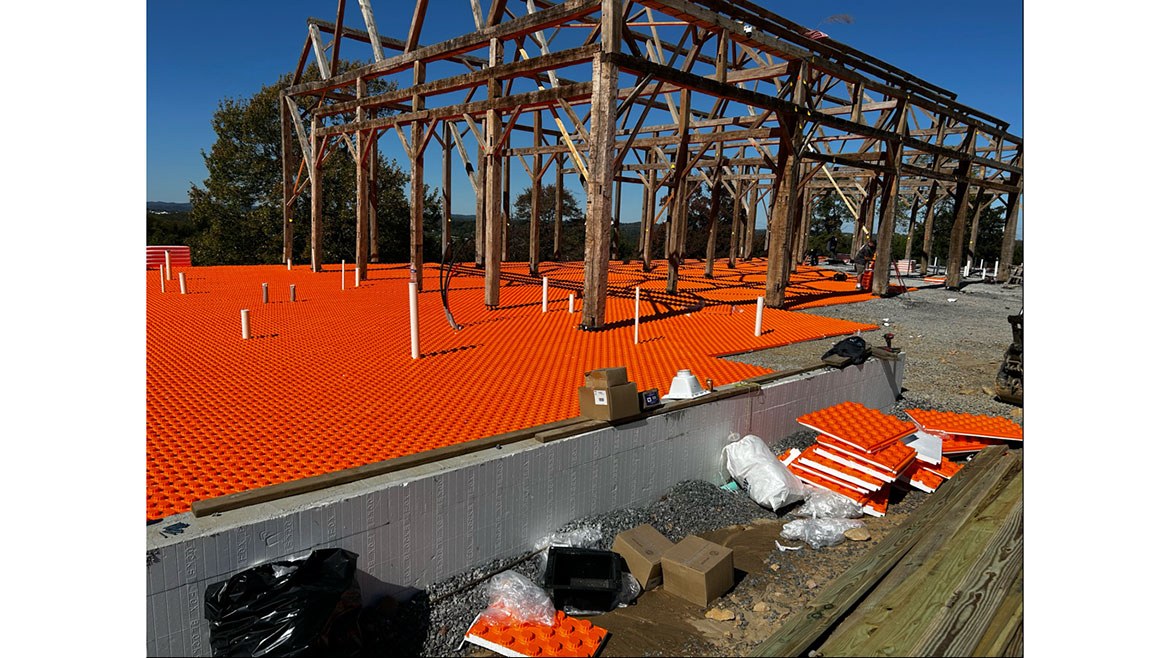
Garett Selestow selected the radiant system as it provides consistent heat while also helping to preserve the barn’s unique aesthetic. Photo by Garett Selestow
They also operate silently, which is critical for a wedding venue, and air quality is much better than that of forced air systems since allergens and dust don’t circulate. They also eliminate the need for bulky radiators or vents, allowing more room for flexibility in design.
Demand for radiant systems for commercial buildings is increasing due to better energy efficiency, improved comfort and a reduced carbon footprint, and was the ideal choice for this project.
Bringing the heat
Selestow selected two products from HTP for the radiant system and hot water.
Three Elite Ultra boilers provide up to 95 percent thermal efficiency to ensure energy savings. They also have an 11:1 turndown ratio that limits short cycling, providing even more efficient energy consumption.
The heart of the Elite Ultra revolves around a heat exchanger made of high-grade stainless steel. The design resists corrosion and the pipe surface is up to 400 percent larger compared to conventional designs. The larger pipe surface increases water flow, creating more internal turbulence that scrubs the internal walls. The process reduces heat exchanger deposits and ensures longer life. The boilers include an up-to-15-year limited warranty on the heat exchanger when registered through HTP.
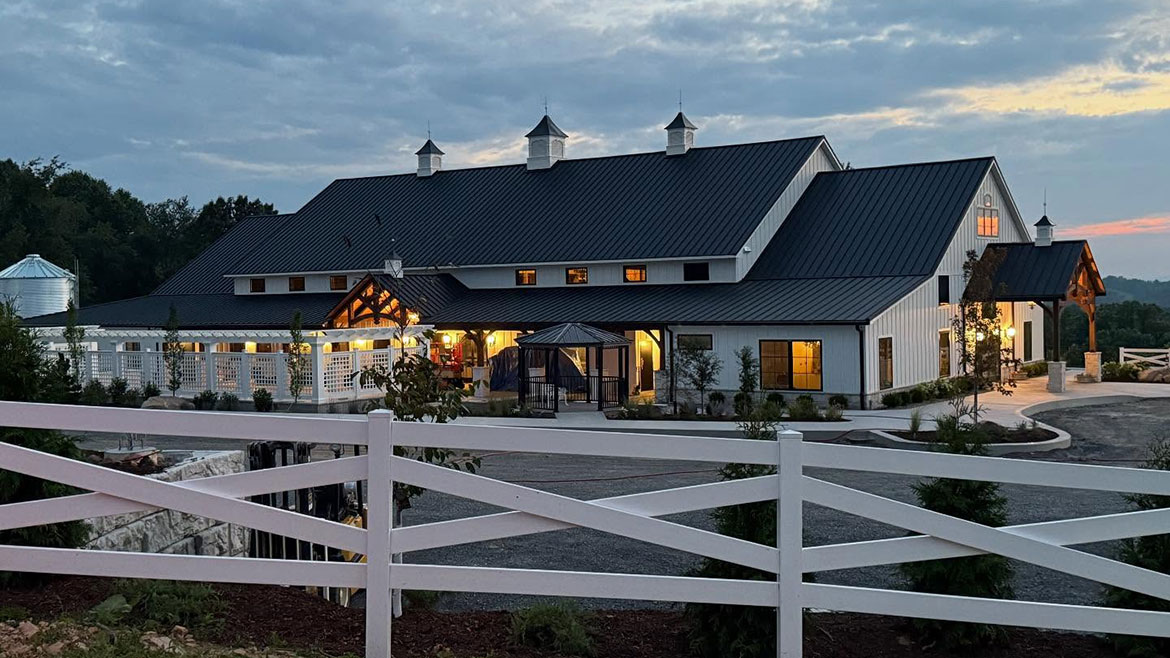
The new venue can accommodate up to 250 guests and includes a large kitchen, bride and groom suites, indoor/outdoor bar and covered verandas. Photo courtesy of White Oak 1838
“The wall-hung boilers are compact and versatile, yet deliver powerful, reliable performance,’’ Selestow explained. “Their scalable design made them well-suited for a large, repurposed space where flexibility and efficiency were critical. The customer also valued the built-in Wi-Fi monitoring capability. That allows them to remotely track and manage boiler operation for peace of mind and ease of maintenance.”
Selestow also selected HTP for the building’s extensive hot water needs. The Superstor Ultra Max 119-gallon indirect hot water tank allows 50 percent more hot water than many hot water heaters of a similar size. The tank features 316L stainless steel to reduce corrosion and extend tank life, and the super flex heat exchanger minimizes scale buildup and prolongs tank life.
“We selected this model for its outstanding first-hour recovery, which ensured the building could meet heavy hot water demands during events,’’ Selestow said. “While the customer initially considered a tankless design, the size and usage patterns of the 19th-century structure made tankless impractical. This choice offers the right balance of capacity and recovery, guaranteeing consistent supply for any occasion.”
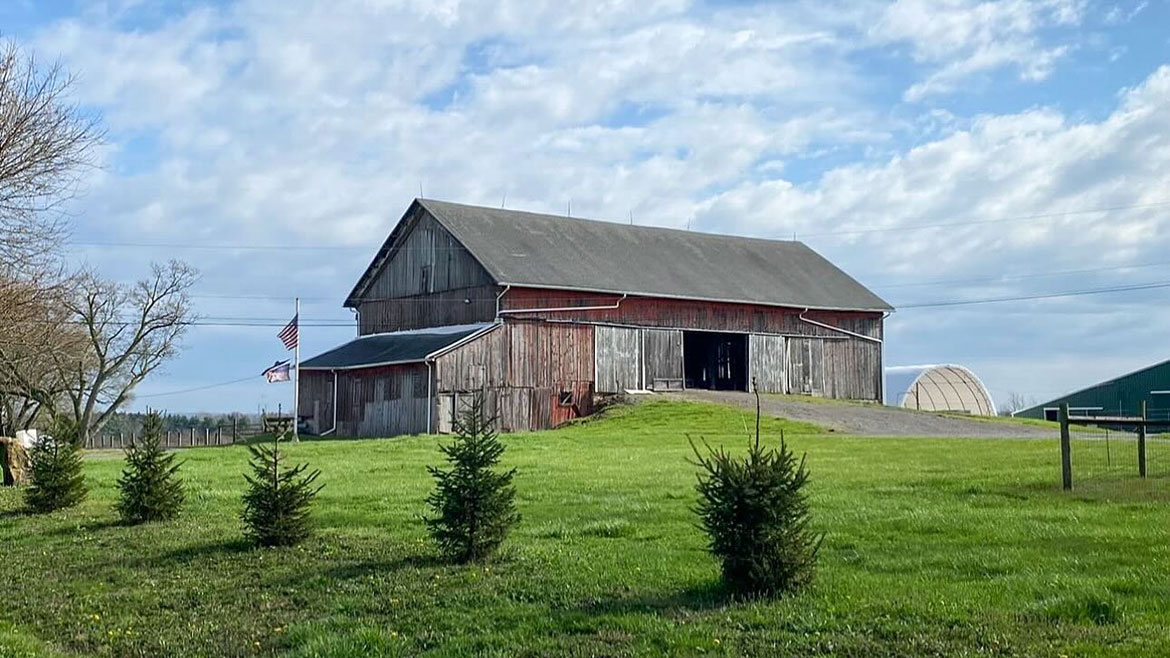
White Oak 1838 was developed from the shell of a barn built in Navarre, Ohio, disassembled, transported, and reassembled at the new location. Photo courtesy of White Oak 1838
To enhance performance, the system was paired with a Taco 0034e stainless steel recirculation pump, which ensures guests will have instant access to hot water at every fixture, combining efficiency with modern comfort.
Integrated approach
Selestow said the design included multiple components and partners. Rosiello and Denali worked with Selestow to build an elaborate system for a unique project.
Taco’s circulators and sequencing controls, the in-slab heating solution from Watts Radiant, NeutraSafe’s condensate neutralization products and a domestic booster pump from Delta P Carver were all integrated into the system for the best possible outcome for White Oak 1838.
“The project came together through strong collaboration,’’ Selestow explained. “These components helped us merge historic architecture with modern comfort and reliability, ensuring the system could perform seamlessly for the building’s unique demands.”
“It was amazing,’’ Rosiello said. “We did a good job with the venue plan, and the flow is good. The acoustics are amazing. We’re excited with the way this project came together.”
Looking for a reprint of this article?
From high-res PDFs to custom plaques, order your copy today!


