
search
cart
facebook instagram twitter linkedin youtube
  • Sign In
  • Create Account
  • Sign Out
  • My Account
  • NEWS
  • PRODUCTS
    • FEATURED PRODUCTS
  • CONTRACTORS
    • BATH & KITCHEN PRO
    • BUSINESS MANAGEMENT
    • HIGH EFFICIENCY HOMES
    • TECHNOLOGY
    • WATER TREATMENT
    • PMC COLUMNS
      • Dave Yates: Contractor’s Corner
      • John Siegenthaler: Hydronics Workshop
      • Kenny Chapman: The Blue Collar Coach
      • Matt Michel: Service Plumbing Pros
      • Scott Secor: Heating Perceptions
  • ENGINEERS
    • CONTINUING EDUCATION
    • DECARBONIZATION | ELECTRIFICATION
    • FIRE PROTECTION
    • GEOTHERMAL | SOLAR THERMAL
    • PIPING | PLUMBING | PVF
    • PME COLUMNS
      • Christoph Lohr: Strategic Plumbing Insights
      • David Dexter: Plumbing Talking Points
      • James Dipping: Engineer Viewpoints
      • John Seigenthaler: Renewable Heating Design
      • Lowell Manalo: Plumbing Essentials
      • Misty Guard: Guard on Compliance
  • RADIANT & HYDRONICS
    • RADIANT COMFORT REPORT
    • THE GLITCH & THE FIX
  • INSIGHTS
    • CODES
    • GREEN PLUMBING & MECHANICAL
    • PROJECT PROFILES
    • COLUMNS
      • Codes Corner
      • Natalie Forster: Editorial Opinion
      • Guest Editorial
  • MEDIA
    • EBOOKS
    • PODCASTS
    • VIDEOS
    • WEBINARS
  • RESOURCES
    • INDUSTRY CALENDAR
    • DIRECTORIES
    • PM BOOKSTORE
    • CE CENTER
    • MARKET RESEARCH
    • CLASSIFIEDS
  • EMAGAZINE
    • EMAGAZINE
    • ARCHIVE ISSUES
    • CONTACT
    • ADVERTISE
    • PME EMAGAZINE ARCHIVES
  • SIGN UP!
Plumbing & Mechanical Engineer Lowell Manalo: Plumbing Essentials

Plumbing Essentials — Design Approaches, Codes and Everything in Between | Lowell Manalo

Water hammer arrestor — simply install one and be done with it

Design considerations to avoid potential pitfalls.

By Lowell Manalo
Stylized sound wave in front of a copper-colored gradient.

Images courtesy of the author.

August 7, 2024
✕
Image in modal.

Water hammer arrestors, as the name implies, are designed to absorb the momentum or shock of changes in water flow from fast-acting valves in hydronic systems. For domestic water systems, the fast-acting valves in question are most often restroom plumbing fixtures. While there is an abundance of information about what water hammering is, its sizing and the different types of hammer arrestors, let’s take a deeper dive below the surface and explore the layers beneath.

Some aspects of water hammer design are nuanced, some often neglected and others still that may not be immediately apparent. The below can aid with decision-making on these systems and raise awareness of potential pitfalls when only trying to apply the very minimum as required by code.

Required by code — no buts, no ifs

Have you ever heard from others who refuse to install hammer arrestor because “they don’t work?” I always cringe when hearing this because regardless of the different types and manufacturers, thousands of water hammer arrestors have been installed and I have yet to see one that does not work when installed and sized properly. Most of the time the opposite is true, where not providing the water hammer arrestor created issues observed on site. The code clearly requires water hammer arrestors be installed where quick closing valves are used — no buts, no ifs.

Fixture units can vary across different jurisdictions

Lowell Manalo: Plumbing Essentials — Design Approaches, Codes and Everything in Between Read More »

When selecting water hammer arresters, always refer to the sizing charts provided by manufacturers, which are often taken from the Plumbing and Drainage Institute (PDI) fixture unit methods. These charts, based on fixture unit methods, are helpful tools for engineers and designers. However, keep in mind that local codes may vary, and that the Authority Having Jurisdiction (AHJ) may have code amendments that change the fixture unit values normally assumed. With that in mind, always verify local code requirements when selecting and sizing water hammer arresters.

Access panels: not required but highly recommended

Have you ever encountered a situation where you arrived at a site to diagnose a water hammer issue only to find that the wall was already closed in, with no access panel to verify the installation? Most manufacturers’ specifications suggest that access to a water hammer arrestor is not required and recommend checking the local codes to confirm otherwise. This is further reinforced by ASSE 1010, noting that water hammer arrestors need to be “maintenance-free.” Note that maintenance-free means that under normal operating conditions, the device should not require routine maintenance. This does not, however, mean that the device will never fail.
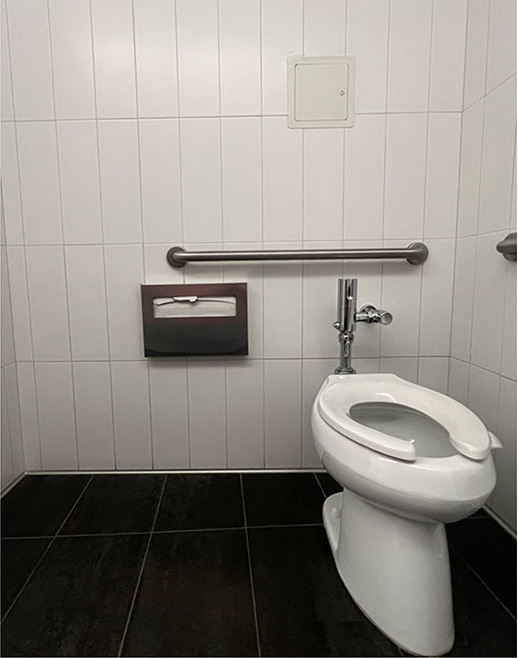
Bathroom toilet

I strongly recommend installing the water hammer arrestor in an accessible location or provided with an access panel.

I strongly recommend installing the water hammer arrestor in an accessible location or provided with an access panel. There may be other unforeseen factors such as dirt getting into the arrester during installation can damage or affect the performance of the arrestor. Installing an access panel also ensures that you have the ability to inspect it should it fail and require replacement. While we can easily justify our design by showing the water hammer arrestor with access panels, ensuring its implementation is a service we owe our clients. The inconvenience to our clients caused by a bathroom wall that needs to be opened due to a failed (or not installed) arrestor can disrupt their operations and is entirely avoidable.

It's a water hammer arrestor, not a pressure-reducing valve.

Have you ever heard of a recommendation to install a larger water hammer arrestor to help with alleviating hammering due to water pressure supply being above 90 PSI? This is a misguided approach of applying a Band-Aid in lieu of fixing the underlying issue. Increases in system pressure over time can overwhelm and greatly reduce the effectiveness of water hammer arrestors.


Note that maintenance-free means that under normal operating conditions, the device should not require routine maintenance. This does not, however, mean that the device will never fail.


Plumbing codes, such as the International Plumbing Code (IPC) and the Uniform Plumbing Code (UPC), set the maximum water pressure for service to plumbing fixtures at 80 PSI. Pressures exceeding this 80 PSI limit can be hazardous, potentially causing damage to the plumbing system and fixtures, leading to water waste and increased stress on pipes and fittings, resulting in higher frequencies of pipe leaks or bursts. A better approach uses pressure-reducing valves to bring the water pressure at the plumbing fixtures to less than the 80 PSI recommended limit.

Water hammer arrestors are crucial for protecting plumbing systems from the effects of water hammering, but they are not intended for managing or regulating high water pressure. It is important to ensure that proper troubleshooting methods are performed and that the appropriate device is used for the identified issue. Failure to do so will result in potential damage to system or code violation requirements that can have legal and financial implications.

Regardless of our preferences and personal opinions, plumbing codes require an arrestor to be installed where quick-closing valves are utilized. Simply install one and be done with it, but be sure that it is sized and installed correctly.

KEYWORDS: engineers plumbing engineers toilets water hammer

Share This Story

Looking for a reprint of this article?
From high-res PDFs to custom plaques, order your copy today!

Lowell manalo headshot

Lowell Manalo is the plumbing discipline leader and principal at SmithGroup. He is a member of ASPE and has more than 20 years of experience designing plumbing systems for various building types.

Recommended Content

JOIN TODAY
to unlock your recommendations.

Already have an account? Sign In

  • 2025 Next Gen ALL-STARS hero 1440

    2025 Next Gen All Stars: Top 20 Under 40 Plumbing Professionals

    This year’s group of NextGen All-Stars is full of young...
    Plumbing & Mechanical Contractor
    By: Kristen R. Bayles
  • Worker using the Milwaukee Tool SWITCH PACK drain cleaner

    Pipeline profits: Drain cleaning, pipe inspection create opportunities

    Drain cleaning and inspection services offer lucrative...
    Green Plumbing and Mechanical
    By: Nicole Krawcke
  • Uponor employee, Arturo Moreno

    The reinvestment in American manufacturing and training

    Plumbing & Mechanical Chief Editor Nicole Krawcke and...
    Plumbing News
    By: Nicole Krawcke and Natalie Forster
Manage My Account
  • eNewsletters
  • Online Registration
  • Subscription Customer Service
  • eMagazine
  • Manage My Preferences

More Videos

Popular Stories

Hot water pipes

Campus shutdown at Oakland University exposes hidden risks of aging hot-water infrastructure

Floor heating manifold cabinet with flowmeter and PEX pipe.

Elegance extended: How to use the homerun system of connecting heat emitters

Industrial pressure gauge on a tank.

From cutting edge to classic: How to modernize outdated pneumatic control systems

Poll

Will business be up or down in 2025?

Do you anticipate business in 2025 to be up or down in comparison to 2024?
View Results Poll Archive

Products

The Water Came To A Stop

The Water Came To A Stop

See More Products
eBook | 2025 Radiant & Hydronics All Stars

Related Articles

  • 01 PME 0923 CLMN Lowell Manalo feature

    Plumbing systems for lab? What is so special about it?

    See More
  • PME January 2024 Lowell Manalo column opening image illustration of robot with thought clouds, thinking about different energy sources.

    The process behind seamless water heater selection

    See More
  • PME March 2024 Lowell Manalo column feature image of robot figure with the words 'Solar?', 'Turbine?', 'Automatice?', 'Hard-wired?', and 'Manual?' in blue and green comment clouds.

    The process behind seamless water faucet selection

    See More

Related Products

See More Products
  • howcome.gif

    How Come? Hydronic heating questions we've been asking for 100 years (with straight answers!)

  • cengagebook.jpg

    Heating with Renewable Energy

  • pocketfullsteamproblm.gif

    A Pocketful of Steam Problems (with solutions!)

See More Products

Events

View AllSubmit An Event
  • May 29, 2014

    Coffee with Caleffi and John Siegenthaler: Air Source and Water Source Heat Pump Systems.

    Coffee with Caleffi will be hosted by John Siegenthaler on May 29, 2014.
View AllSubmit An Event
×

Keep your content unclogged with our newsletters!

Stay in the know on the latest plumbing & piping industry trends.

JOIN TODAY!
  • RESOURCES
    • Advertise
    • Contact Us
    • Directories
    • Store
    • Want More
    • Supply House Times
  • SIGN UP TODAY
    • Create Account
    • eMagazine
    • eNewsletter
    • Customer Service
    • Manage Preferences
  • SERVICES
    • Marketing Services
    • Reprints
    • Market Research
    • List Rental
    • Survey/Respondent Access
  • STAY CONNECTED
    • LinkedIn
    • Facebook
    • Instagram
    • YouTube
    • X (Twitter)
  • PRIVACY
    • PRIVACY POLICY
    • TERMS & CONDITIONS
    • DO NOT SELL MY PERSONAL INFORMATION
    • PRIVACY REQUEST
    • ACCESSIBILITY

Copyright ©2025. All Rights Reserved BNP Media.

Design, CMS, Hosting & Web Development :: ePublishing