Michigan school district modernizes heating systems
Byron Center School District overhauls heating, hot-water systems to save $400,000 per year.
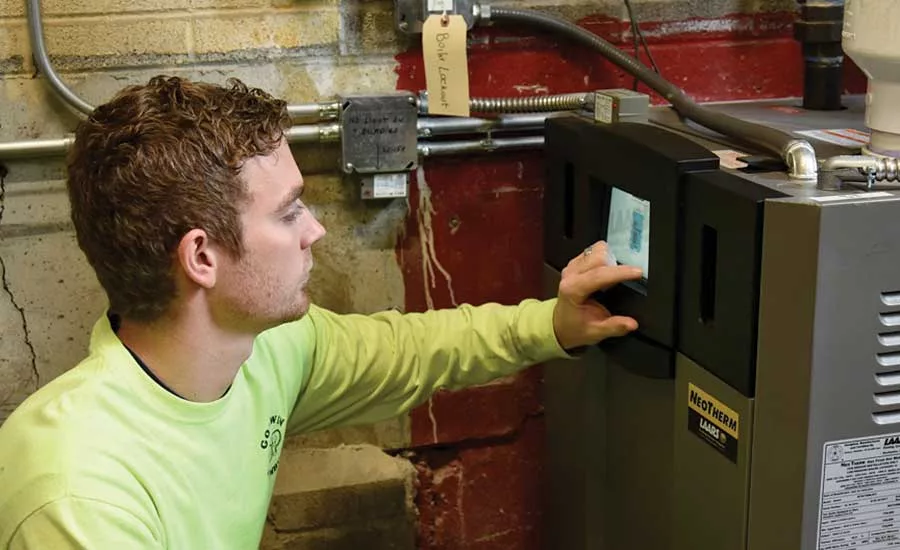
School administrators in Byron Center, Michigan, recently overhauled the district's heating and hot-water systems to save energy and money. Photo credit: Laars/Bradford White
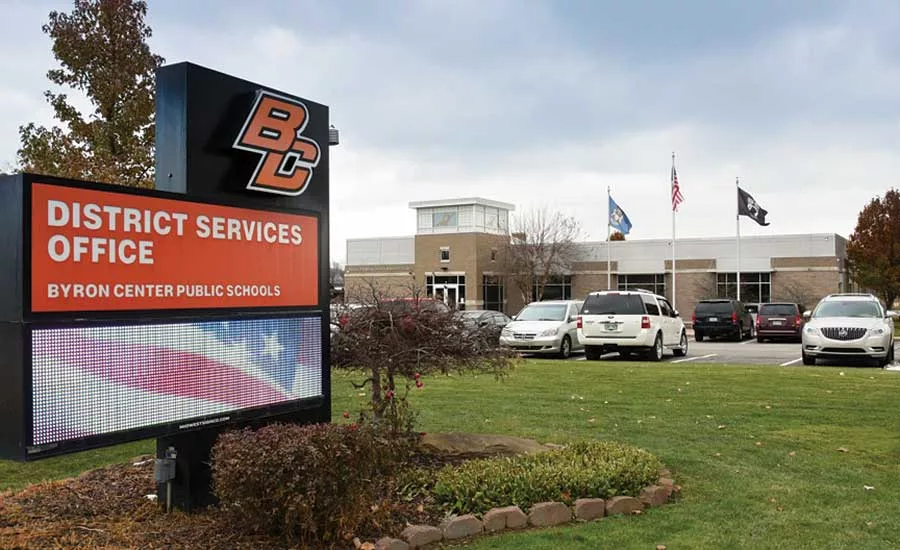
Byron Center Public Schools are implementing numerous eco-friendly practices, starting with overhauling its heating systems.
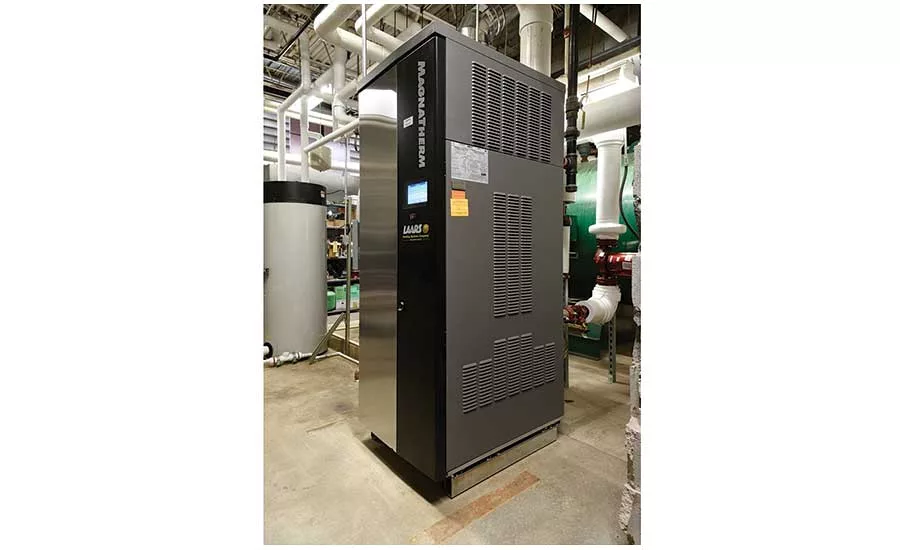
The new, much more efficient heating systems at Byron Center Public Schools are saving the district roughly $400,000 per year.
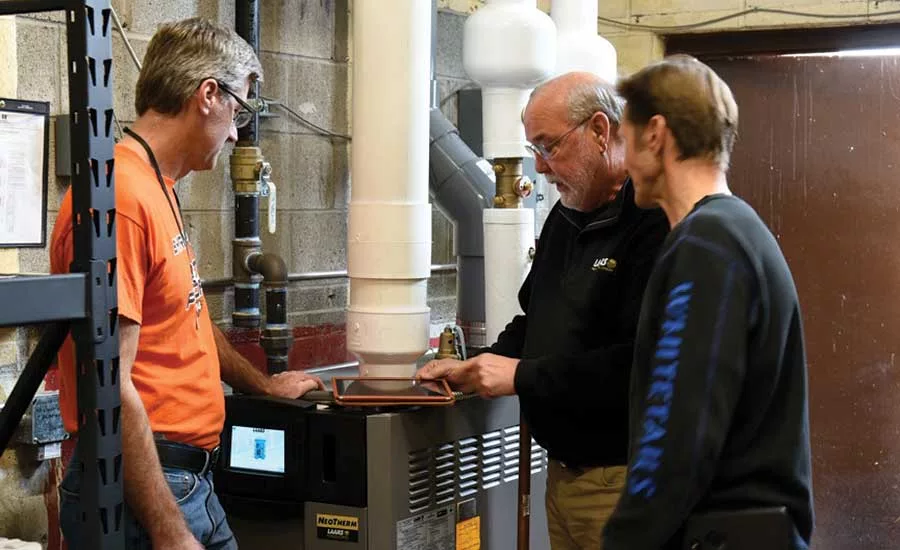
Byron Center Public Schools' Doug Gallup plans to invest in variable-speed motors, insulation and thermal imaging next in order to help save energy and money.
Turtleneck sweaters, beehive hairdos and inefficient mechanical systems have this in common: they’re all, thankfully, a thing of the past.
The 1960s also brought a healthy dose of new environmental awareness.
Buildings constructed during that decade began to show signs of it, too: smarter use of insulation, improved construction, and more efficient heating and cooling equipment.
Michigan makeover
Built in the mid-1960s, buildings in the Byron Center school district, which serves roughly 4,500 students in Byron Center, Michigan, were about as inefficient as they come.
Fortunately for the school district, however, the facilities’ current operations director is extremely eco-conscious and has gone to all lengths to “re-green” school facilities and admin buildings.
Doug Gallup began his work at the school district in 2000 as the assistant principal and dean of students. He took over the role of facilities’ operations director in 2012, and the school district has been making eco-friendly improvements ever since.
The first thing Gallup did in his new role was to study the district’s water and electric bills. The heating and cooling bill for one year for the high school alone was $398,000. It wasn’t hard to calculate — with the numbers they’d been spending yearly for all schools within the district — that there was only room for improvement.
Gallup began with quick fixes, including replacing all indoor and outdoor lighting with LEDs and asking kitchen staff to fire up the commercial ovens only 15 minutes prior to their need. He learned that, previously, the behemoth ovens were turned on up to two hours before the lunchtime meal each weekday.
Energy modifications
“I also began to record our energy consumption,” Gallup says. “I wanted everything to be data-driven — the usage and eventually the savings — so I put boards in all of the schools to monitor gas and electric meters to start collecting data.
“And, fortunately, most of our school district transformers are owned by the district, so I was also able to negotiate rates with our gas and electric companies for tremendous savings,” he adds.
The first large, full-scale project Gallup tackled was to change all of the buildings’ white roofs to black — a heat-retention method that makes good sense in Michigan.
“The majority of the district’s high utility costs were for heating the schools,” Gallup says. “We switched from white to black roofs because they absorb and hold more solar energy, which helps by not having to utilize our heating systems as much.”
Reducing water consumption
When it was built in 1968, the Nickels building was originally the district’s high school. Since then, it’s been repurposed as the fifth- and sixth-grade intermediate school.
When studying the exorbitant energy costs from years past, Gallup discovered there was a 750-gallon hot water tank continuously heating water for 32 showers at the Nichols building.
In its high school years, the showers at Nickels were likely used frequently following gym classes.
“Kids in fifth and sixth grade don’t shower after gym class,” Gallup says. “They spray on some Axe and call it good.”
Gallup worked with a local rep agency to find the best manufacturer for a high-efficiency solution for the locker room project. Through the rep firm, he was introduced to Van Culberson, the regional manager for Laars Heating Systems.
“It turns out, we’re practically neighbors,” Gallup says. “We like their products, and I can send my maintenance faculty to their rep training facility. An added plus was to see that tax dollars were spent locally.”
The solution: They kept the showers, but now a single, 199-gallon, high-efficiency Laars UHE condensing water heater manages the task of heating domestic water for the entire school.
The district tapped Grand Rapids, Michigan-based Godwin Plumbing and Heating for all the plumbing and mechanical work at the school district.
David Breuker, project controller and estimator at Godwin Plumbing, says the gas-fired UHE runs at 99% efficiency.
“That costs a whole lot less to operate than the 750-gallon tank that was in the Nichols building previously,” he says, adding that if the need should ever arise, a second UHE could be put next to (or stacked on top of) the existing one.
Efficient heating
Next, Gallup turned his sights to a pair of 4 million Btu “energy hog” boilers in the Nickels building’s mechanical room, chugging away at 72% efficiency.
“After putting our heads together, Van and I decided that a 3-million Btu condensing boiler would be our best option for primary heating of the Nickels building,” Gallup says. “We chose to keep the old ones there for backup — necessary on single-digit days.”
The gas-fired, modulating boiler runs at 95% efficiency and serves all of the heating needs at Nickels.
“The gas and electric savings in that building are nothing short of incredible,” Gallup adds. “When we began to see the impact of these savings, we knew we were on the right track.”
Over at the ECC
The Early Childhood Center (ECC)/Administration Building was built in the ‘50s, where it had been originally tied into a campus-wide steam system — and acted as the high school before Nickels was built in 1968. Now, the building is a weekday home away from home for more than 180 children ranging from 6 weeks to 5 years of age.
When Gallup took on his current role, ECC had two 2 million Btu boilers — much more than was necessary for the 27,000-square-foot single-story building.
“The ECC building has a convection heating system. So, when looking at loop temps, the target ∆T is 20° F,” Culberson says.
Once Gallup looked over the metered data collected from the dashboard he had installed, he realized there was only a difference of 8° or 9° between the incoming and outgoing water temps.
Culberson quickly identified the problem as oversized pumps.
“An immediate solution to the oversized pumps was to put variable frequency drives on them,” Culberson says. “They went from running at 20 hp to 8 hp.”
By modulating pump speed, they greatly improved heat distribution, seen quickly in the improved system ∆T.
“Those big pumps had been pushing water way too fast for system heat to be distributed,” Gallup says.
Upgrading equipment
The addition of variable-frequency drives delivered a quick solution to the expensive issue of oversized pumps — but it wasn’t intended to be the main course of action with the energy overhaul.
For that, Culberson suggested a 1.25 million Btu Laars NeoTherm that modulates with 5:1 turndown. The line features ASME stainless steel heat exchangers and low NOx emissions.
“Kids as young as the ones at ECC are always crawling around and playing on the floor,” Gallup says. “We didn’t want hot radiators where kids could very easily burn themselves, so we installed fin-tube baseboards that accomplish easy heat distribution at much lower temps.”
Also, a 55-gallon water heater was installed to meet the need for domestic hot water.
Another building in the Byron Center School District — the Countryside Elementary school — also needed some efficiency tweaking, though on a much smaller scale, and also received a 50-gallon Bradford White water heater.
Re-greening takes root
Gallup’s passion for energy conservation, penchant for efficiency data and aggressive courses of action to re-green the schools led to EnergyStar ratings in all of Byron Center School District’s buildings, with several of them coming in at 100%.
“Our school district went from spending $1.4 million a year for heating and cooling to $1 million.”
Gallup continues to introduce eco-friendly practices to the schools on smaller scale. For instance, students are learning to make natural fertilizer in school greenhouses for fields and trees. Many school windows now have energy efficiency film on inside surfaces. Attic and wall spaces have received enhanced insulation, and there’s light-harvesting technology in use as well.
“I’m not done yet,” Gallup says. “In the next three years, I’d still like to invest in variable-speed motors, broader use of super-efficient insulation, and thermal imaging of all the schools to see where we can enact further improvement.”
Editor’s Note: This case study is courtesy of Bradford White Corp. For more information, visit www.bradfordwhite.com.
Looking for a reprint of this article?
From high-res PDFs to custom plaques, order your copy today!