
Comfort vs. efficiency
One critical area that the building and energy codes do not address directly is the comfort condition of the occupants.
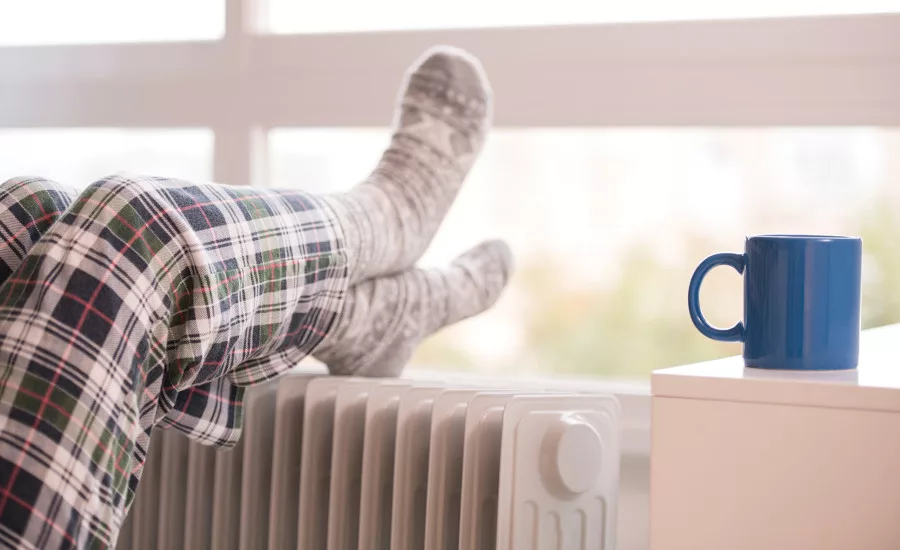
When designing radiant heating systems, professionals should worry about ensuring occupant comfort first and energy efficiency second. Photo credit: ©gettyimages.com/AleksandarNakic

The control knobs on most European panel radiators thermostatic radiator valves use a “comfort setting.”
As the chairman of the RPA Technical committee, I try to stay abreast of situations that may affect our working members. One such area is the movement towards energy efficiency.
I’ve been involved in the construction trades for 43 years this summer, and I must tell you that I have seen a lot of things come and go, many of which were touted as being the “best” energy saving devices. I won’t pick on any one particular product, but the one area that I have seen the most improvements on are our energy sources, primarily gas-fired boilers. The world’s most efficient boiler may not be capable of delivering the end product that the consumer was looking for — that product being comfort.
In all of my years as a hydronic practitioner and radiant contractor, I’ve never had to resort to energy savings to seal the deal. When I interview a possible client, I ask them about their personal comfort and listen to their answers about their comfort issues.
It has been proven time and time again that most North Americans are, in fact, not comfortable in either their home environment or their work environment. Survey after survey has proven this over the years, and our existing energy codes attempt to address energy efficiency using tools that are much more common today than they were 20 years ago, but they still do not address occupant comfort. Building to “code” simply means you’ve met the minimum standards available.
I understand the need for an envelope to be as energy efficient as possible, but if the occupants who reside inside of this energy-efficient box are not comfortable, they will do everything in their power to get and stay comfortable, most of which wastes the precious energy we are striving to conserve. The most common method is to turn the temperature within the room to a higher (or lower for cooling) setting. This makes their energy-efficient home less than energy-efficient.
Comfort first
One critical area that the building and energy codes do not address directly is the comfort condition of the occupants. My comment is this: If the people inside these dwellings are not comfortable, then we have failed at our jobs of being comfort experts, and all the energy conservation in the world is not going to satisfy their needs.
I know that comfort is subjective, and what may be comfortable for me may not necessarily be comfortable for you. It’s physics — I understand it. The Europeans, namely the Germans, understand this, too. In fact, if you look at the control knobs on most European panel radiators thermostatic radiator valves, you will see that they don’t use the Fahrenheit scale that us North Americans do — they use a “comfort setting,” which varies from 0 to 5, with 5 being the warmest.
In instructing the end users, they are told that the correct number is dependent upon numerous variables (clothing, solar gains, physical activity, age, metabolic rates, etc.). You are instructed to turn the setting to whatever makes you comfortable, depending on what activity you are preforming, how you are dressed, and your proximity to less-than-ideal comfort conditions, like highly glazed areas.
If you are physically active, and heavily dressed, a 1 or 2 may meet your needs. If you are sedentary and sitting near a highly glazed area, you may need to set your system to a 3.5, 4 or 5, depending up on your age and other variables. Regardless, the Germans are addressing human comfort, instead of energy efficiency. Respected industry expert Robert Bean is constantly shouting from the rooftops and podiums, “If you design and build around comfort, energy efficiency will follow.”
In some situations, even though the dwelling is capable of maintaining 70° to 72° F, it is entirely possible — in fact, it is likely — that the occupants inside the building are not going to be comfortable. This can be due to their proximity to a highly glazed area.
ASHRAE has developed some new comfort forecasting tools that will predict the Mean Radiant Temperature for a given construction scenario. In areas with significant glazing or low R values within a wall, it can predict human comfort fairly accurately. This is why selling radiant over a convection system is so easy. We are addressing the comfort needs of the occupant first and the energy efficiency second. In all of my years in doing this, the speech I deliver has been as follows: “This will make you much more comfortable than the alternatives. And oh, by the way, it may reduce your energy consumption by as much as 30%, depending on your scenario.”
Radiant Tools
We have radiant tools available to us now that we didn’t have access to even just a few years ago. In addition to the wonderful radiant flooring systems, we now have radiant walls, ceilings, windows and flat-panel radiators. The radiant windows are available on the European markets and have been available for over 30 years, and they will be made readily available here in the U.S. in the next few years.
I’ve had situations where we had installed a very efficient radiant floor heating system, and it was capable of maintaining 70° air temperatures, even at design conditions. But due to the amounts of double-pane glazing within the home, the occupants were not comfortable, regardless of where they were located within the dwelling. This is typical of our historic effort to keep the space at a given condition, in which we assumed that the occupants would be comfortable.
If we’d have had access to the prediction tools of today, I’d have been able to predict the occupants’ possible discomfort factors and would have brought radiant windows into the picture to assure excellent human comfort. This way, we professionals in the “comfort” business can better handle the needs of the occupants of these buildings we are developing today.
My suggestion would be to become familiar with the ASHRAE tools, and to incorporate them into your design processes. This will set you apart from the pack and will assure excellent occupant comfort.
Looking for a reprint of this article?
From high-res PDFs to custom plaques, order your copy today!


