
search
cart
facebook instagram twitter linkedin youtube
  • Sign In
  • Create Account
  • Sign Out
  • My Account
  • NEWS
  • PRODUCTS
    • FEATURED PRODUCTS
  • CONTRACTORS
    • BATH & KITCHEN PRO
    • BUSINESS MANAGEMENT
    • HIGH EFFICIENCY HOMES
    • TECHNOLOGY
    • WATER TREATMENT
    • PMC COLUMNS
      • Dave Yates: Contractor’s Corner
      • John Siegenthaler: Hydronics Workshop
      • Kenny Chapman: The Blue Collar Coach
      • Matt Michel: Service Plumbing Pros
      • Scott Secor: Heating Perceptions
  • ENGINEERS
    • CONTINUING EDUCATION
    • DECARBONIZATION | ELECTRIFICATION
    • FIRE PROTECTION
    • GEOTHERMAL | SOLAR THERMAL
    • PIPING | PLUMBING | PVF
    • PME COLUMNS
      • Christoph Lohr: Strategic Plumbing Insights
      • David Dexter: Plumbing Talking Points
      • James Dipping: Engineer Viewpoints
      • John Seigenthaler: Renewable Heating Design
      • Lowell Manalo: Plumbing Essentials
      • Misty Guard: Guard on Compliance
  • RADIANT & HYDRONICS
    • RADIANT COMFORT REPORT
    • THE GLITCH & THE FIX
  • INSIGHTS
    • CODES
    • GREEN PLUMBING & MECHANICAL
    • PROJECT PROFILES
    • COLUMNS
      • Codes Corner
      • Natalie Forster: Editorial Opinion
      • Guest Editorial
  • MEDIA
    • EBOOKS
    • PODCASTS
    • VIDEOS
    • WEBINARS
  • RESOURCES
    • INDUSTRY CALENDAR
    • DIRECTORIES
    • PM BOOKSTORE
    • CE CENTER
    • MARKET RESEARCH
    • CLASSIFIEDS
  • EMAGAZINE
    • EMAGAZINE
    • ARCHIVE ISSUES
    • CONTACT
    • ADVERTISE
    • PME EMAGAZINE ARCHIVES
  • SIGN UP!
Columns

The Incredible Shrinking Circulator
John Siegenthaler, P.E.
By John Siegenthaler, P.E.
May 2, 2007
The lower limits are smaller than you think.

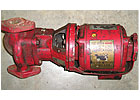
Figure 1 (courtesy of Bob "Hot Rod" Rohr)


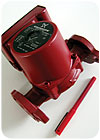
Figure 2: A modern circulator - next to a pen.

What size circulator should I be using on a residential hydronic heating system? Sounds like a question to a local wholesaler from an installer content to live with rules of thumb and hardware that simply keeps his installations above the callback threshold.

The way he phrases the question implies he knows that residential heating systems usually use less powerful circulators than do commercial systems. But how small can he go, or perhaps more relevant to his design philosophy - how cheap can he go?

Take a look at Figure 1. This is a familiar sight in basements of older homes in traditional hydronic heating markets. A typical three-piece circulator like this weighs about 26 pounds and requires about 185 watts of power at full load. When it finally spins its last, this mass of metal makes a great anchor for a fishing skiff. Just be sure to drain out the oil before throwing it overboard.

A few decades later, a circuit of similar heating capacity would probably use a nominal 1/25 horsepower wet-rotor zone circulator weighing about 6 1/2 pounds and operating on 60-90 watts. An example is shown in Figure 2.



Water Watts

It’s hard to say if the wattage of past or current generation circulators is “where it needs to be” without knowing the mechanical wattage needed to move flow through a specific circuit. This can be calculated using Formula 1:

Formula 1

Where:
Wm = mechanical power required to maintain flow in circuit (watts)
f = flow rate in circuit (gpm)
∆P = pressure drop along circuit (psi)
0.4344 = units conversion factor

For example, how much mechanical power is necessary to sustain a flow of 180-degree F water flows at 5 gpm through a circuit of 3/4-inch copper tubing having an equivalent length of 200 feet?

The solution: The head loss associated with this flow is 9.11 feet. You could look this up in a number of references or calculate it using a number of computer programs. The pressure drop associated with this head loss is 3.83 psi. Putting these numbers into Formula 1 yields:
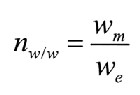


That’s quite a bit lower than the electrical operating wattage of even the smallest currently available wet rotor circulator. In part that’s because this is the mechanical wattage the circulator’s impeller needs to impart to the water, not the electrical wattage required to operate the circulator’s motor. The ratio of the mechanical wattage the impeller imparts to the water divided by the electrical wattage to operate the motor is called wire-to-water efficiency, and is represented by Formula 2.

Formula 2

Where:
nw/w = wire-to-water efficiency of the circulator (decimal percentage)
wm = mechanical power transferred to water by impeller (watts)
we = electrical power input to motor (watts)

Formula 1 and 2 can be combined into Formula 3:


Formula 3

A current generation wet-rotor circulator has a maximum wire-to-water efficiency in the range of 25 percent. If we put this into Formula 3 along with the previous data, we get the electrical wattage required to maintain flow in the circuit.

Keep in mind that this wattage is based on the peak efficiency of the circulator, which typically occurs when the operating point is near the middle of the pump curve. Systems that force the operating point higher or lower on the pump curve cause the efficiency to drop.


Say Watt!

Next, consider that a flow of 5 gpm in a circuit with a 20-degree F temperature drop is moving about 50,000 Btu/hr., and the electrical power to “run the conveyor belt” according to the last calculation is only 33.2 watts. The distribution efficiency of such a circuit is:

To put this in perspective, compare it to a 4-ton-rated geothermal water-to-air heat pump delivering 48,000 Btu/hr. using a blower operating on 1,080 watts. The distribution efficiency of this delivery system is:

These numbers imply that the hydronic system delivers heat to the building using only 2.9 percent (e.g., 44.4/1,506) of the electrical power required by the forced-air delivery system.

From Small To Micro

This comparison shows that the electrical power needed to transport heat throughout a building using hydronics is already a pittance relative to that required by a typical forced-air system. But is this as good as it gets? Is it possible to use even less power and still have a functional hydronic system? As you’ll soon see, the lower limits on circulator power may just start with a decimal point rather than a digit.

For example, consider a circuit of 1/2-inch PEX-AL-PEX tubing transporting heat to a panel radiator that delivers 8,000 Btu/hr. to a 16 x 20 foot bedroom at design load. Suppose the equivalent length of the circuit is 200 feet (50 feet supply tubing + 50 feet return tubing +100 feet equivalent length of the panel radiator). With the panel operating at a 30-degree F temperature drop, the required flow rate is:

The electrical wattage associated with moving 0.54 gpm through the 200-foot circuit of 1/2-inch PEX-AL-PEX using a circulator with 25 percent wire-to-water efficiency is:

This is less power than a typical Christmas tree bulb, and yet it’s enough to transport sufficient heat to keep a rather spacious bedroom comfortable on a design load night.

Next, consider a 250-foot-long radiant floor circuit of 1/2-inch PEX tubing embedded in a bare concrete floor at 12-inch spacing and supplied with 110-degree F water. At 0.75 gpm, that circuit supplies 6,656 Btu/hr., and has a nominal 18-degree F temperature drop. The pressure drop along this circuit is 2.66 psi. Assuming the same 25 percent wire-to-water circulator efficiency, the electrical power needed to sustain this operating condition is:


Although significantly higher than the previous result for the panel radiator circuit, this is still a tiny number compared to what typically comes to mind when we think circulator wattage.

The point of these calculations is to convince you that the electrical power needed to move flow through typical residential hydronic circuits is very small.
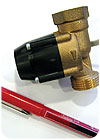


Figure 3

Anticipation

Imagine you could buy a “microcirculator” that operates in the range of perhaps 0 to 5 watts. You could use one on each homerun circuit to a radiant floor panel, panel radiator or baseboard. Heat output to each circuit could be precisely regulated from zero to full design load by varying the speed of the microcirculator in response to room temperature. In the case of panel radiators, you could send 80,000 Btu/hr. to a house under design load conditions using about 8 watts of electrical power to make the delivery.

Pie-in-the-sky, you say. Who in their right minds would make such a tiny circulator and really expect there’s a market for it? Hint: Where do we usually look when it comes to “think-drastically-outside-the-box” hydronic concepts? You got it - the Europeans.

Take a look at Figure 3. The device at the bottom is a pen. What do you suppose the device above the pen is?

For now I’m going to keep you guessing. I don’t want to spoil the surprise when these appear at your local wholesaler in the not-too-distant future. For now, let’s just say this device is a real hydronic system component. It weighs a few ounces. Several of them are operating quite nicely in European systems. And each of them draws less power than a typical Christmas tree bulb.

Happy guessing.


Links

  • Radiant & Hydronics e-News
  • Contact Plumbing & Mechanical
  • HydronicPros.com

Share This Story

Looking for a reprint of this article?
From high-res PDFs to custom plaques, order your copy today!

John siegenthaler 200x200

John Siegenthaler, P.E., is a consulting engineer and principal of Appropriate Designs in Holland Patent, New York. In partnership with HeatSpring, he has developed several online courses that provide in-depth, design-level training in modern hydronics systems, air-to-water heat pumps and biomass boiler systems. Additional information and resources for hydronic system design are available on Siegenthaler’s website,  www.hydronicpros.com.

Recommended Content

JOIN TODAY
to unlock your recommendations.

Already have an account? Sign In

  • 2025 Next Gen ALL-STARS hero 1440

    2025 Next Gen All Stars: Top 20 Under 40 Plumbing Professionals

    This year’s group of NextGen All-Stars is full of young...
    Plumbing & Mechanical Contractor
    By: Kristen R. Bayles
  • Worker using the Milwaukee Tool SWITCH PACK drain cleaner

    Pipeline profits: Drain cleaning, pipe inspection create opportunities

    Drain cleaning and inspection services offer lucrative...
    Green Plumbing and Mechanical
    By: Nicole Krawcke
  • Uponor employee, Arturo Moreno

    The reinvestment in American manufacturing and training

    Plumbing & Mechanical Chief Editor Nicole Krawcke and...
    Plumbing News
    By: Nicole Krawcke and Natalie Forster
Manage My Account
  • eNewsletters
  • Online Registration
  • Subscription Customer Service
  • eMagazine
  • Manage My Preferences

More Videos

Popular Stories

Hot water pipes

Campus shutdown at Oakland University exposes hidden risks of aging hot-water infrastructure

Floor heating manifold cabinet with flowmeter and PEX pipe.

Elegance extended: How to use the homerun system of connecting heat emitters

Industrial pressure gauge on a tank.

From cutting edge to classic: How to modernize outdated pneumatic control systems

Poll

Will business be up or down in 2025?

Do you anticipate business in 2025 to be up or down in comparison to 2024?
View Results Poll Archive

Products

The Water Came To A Stop

The Water Came To A Stop

See More Products
eBook | 2025 Radiant & Hydronics All Stars

Related Articles

  • Take The High Road
    John Siegenthaler, P.E.

    See More
  • Radiant Expansionism
    John Siegenthaler, P.E.

    See More
  • Minitube Mods
    John Siegenthaler, P.E.

    See More

Related Products

See More Products
  • The ACCA Job Safety (1).jpg

    The ACCA On-The-Job Safety Handbook (Pack of 5)

  • what hydronics taught holohan.jpg

    What Hydronics Taught Holohan: A Memoir of Life in the Heating Industry

See More Products

Events

View AllSubmit An Event
  • May 29, 2014

    Coffee with Caleffi and John Siegenthaler: Air Source and Water Source Heat Pump Systems.

    Coffee with Caleffi will be hosted by John Siegenthaler on May 29, 2014.
View AllSubmit An Event
×

Keep your content unclogged with our newsletters!

Stay in the know on the latest plumbing & piping industry trends.

JOIN TODAY!
  • RESOURCES
    • Advertise
    • Contact Us
    • Directories
    • Store
    • Want More
    • Supply House Times
  • SIGN UP TODAY
    • Create Account
    • eMagazine
    • eNewsletter
    • Customer Service
    • Manage Preferences
  • SERVICES
    • Marketing Services
    • Reprints
    • Market Research
    • List Rental
    • Survey/Respondent Access
  • STAY CONNECTED
    • LinkedIn
    • Facebook
    • Instagram
    • YouTube
    • X (Twitter)
  • PRIVACY
    • PRIVACY POLICY
    • TERMS & CONDITIONS
    • DO NOT SELL MY PERSONAL INFORMATION
    • PRIVACY REQUEST
    • ACCESSIBILITY

Copyright ©2025. All Rights Reserved BNP Media.

Design, CMS, Hosting & Web Development :: ePublishing