
Plumbing Talking Points | David Dexter
Plumbing application and implementation varies around the world
Plumbing, what is it?
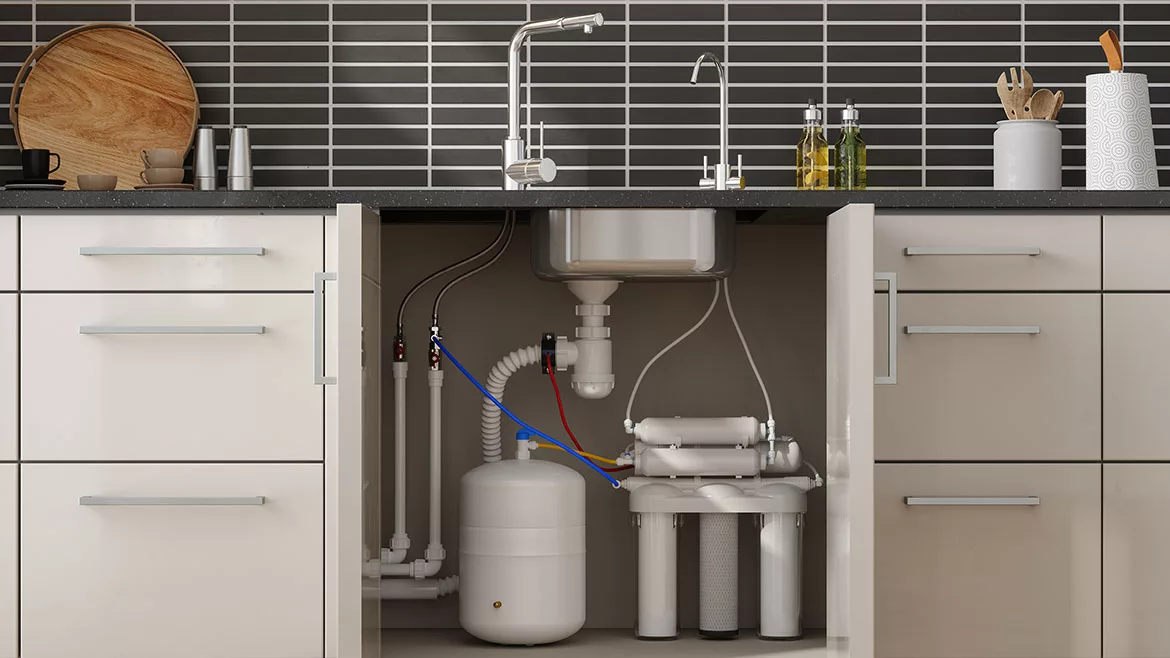
Image courtesy of onurdongel / iStock / Getty Images Plus.
According to the definition section in the Ohio Plumbing Code (IPC-based), Plumbing is defined as, “The practice, materials and fixtures utilized in the installation, maintenance, extension and alteration of all piping, fixtures, plumbing appliances and plumbing appurtenances, within or adjacent to any structure, in connection with sanitary drainage or storm drainage facilities; venting systems; and public or private water supply systems.” According to Wikipedia, plumbing is any system to convey fluids for a wide range of applications. Plumbing uses pipes, valves, fixtures, tanks and other apparatuses to convey fluids. Waste removal and potable water delivery are among the most common uses, but is not limited to these applications. The word derives from the Latin for lead, plumbum, as the first effective pipes used in the Roman era were lead pipes.
In today’s world, plumbing infrastructure is critical to public health and sanitation. Plumbing originated during ancient civilizations, as public baths were being developed to serve larger numbers of people who needed potable water and waste removal. As far back as 4000 BC in the area of Mesopotamia one can find examples of clay sewer pipes used to remove wastewater from sites and capture rainwater in wells.
So plumbing is the basic term used to provide potable water, collect and remove sanitary wastewater and collect/direct rainwater to areas for future use with the intent of protecting the public health. While this may be the basic definition, as plumbing engineers and designers, we know that today’s plumbing systems involve much more: gray and black water systems, distribution of fuel gases and lubricants, medical gas systems, siphonic roof drainage, laboratory systems, management of water quality to assure the water remains clean and potable, among many other plumbing/piping systems needed to serve the public need.
While plumbing and the associated codes are utilized all over the world, their implementation and application vary widely. I say this after recent travels to the “end of the earth” at the southern tip Argentina where the Pan-American Highway has its terminus point in the Puerto Madryn National Park. It is the furthest one can travel by land in the Americas. And after visiting the “end of the world” it seemed only logical that we continued to the South Pole region in Antarctica to visit the “bottom of the world.” It was a trip of a lifetime, allowing me to observe the differing styles of plumbing found in those parts of the world. While I think we all agree, if it has a waste, drain it away and if it smells, vent it and provide potable water to wash and drink. But it is also obvious that how that is accomplished differs greatly all over the world.
A fellow engineer asked if Argentina was similar to Brazil in their plumbing practices. He indicated that in Brazil, they use what is known as “caixa sifonada” for a floor drain as well as the receptor for all other plumbing fixtures in the bathroom, except for the water closet. The caixa sifonada looks like this:
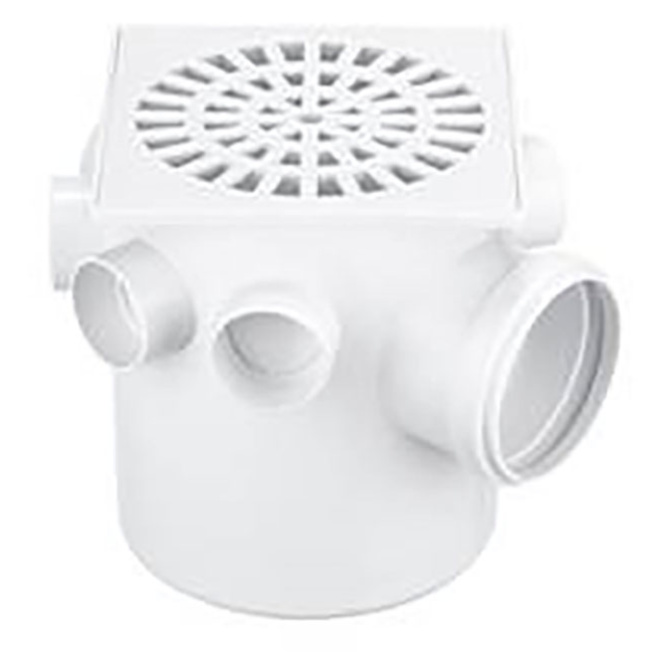
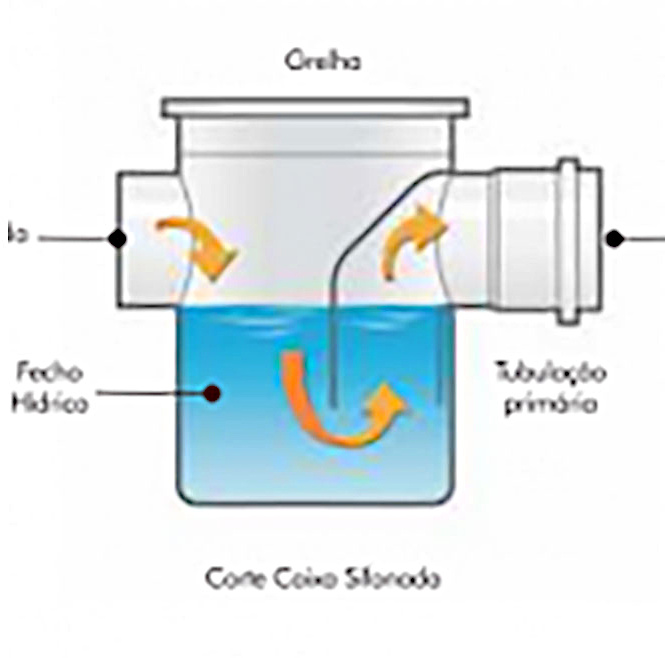
While we are talking about Latin America, the term itself is actually Portuguese in origin and translates as “siphoned box.” Note that there is no siphonic action actually taking place in the box or device. This device actually serves two purposes; it acts as a floor drain to collect overflows and run off from the floor, as well as a receiver for grey water waste from the lavatory, tub/shower, and the bidet.
With that said, this is essentially a drum trap with multiple inlets being served by a single outlet. Drum traps were a type of plumbing trap used in residential style applications before the advent of the modern P-Trap. The drum trap is a cylindrical shaped trap with a vertical drain outlet (just above the bottom of the unit) that, in this case, turns horizontally to connect with the vented drainage system. It holds a pool of water to create a “trap seal,” that prevents sewer gases and odors from entering the space protected by the trap and contaminating the living space through the trap.
However, over time, drum traps have been found to be problematic in several ways. One of the primary issues is that they are prone to becoming clogged with hair, soap scum and other substances. Because of their design and installation locations, drum traps are more challenging to clean than other types of traps.
Depending on the materials of construction, the drum trap can corrode over time, leading to leaks and damage to the surrounding plumbing system. In some cases, drum traps can become so corroded that they fail to create a proper seal, allowing sewer gases and odors to escape into the surrounding area.
At least in the Ohio Plumbing Code (OPC) which is based on the International Plumbing Code (IPC): drum traps are a prohibited type of trap except when used as a solids interceptor or serving a chemical waste system.
An additional concern is the amount of waste piping between the lavatory (maybe 10’), the tub/shower (maybe 8’), and the bidet (maybe 2’). The distances all are dependent on the room layout, but seem consistent with the room layout shown:
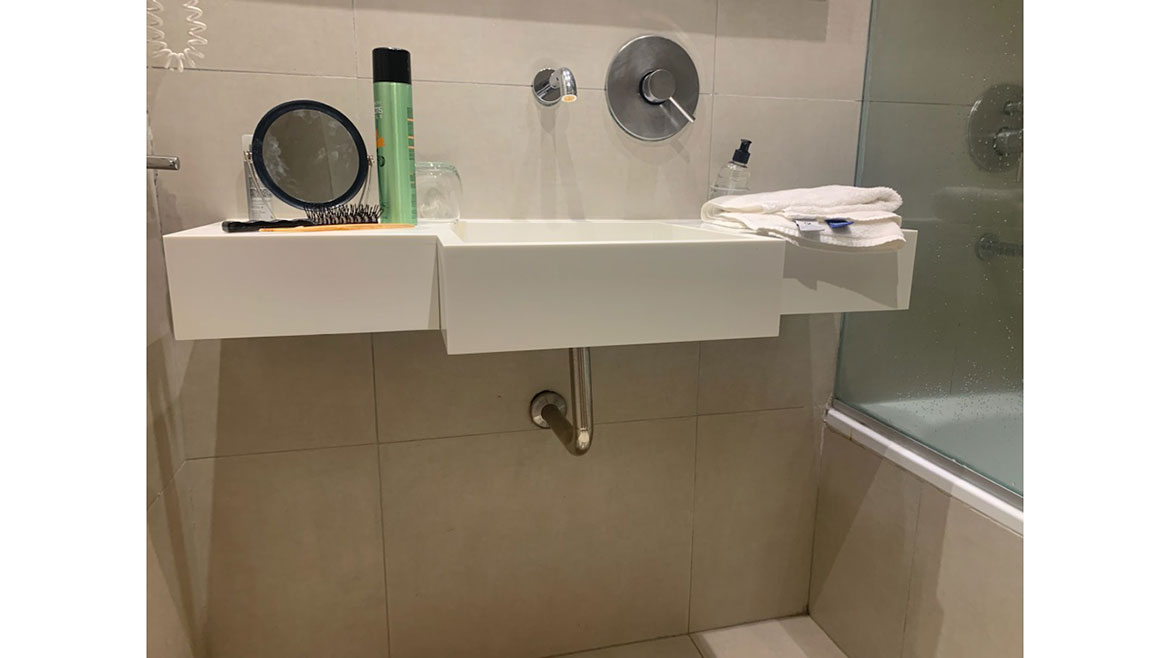
Hotel Dazzler by Wyndham in Buenos Aires, Argentina, note there is no trap on the lavatory waste line.

The tub/shower was located to the right of the lavatory, as you faced the lavatory, and on the opposite wall from the water closet, bidet and the caixa sifonada.

This is the opposite wall from the lavatory with the bidet located near the foot of the tub/shower. The caixa sifonada is located between the water closet and the bidet.
The amount of waste piping allows ventilation through the drum trap and the other fixtures, which could introduce odors into the space, although no such odor was noted during our stay. But any piping is subject to a buildup of soap scum, biofilm, hair, etc. that could generate odor within those sections of piping.
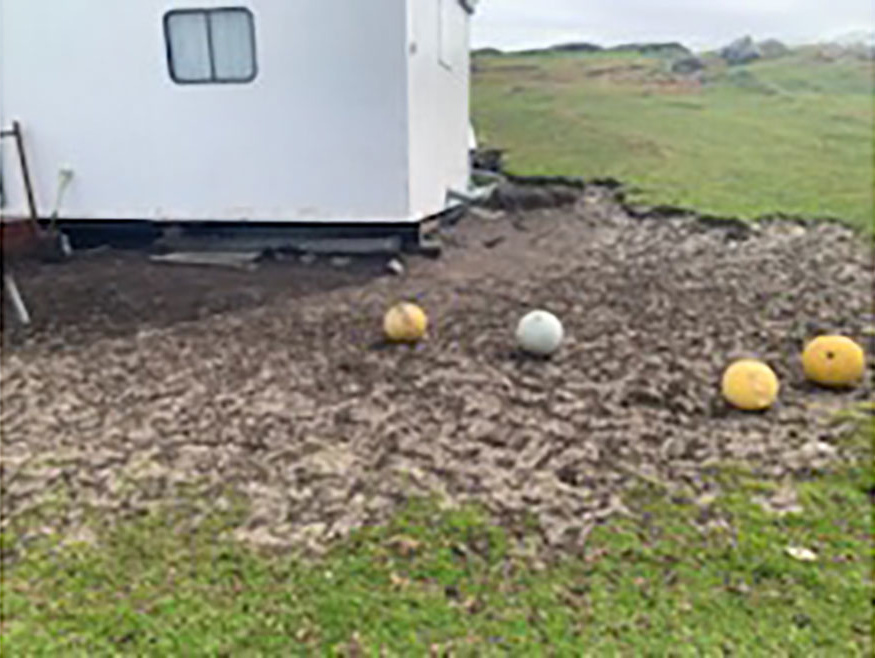
Traveling further to the south, we visited Stanley in the Falkland Islands. These islands are part of the British Commonwealth, but disputed by Argentina. As part of our travels, we were there to see the penguins. But, as I usually do, I had to observe the plumbing systems. The penguin viewing area was out on a large farm, accessible only by 4-wheel vehicles. So, it is not surprising that the plumbing systems in the rest area/shelter were less than ideal.
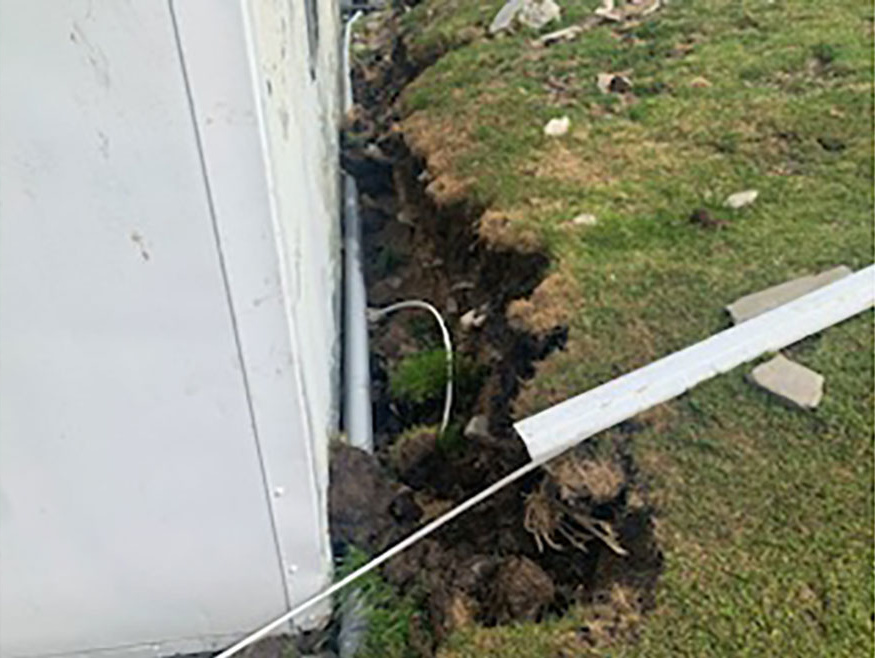
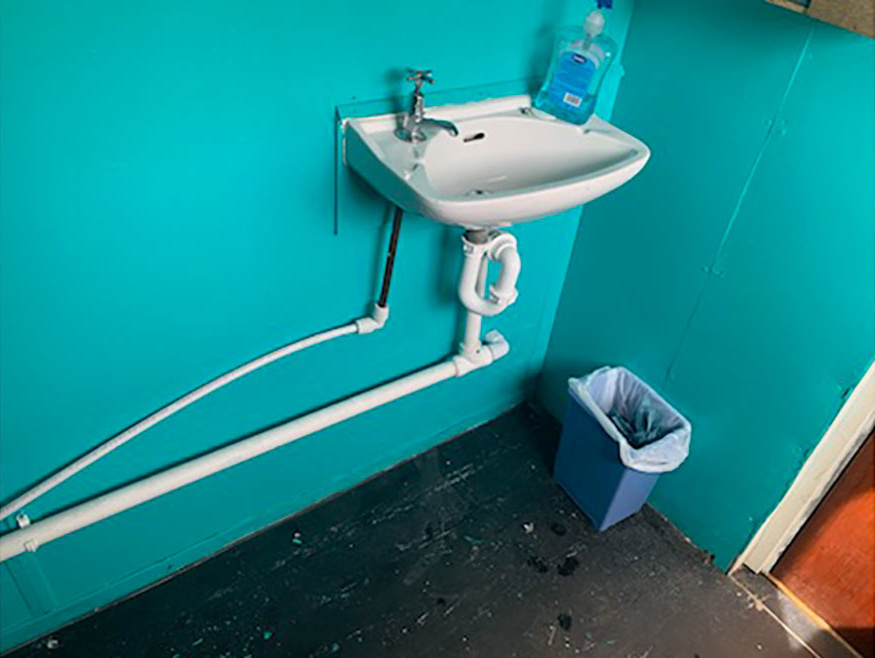
The shelter was basically a trailer or shipping container that had been modified to serve the intended purpose:


While plumbing and the associated codes are utilized all over the world, their implementation and application varies widely. I say this after recent travels to the “end of the earth” at the southern tip Argentina where the Pan-American Highway has its terminus point in the Puerto Madryn National Park. It is the furthest one can travel by land in the Americas.
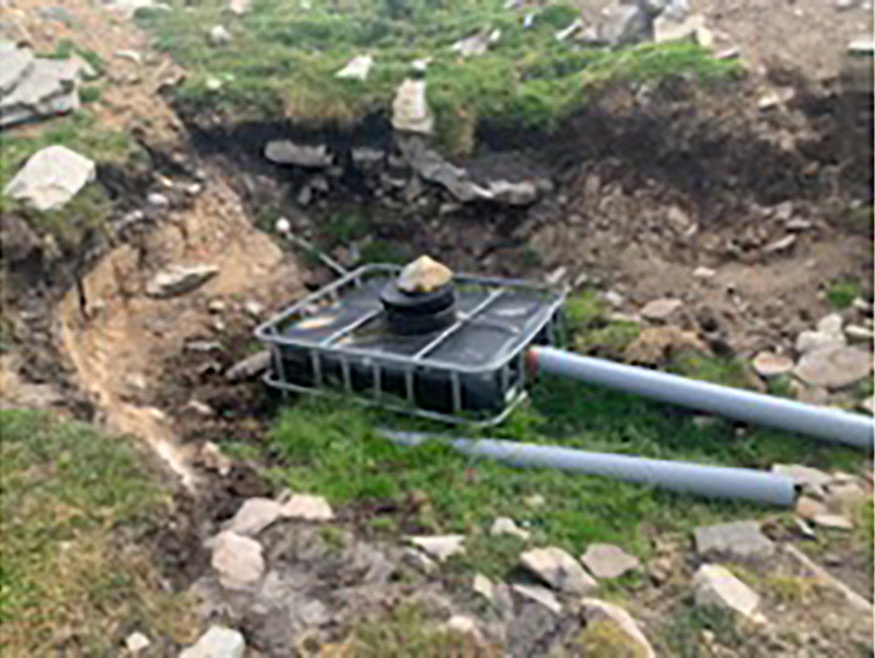
As you should note, the water supply for fixture flushing was supplied by a rainwater catchment container at the exterior rear corner of the shelter. All of the sewage was routed from the shelter’s two restrooms to an above ground storage tank. It is unknown how they clear this tank; is it hauled away to be processed or hauled to some area of the farm and spread along with the animal waste?
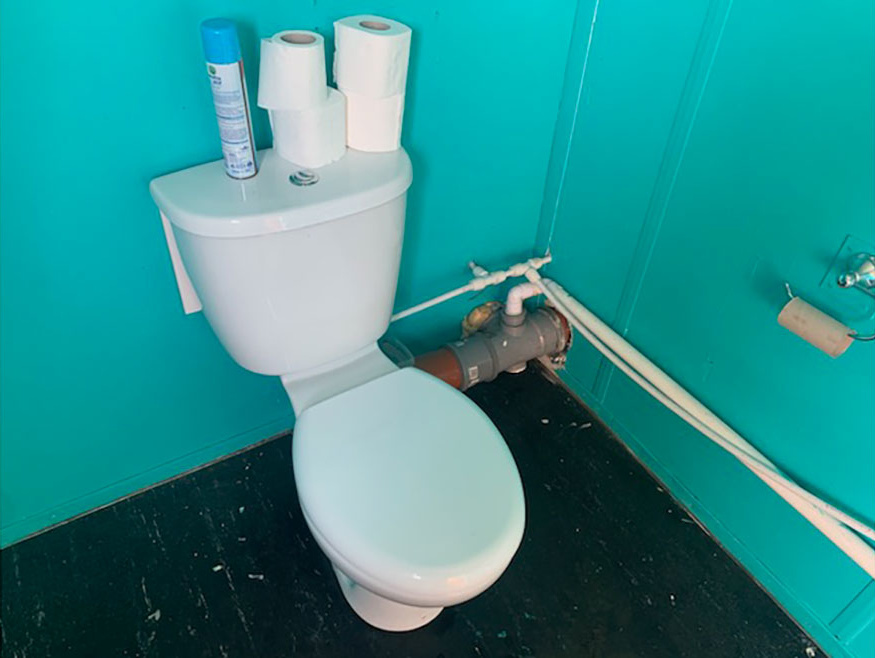
The waste line from the fixtures exits the shelter from the end of the shelter where the fixtures are located, exposed to the elements. This waste line wraps around the building and runs toward the storage tank along the back of the building, generally exposed. Each restroom had a water closet and lavatory. The water closet was some type of back-flush fixture that simply connected to the 4” waste line. The lavatories were mounted back-to-back utilizing a glorified “S” trap arrangement. Venting did not seem to be a major concern, although given the normal wind conditions any odors would have been quickly dissipated. It was an interesting excursion to see the penguins and observe the interesting plumbing.
As I normally do on such trips, the one thing that I must do is stop and to enjoy a local beer. So, upon my return to Stanley, I found Victory Bar a friendly local pub. As you can observe from the following photographs, freezing conditions do not appear to be a problem.
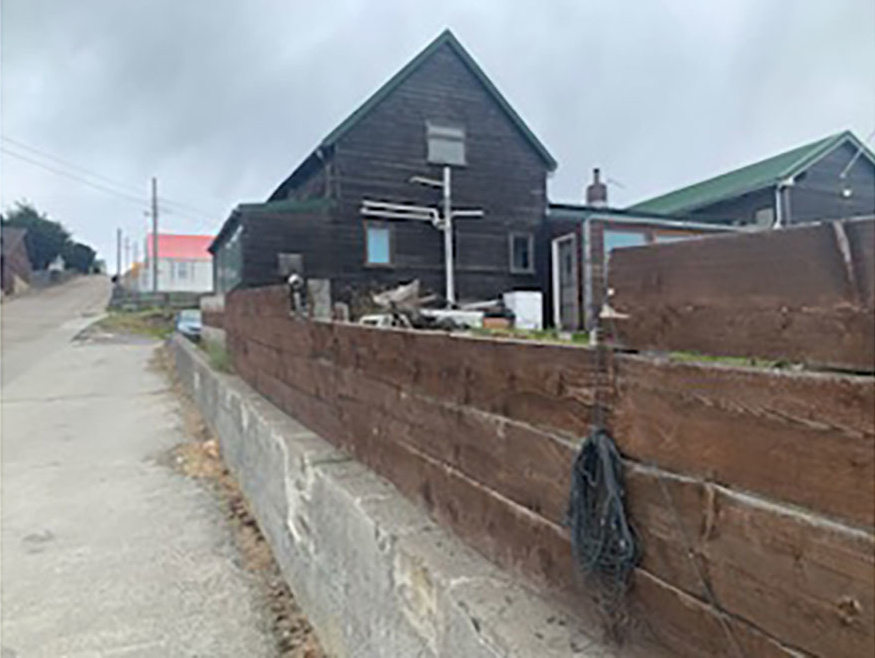
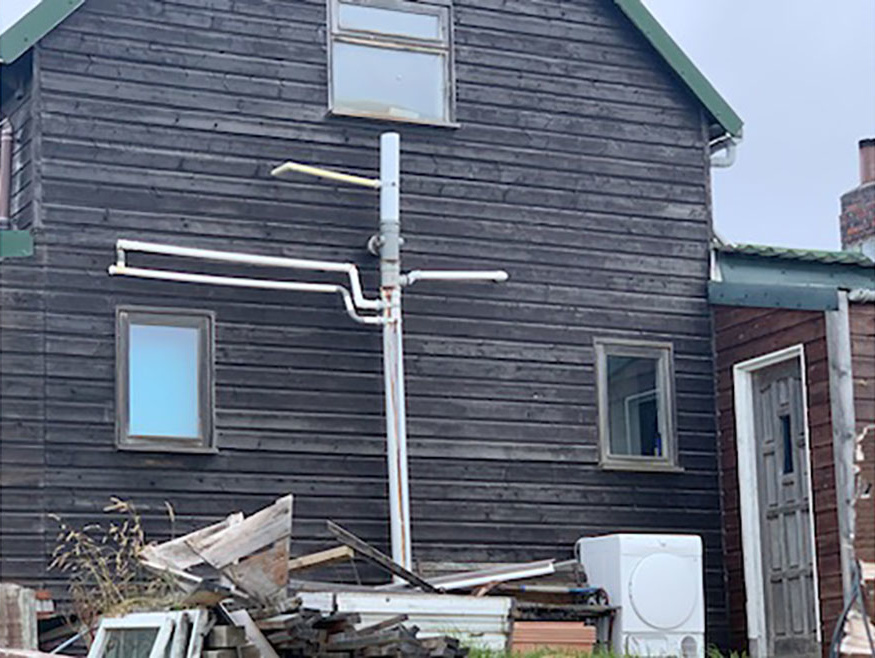
As with many facilities on the island, much of the plumbing is exposed on the exterior of the building. At least that collection of pipe had a vent although the vent appears to just below a non-operable window.
The local pub was as advertised, friendly and the local ale was Rock Hopper:
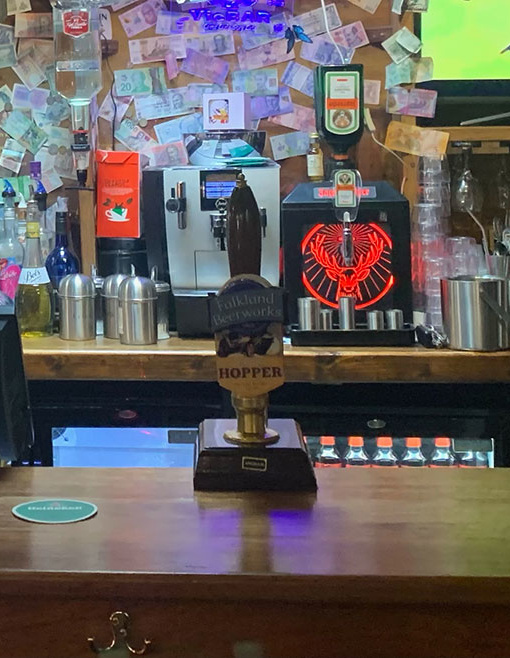
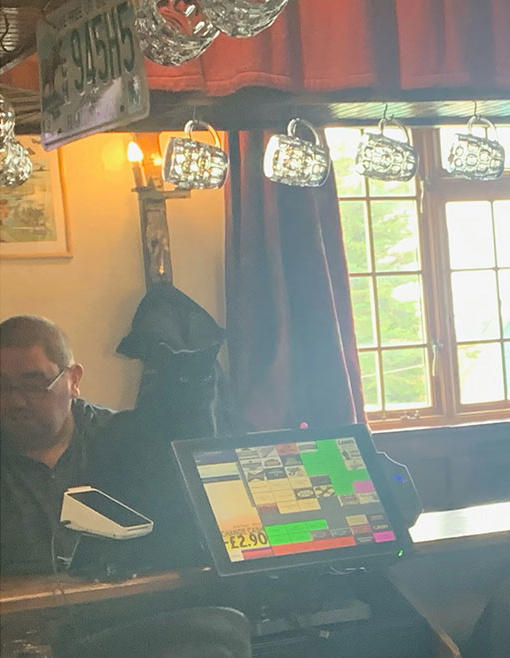
It was dispensed from a hand pump beer tap while chilled, it was not cold. But I did enjoy the ale and the company; everyone was friendly including the house black cat (look just above the left upper corner of the register).
Looking for a reprint of this article?
From high-res PDFs to custom plaques, order your copy today!


