search
cart
facebook instagram twitter linkedin youtube
  • Sign In
  • Create Account
  • Sign Out
  • My Account
  • NEWS
  • PRODUCTS
    • FEATURED PRODUCTS
  • CONTRACTORS
    • BATH & KITCHEN PRO
    • BUSINESS MANAGEMENT
    • HIGH EFFICIENCY HOMES
    • TECHNOLOGY
    • WATER TREATMENT
    • PMC COLUMNS
      • Dave Yates: Contractor’s Corner
      • John Siegenthaler: Hydronics Workshop
      • Kenny Chapman: The Blue Collar Coach
      • Matt Michel: Service Plumbing Pros
      • Scott Secor: Heating Perceptions
  • ENGINEERS
    • CONTINUING EDUCATION
    • DECARBONIZATION | ELECTRIFICATION
    • FIRE PROTECTION
    • GEOTHERMAL | SOLAR THERMAL
    • PIPING | PLUMBING | PVF
    • PME COLUMNS
      • Christoph Lohr: Strategic Plumbing Insights
      • David Dexter: Plumbing Talking Points
      • James Dipping: Engineer Viewpoints
      • John Seigenthaler: Renewable Heating Design
      • Lowell Manalo: Plumbing Essentials
      • Misty Guard: Guard on Compliance
  • RADIANT & HYDRONICS
    • RADIANT COMFORT REPORT
    • THE GLITCH & THE FIX
  • INSIGHTS
    • CODES
    • GREEN PLUMBING & MECHANICAL
    • PROJECT PROFILES
    • COLUMNS
      • Codes Corner
      • Natalie Forster: Editorial Opinion
      • Guest Editorial
  • MEDIA
    • EBOOKS
    • PODCASTS
    • VIDEOS
    • WEBINARS
  • RESOURCES
    • INDUSTRY CALENDAR
    • DIRECTORIES
    • PM BOOKSTORE
    • CE CENTER
    • MARKET RESEARCH
    • CLASSIFIEDS
  • EMAGAZINE
    • EMAGAZINE
    • ARCHIVE ISSUES
    • CONTACT
    • ADVERTISE
    • PME EMAGAZINE ARCHIVES
  • SIGN UP!
Radiant & HydronicsRadiant Comfort Report

Radiant Comfort Report

Residential retrofit maintains historic appearance

By Dillon Wilson
Residential retrofit maintains historic appearance

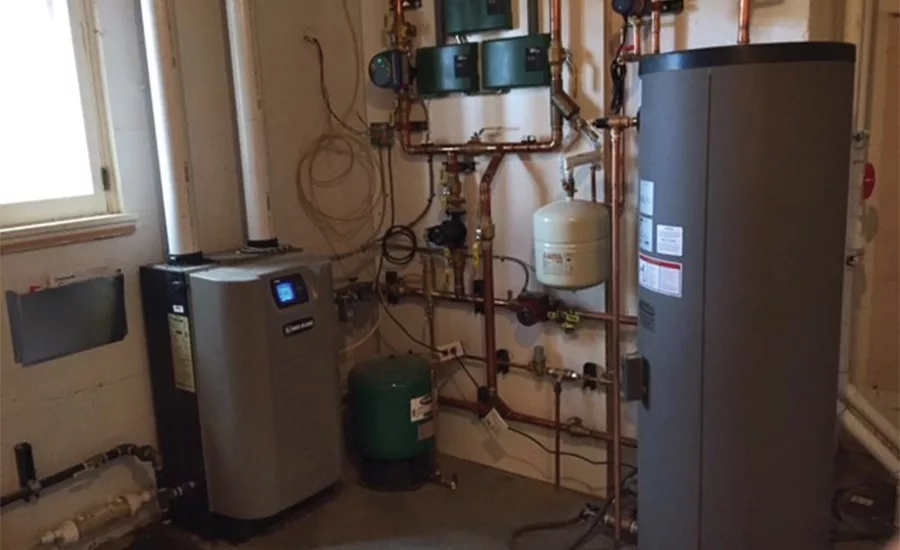
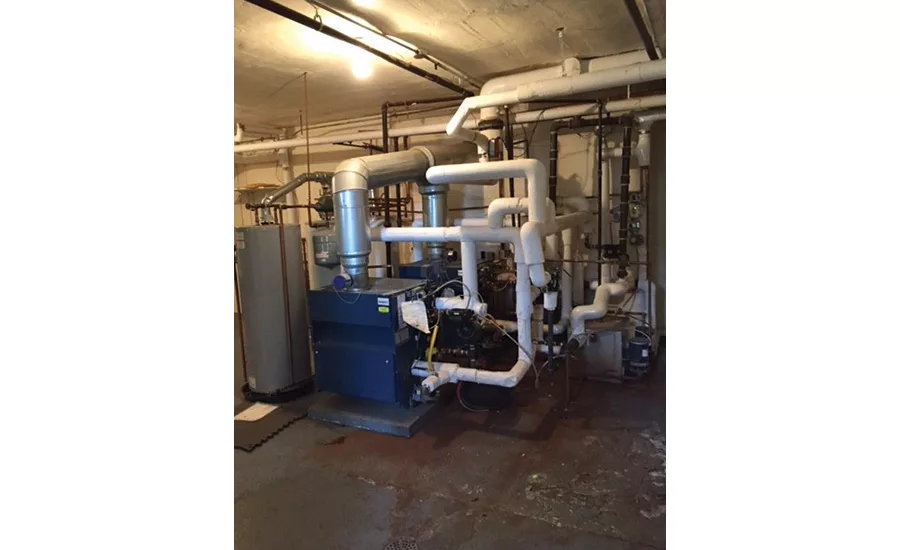
Denver-based Advanced Hydronics replaced the existing steam boiler heating system of a historic home built in 1933 with a hot–water, forced-circulation heating system to provide better temperature control. Photo credit: Dillon Wilson.
hot-water system

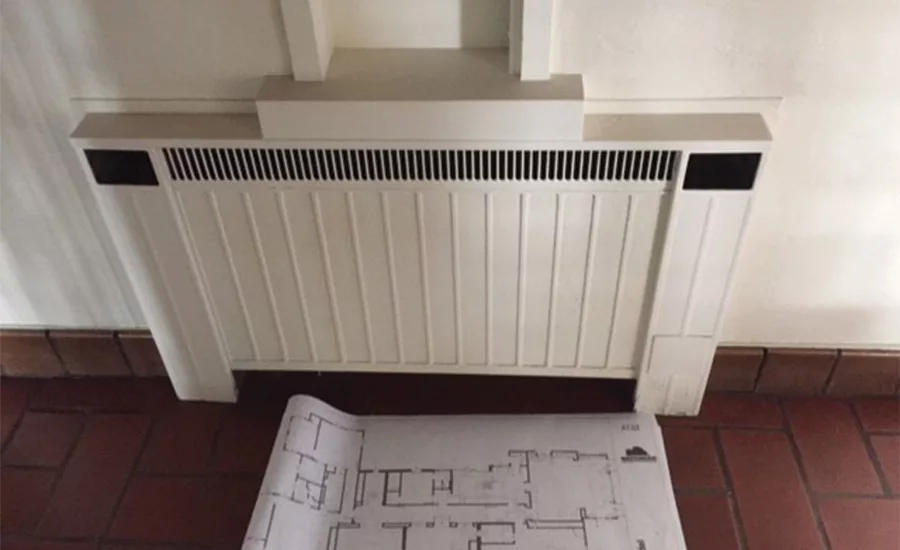
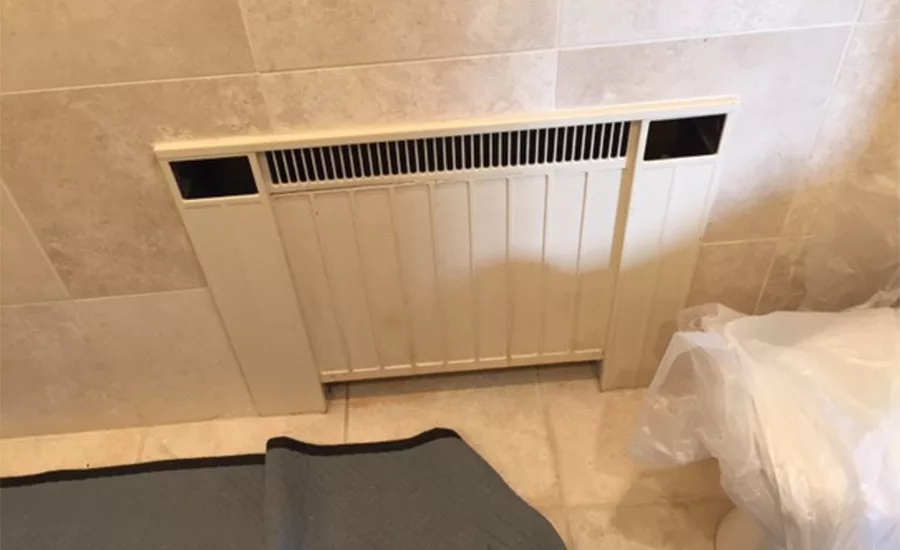
To convert to a hot-water system, the existing steam traps were removed from the radiators and recessed wall units and replaced with new hot-water valves or thermostatic radiator valves (TRVs).
hot-water system

To convert to a hot-water system, the existing steam traps were removed from the radiators and recessed wall units and replaced with new hot-water valves or thermostatic radiator valves (TRVs).
hot-water system

To convert to a hot-water system, the existing steam traps were removed from the radiators and recessed wall units and replaced with new hot-water valves or thermostatic radiator valves (TRVs).
hot-water system

To convert to a hot-water system, the existing steam traps were removed from the radiators and recessed wall units and replaced with new hot-water valves or thermostatic radiator valves (TRVs).

Residential retrofit maintains historic appearance
hot-water system
hot-water system
hot-water system
hot-water system
June 14, 2019

In the middle of the Front Range, looking down over the Denver skyline and plains, sits a historic property built in 1933 that is undergoing a complete transformation. Our task was to replace the existing steam boiler heating system with a hot–water, forced-circulation heating system to provide better temperature control. The other important factor was by eliminating the original steam piping mains in the basement, the new owners would gain valuable headroom space. 


The specs

The home was mostly stripped down to the studs, but it retained much of the fine woodwork.  The house was built in the Southwest style of architecture with white stucco and dark stone exteriors, and a red tile roof. Unfortunately, the exterior walls were either two-by-fours with no insulation or uninsulated concrete block. The ceilings throughout, and in the two vaulted great rooms, were also uninsulated.

For a total of 6,700 square feet of living space, the existing system consisted of two not very old 199,000 Btu/h steam boilers in a two-pipe steam arrangement supplying a variety of heat emitters. The great rooms had floor-mounted and enclosed cast iron radiators. The basement and garage had ceiling and wall-mounted cast iron radiators. The unique parts of the house were the 19 recessed wall unit heat emitters that were built by an unknown manufacturer.  The question became, do we replace them or try to salvage them? 

"Our task was to replace the existing steam bolier heating system with a hot-water, forced-circulation heating system to provide better temperature control. The other important factor was by eliminating the original steam piping mains in the basement, the new owners would gain valuable headroom space."

We disconnected and disassembled one of the units so it could be air tested to see if it was a viable candidate for conversion from steam to a hot-water system. It held the 30-psi air pressure test, which was a good sign, so we decided to try to salvage them all. Each unit was then disassembled and air tested. Two failed the pressure test, but the rest of the 17 were good. This was great news since we could then reinstall the original heaters to keep the original historic look of the home.  

The recessed wall units had a cast iron front mounted radiant panel plate and a row of fin tube elements in the cabinet, so it was both a radiator and a convector. A label was found on an inside panel, which turned out to be made by Modine Mfg. Co.

I called them to inquire about these units, and if they had any specification data for them. They told me Modine had a fire that wiped out much of their archival material many years ago.  We had no Btu output data for these units, so output estimates were based on other known, but somewhat different emitters.

It was obvious that upgrading the building envelope was going to be of major importance for this approach to work because when converting to a system that runs on 180° F maximum hot water supply temperature instead of approximately 200° steam at the altitude of the home, the Btu output of the emitters is significantly reduced. We performed ACCA Manual J heat load calculations based on the new envelope design and insulation values that were specified. Additionally, one of the great rooms featured a massive fireplace that needed to be properly sealed when not in use. Old wood fireplaces with drafty dampers are a common and preventable infiltration point and a high heat loss area. 


The conversion

To convert to a hot-water system, the existing steam traps were removed from the radiators and recessed wall units and replaced with new hot-water valves or thermostatic radiator valves (TRVs).  In some areas, multiple cast iron radiators are connected and controlled with a single zone valve and thermostat. In other areas, electric actuators are mounted on TRVs installed in the recessed wall units. These are also controlled by wall-mounted thermostats.  Several radiators are installed with non-electric TRVs and get heat whenever the system is on. Four of the larger zones are Wi-Fi-connected for remote monitoring and control. The homeowners are often away, and this allows them the ability to turn up the system so the house is warm when they arrive.   

The heating design for the smaller rooms in the lower level basement area calls for modern steel panel radiators and towel warmers, each with a non-electric TRV. Each panel radiator controls its own output based on the manually adjusted TRV dial setting and is essentially a zone unto itself. We installed a few new cast iron thin tube style radiators to provide heat where the failed recessed wall units had been.  

We chose to install a new, modern 299,000 Btu/h, high efficiency, modulating condensing floor-mounted boiler with outdoor reset and DHW priority. A 119-gallon indirect tank provides the DHW. The single system circulator is a smart pump that varies its speed based on downstream variations in demand as zones open and close. This single system circulator supplies all the variety of heat emitters in the home through a new, two-pipe parallel distribution piping system routed through ceilings, floors and walls.

The project is near completion with the lower level radiators, final trim, thermostats and final commissioning remaining. The main level heat has been operational this winter during interior construction.  

KEYWORDS: boilers radiant heating residential plumbing

Share This Story

Looking for a reprint of this article?
From high-res PDFs to custom plaques, order your copy today!

Dillon Wilson is a design consultant with Advanced Hydronics in Denver. He is involved in the design, specification and sales of hydronic heating systems, including radiant floors, radiators, baseboards, solar thermal, geothermal and snow melting.

Recommended Content

JOIN TODAY
to unlock your recommendations.

Already have an account? Sign In

  • 2025 Next Gen ALL-STARS hero 1440

    2025 Next Gen All Stars: Top 20 Under 40 Plumbing Professionals

    This year’s group of NextGen All-Stars is full of young...
    Plumbing & Mechanical Contractor
    By: Kristen R. Bayles
  • Worker using the Milwaukee Tool SWITCH PACK drain cleaner

    Pipeline profits: Drain cleaning, pipe inspection create opportunities

    Drain cleaning and inspection services offer lucrative...
    Green Plumbing and Mechanical
    By: Nicole Krawcke
  • Uponor employee, Arturo Moreno

    The reinvestment in American manufacturing and training

    Plumbing & Mechanical Chief Editor Nicole Krawcke and...
    Plumbing News
    By: Nicole Krawcke and Natalie Forster
Manage My Account
  • eNewsletters
  • Online Registration
  • Subscription Customer Service
  • eMagazine
  • Manage My Preferences

More Videos

Popular Stories

Hot water pipes

Campus shutdown at Oakland University exposes hidden risks of aging hot-water infrastructure

Floor heating manifold cabinet with flowmeter and PEX pipe.

Elegance extended: How to use the homerun system of connecting heat emitters

Industrial pressure gauge on a tank.

From cutting edge to classic: How to modernize outdated pneumatic control systems

Poll

Will business be up or down in 2025?

Do you anticipate business in 2025 to be up or down in comparison to 2024?
View Results Poll Archive

Products

The Water Came To A Stop

The Water Came To A Stop

See More Products
eBook | 2025 Radiant & Hydronics All Stars

Related Articles

  • Wythe-Hotel

    Radiant retrofit transforms factory into luxury hotel

    See More
  • Aug. 21, 2007 - Indianapolis Maintains Ranking Of Most Affordable Housing Market

    See More
  • Uponor wins award for radiant heating, cooling system in renovated historic building

    See More

Related Products

See More Products
  • Residential_Hydronic_Heatin.gif

    Residential Hydronic Heating Systems Course

  • MHH4-cover-image-301x400.jpg

    Modern Hydronic Heating and Cooling For Residential and Light Commercial Buildings, 4th Edition

  • IRC

    2024 International Residential Code, 1st Edition

See More Products
×

Keep your content unclogged with our newsletters!

Stay in the know on the latest plumbing & piping industry trends.

JOIN TODAY!
  • RESOURCES
    • Advertise
    • Contact Us
    • Directories
    • Store
    • Want More
    • Supply House Times
  • SIGN UP TODAY
    • Create Account
    • eMagazine
    • eNewsletter
    • Customer Service
    • Manage Preferences
  • SERVICES
    • Marketing Services
    • Reprints
    • Market Research
    • List Rental
    • Survey/Respondent Access
  • STAY CONNECTED
    • LinkedIn
    • Facebook
    • Instagram
    • YouTube
    • X (Twitter)
  • PRIVACY
    • PRIVACY POLICY
    • TERMS & CONDITIONS
    • DO NOT SELL MY PERSONAL INFORMATION
    • PRIVACY REQUEST
    • ACCESSIBILITY

Copyright ©2025. All Rights Reserved BNP Media.

Design, CMS, Hosting & Web Development :: ePublishing