Solar Heating Report ― Summer 2009
Solar Beer
Indiana's
largest microbrewery embraces the sun.

Leaving your beer out in the sun doesn’t sound like a good idea, but Upland Brewing Co. says bring on the rays! The roof of this large Indiana microbrewery is now home to 300 solar thermal tubes working to capture the sun’s heat and energy, supplementing the thousands of gallons of water used daily by the company as it makes its satisfying brews.
 Designing and installing the 10 Apricus AP30
evacuated tube panel system was the work of Mann Plumbing Inc., a Bloomington, Ind.,
plumbing contractor that has taken the plunge into the solar heating market.
Our editors had a chance to speak with owner David Mann
during the ribbon-cutting ceremony at Upland
on a beautiful day in mid-April when the brewery was celebrating the project
completion. The party included good food, music and drinks (of course) - and
even some solar education. The brewery also announced the re-naming of its
popular pale ale to “Helios” to honor the sun and the company’s commitment to
alternative energy.
Designing and installing the 10 Apricus AP30
evacuated tube panel system was the work of Mann Plumbing Inc., a Bloomington, Ind.,
plumbing contractor that has taken the plunge into the solar heating market.
Our editors had a chance to speak with owner David Mann
during the ribbon-cutting ceremony at Upland
on a beautiful day in mid-April when the brewery was celebrating the project
completion. The party included good food, music and drinks (of course) - and
even some solar education. The brewery also announced the re-naming of its
popular pale ale to “Helios” to honor the sun and the company’s commitment to
alternative energy.
Besides all the details of the solar installation, Mann shared how he became interested in the solar thermal industry, his views on the secret to solar thermal sales and where he thinks the green movement will take his company.

Then an out-of-the-blue call from a Fort Wayne, Ind., distributor for solar energy projects flipped Mann’s successful business plan upside-down.
“Gary Washington from Solar Usage Now called me and we talked about solar thermal for about 10 minutes. I found I was hooked right away on the idea,” Mann recalls. “As I got more interested, we traded phone calls back and forth.”
The year was 2007. That summer, looking to research solar installations even further, Mann went to the Radiant Panel Association’s annual conference in Hartford, Conn. He hoped to talk and network with a few peers about solar hot water, and measure if it was a viable business endeavor.
“Turns out everybody out there was talking about solar hot water, and there were a lot of displays from manufacturers,” he says.
Convinced now that people in the radiant floor heating trade were moving toward solar thermal as an addition to their radiant floor and hydronic experiences, Mann was excited about the next steps.
“It gave me a strong indication that I might be on the right track: My interest being shared by other professionals who I looked up to. I wanted to follow the lead of those guys.”
Mann’s sister-in-law Amie McCarty apparently came to a similar conclusion at about the same time. Mann tells the story: “I had kept the secret to myself for a couple of months about this solar idea and expanding my business - even from my wife, Mary. But one night I told her, ‘I’m thinking about getting into the solar panel business.’ She said, ‘I can’t believe you said that. Amie just told me yesterday that she’d like to sell solar panels.’”
Embracing her career change, McCarty was hired by the company as its new sales and marketing director and was placed completely in charge of promoting Mann Plumbing’s new solar identity.
Education on the job was essential, and McCarty and Mann read all they could on the subject and talked to as many people as possible. They began by trying to sell systems to homeowners, which turns out to be a very difficult sale in Indiana right now.
Is it because of the economy or the cost of the installation? Well, Mann believes it’s even more than that.
“Electricity is still very cheap in Indiana; it’s a big coal-burning state for electricity,” says Mann. “Unlike the East and West Coasts, energy costs are still fairly low for the Midwest, and there’s a lot of natural gas heating and water heating in the Bloomington area.”
But drive a little further away from Bloomington and it’s mostly propane. Now certainly, propane is going up in cost. So, Mann decided it needed to market commercial projects.
“We began to target businesses - those that used a lot more hot water and would see a definitive savings,” McCarty mentions. “Upland Brewing Co. was a natural.”
Upland Brewing Co. is a relatively young business founded in 1997. In 1998 its Tap Room restaurant opened and Upland distributed its first kegs to its first Bloomington customers and select Indiana venues. Within the year, full distribution of both kegs and bottles began.
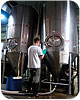
Upland’s facility currently houses two 60-barrel fermenters (affectionately named “King” and “Kong”) and two 30-barrel fermenters. Included in the brewing process, the company uses a mash tun, boiling kettle, hot-storage tanks and smaller R-2 units for building yeast cultures. Several large, stainless-steel conditioning tanks and a bottling machine round out Upland’s Bloomington plant.
As for the beer, five different styles are brewed on a monthly basis by head brewer Caleb Staton and his six-member, full-time brew crew: Wheat (Upland’s signature beer), Amber, Pale, Dragonfly IPA and Bad Elmer’s Porter. Upland also offers seasonal beers, such as its Oktoberfest, Winter Warmer, Chocolate Stout, “Ard Ri” Irish-style Imperial Red Ale, Weizen, Schwarz and Maibock.
In this college town, word-of-mouth (organic) advertising about the brewery’s quality helped expand Upland’s sale and distribution exponentially each year. By 2004, Upland had partnered with three distributors who ultimately extended its reach to all 92 counties in Indiana.
But water-heating bills can get out of hand for Indiana’s largest microbrewery.
“They had two 50-gallon natural gas water heaters for their domestic use - kitchen and bathrooms. Plus they have the restaurant with a full commercial kitchen, so they were using a lot of hot water,” says Mann. There was also a steam boiler for the brewing process; steam for the jacketed kettles Upland uses to heat its mash.
“They were already taking that condensed steam and sending it through a heat exchanger - reclaiming some of that hot water energy. That’s pretty progressive, but Upland’s folks are forward-looking people,” Mann admits.
 However, Mann and McCarty knew their plumbing
company could expand on Upland’s
green tendencies. “If we could get the message to Upland about further energy
and money savings - and its environmental position in the community - I knew
we’d have an OK on the project,” McCarty says.
However, Mann and McCarty knew their plumbing
company could expand on Upland’s
green tendencies. “If we could get the message to Upland about further energy
and money savings - and its environmental position in the community - I knew
we’d have an OK on the project,” McCarty says.
She asked to see the company’s natural gas bills. The brewery was spending thousands to heat water not only for the brewing process but to supply hot water for the growing Tap Room, which now included an outdoor dining-and-music biergarten.
In the spring of 2008, Mann Plumbing wrote up its proposal on the concept of supplementing the brewery’s hot water needs with solar thermal power. Armed with the facts - both energy and monetary savings - it was a relatively easy sell. “Upland was really receptive,” McCarty says.
To offset costs for the project, Upland decided to apply for a state grant from the Alternative Power and Energy (APE) program. Mann Plumbing shepherded Upland through the grant process. “They had to apply for the money themselves,” McCarty explains. “We helped with the financial proposal, design requirements, projected energy savings, etc. However, Upland had to impress the grant panel with their marketing plan - and they did!”
The APE grant is a 50/50 situation, where money is matched by the grant recipient up to $25,000. Upland was awarded $24,000 in grant funds and the project was a go.
“Going green is just part of being in Bloomington,” brewmaster Staton says. “It’s a very green-focused city; it’s had a big recycling push. As a company, we’re in the same line of thinking as the community.”
As we mentioned earlier, the Upland solar thermal system consists of 10 Apricus AP30 evacuated tube panels, which Mann Plumbing secured as a dealer for Solar Usage Now. The panels provide a rated production of 350,000 Btu per day. The solar-heated water is stored in three 200-gallon A.O. Smith Mfg. hot water tanks, with the first tank designed as a priority tank meant to heat to 150 degrees F before it heats the other two tanks piped as one.
“This control strategy allows the large panel array to quickly charge the priority tank for use in the brewery’s kitchen by late morning,” Mann says. With about 600 gallons of storage, Upland is also able to pull solar-heated water from the tanks a couple times a week as a preheat for the mashing process, which requires 175-degree F water.
Staton is impressed by the continuous supply of hot water he’s seen in the few months the system’s been operational. “We pulled the data logger integrated into the solar controller. One way or another we’re heating water,” he says. Staton also doesn’t rule out further solar expansion. “This current array is working well, but it also gives us a chance to expand it in the future - adding panels and reservoirs. The groundwork has been laid.”
The brewery will be part of the American Solar Energy Society’s national solar tour, which will take place nationwide Oct. 3. In addition, Upland hosts open houses several times throughout the year called “Green Drinks” where it opens its doors and shows visitors the new solar thermal system. Especially interested in tours are alternative power groups, students and other green enthusiasts.
“The change to solar has been very well received by our customers,” Staton says. Plus, renaming the Helios ale gave Upland an opportunity to spruce up that brand. “It’s always been a summer-type beer, so it’s great that fell together that way.”
But all warm-fuzzy environmental feelings aside, without matching grant money, the brewery admits it would’ve had to think long and hard about completing a project like this. Mann Plumbing knows this all too well, as it’s seen its pursuit of the residential market fall a bit flat but has found success with commercial.
“I think the key for residential sales is further state incentives of some form,” Mann says, though he’s not optimistic about the time frame. “It was wonderful that the $2,000 federal cap was lifted for solar thermal - it needed to happen, certainly. It’s going to help us a little bit. But right now I think it’s just a manner of education with the state of Indiana.”
Mann doesn’t know what’s going to happen with the solar industry. For him, it all seems to be in transition. “As the United States gets a little bit more on the ball and things start to really roll, there’s going to be so many players involved it’s going to be really confusing for a while. But it’s all going to settle out.”
For now, Mann Plumbing’s solar thermal adventure is all about promotion. “We’re always looking for ways to make the solar package more attractive to our clients,” McCarty says. Mann Plumbing now markets dual-systems for heat, whether hydronic or forced air via a fan coil, and domestic hot water, maximizing the use of the solar collector.
“We’re absolutely in it for the long haul,” Mann says. “It’s important to us. The future is bright for solar in Indiana and the U.S.”
We’ll drink to that.
Leaving your beer out in the sun doesn’t sound like a good idea, but Upland Brewing Co. says bring on the rays! The roof of this large Indiana microbrewery is now home to 300 solar thermal tubes working to capture the sun’s heat and energy, supplementing the thousands of gallons of water used daily by the company as it makes its satisfying brews.
A member of the brew crew measures Upland's quality.
Besides all the details of the solar installation, Mann shared how he became interested in the solar thermal industry, his views on the secret to solar thermal sales and where he thinks the green movement will take his company.
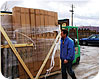
The Mann Plumbing cew puts the final touches on one of the Apricus AP30 solar arrays.
Getting Started
Mann started his plumbing company in 1992. Back then it focused mostly on service and repair, residential remodel and some light commercial jobs. In a natural progression, Mann became interested in hydronics - radiant floor heating, specifically - and installed his first radiant floor system in his own home 10 years ago. He happily added that segment to his list of services, taking on heating clients, and growing successfully in Bloomington and its surrounding areas.Then an out-of-the-blue call from a Fort Wayne, Ind., distributor for solar energy projects flipped Mann’s successful business plan upside-down.
“Gary Washington from Solar Usage Now called me and we talked about solar thermal for about 10 minutes. I found I was hooked right away on the idea,” Mann recalls. “As I got more interested, we traded phone calls back and forth.”
The year was 2007. That summer, looking to research solar installations even further, Mann went to the Radiant Panel Association’s annual conference in Hartford, Conn. He hoped to talk and network with a few peers about solar hot water, and measure if it was a viable business endeavor.
“Turns out everybody out there was talking about solar hot water, and there were a lot of displays from manufacturers,” he says.
Convinced now that people in the radiant floor heating trade were moving toward solar thermal as an addition to their radiant floor and hydronic experiences, Mann was excited about the next steps.
“It gave me a strong indication that I might be on the right track: My interest being shared by other professionals who I looked up to. I wanted to follow the lead of those guys.”
Mann’s sister-in-law Amie McCarty apparently came to a similar conclusion at about the same time. Mann tells the story: “I had kept the secret to myself for a couple of months about this solar idea and expanding my business - even from my wife, Mary. But one night I told her, ‘I’m thinking about getting into the solar panel business.’ She said, ‘I can’t believe you said that. Amie just told me yesterday that she’d like to sell solar panels.’”
Embracing her career change, McCarty was hired by the company as its new sales and marketing director and was placed completely in charge of promoting Mann Plumbing’s new solar identity.
Education on the job was essential, and McCarty and Mann read all they could on the subject and talked to as many people as possible. They began by trying to sell systems to homeowners, which turns out to be a very difficult sale in Indiana right now.
Is it because of the economy or the cost of the installation? Well, Mann believes it’s even more than that.
“Electricity is still very cheap in Indiana; it’s a big coal-burning state for electricity,” says Mann. “Unlike the East and West Coasts, energy costs are still fairly low for the Midwest, and there’s a lot of natural gas heating and water heating in the Bloomington area.”
But drive a little further away from Bloomington and it’s mostly propane. Now certainly, propane is going up in cost. So, Mann decided it needed to market commercial projects.
“We began to target businesses - those that used a lot more hot water and would see a definitive savings,” McCarty mentions. “Upland Brewing Co. was a natural.”
Head brewer Caleb Staton gets his first look at Upland's new solar thermal tubes.
Not-So-Strange Brew
Bloomington is a college town, home to Indiana University and probably the greenest city in the state. The population is filled with that unique demographic cocktail of progressive ivory-tower types; blossoming and open-minded student bodies; a hard-working middle class looking for a break on monthly bills; and folks eyeing a comfortable retirement.Upland Brewing Co. is a relatively young business founded in 1997. In 1998 its Tap Room restaurant opened and Upland distributed its first kegs to its first Bloomington customers and select Indiana venues. Within the year, full distribution of both kegs and bottles began.
Upland’s facility currently houses two 60-barrel fermenters (affectionately named “King” and “Kong”) and two 30-barrel fermenters. Included in the brewing process, the company uses a mash tun, boiling kettle, hot-storage tanks and smaller R-2 units for building yeast cultures. Several large, stainless-steel conditioning tanks and a bottling machine round out Upland’s Bloomington plant.
As for the beer, five different styles are brewed on a monthly basis by head brewer Caleb Staton and his six-member, full-time brew crew: Wheat (Upland’s signature beer), Amber, Pale, Dragonfly IPA and Bad Elmer’s Porter. Upland also offers seasonal beers, such as its Oktoberfest, Winter Warmer, Chocolate Stout, “Ard Ri” Irish-style Imperial Red Ale, Weizen, Schwarz and Maibock.
In this college town, word-of-mouth (organic) advertising about the brewery’s quality helped expand Upland’s sale and distribution exponentially each year. By 2004, Upland had partnered with three distributors who ultimately extended its reach to all 92 counties in Indiana.
But water-heating bills can get out of hand for Indiana’s largest microbrewery.
“They had two 50-gallon natural gas water heaters for their domestic use - kitchen and bathrooms. Plus they have the restaurant with a full commercial kitchen, so they were using a lot of hot water,” says Mann. There was also a steam boiler for the brewing process; steam for the jacketed kettles Upland uses to heat its mash.
“They were already taking that condensed steam and sending it through a heat exchanger - reclaiming some of that hot water energy. That’s pretty progressive, but Upland’s folks are forward-looking people,” Mann admits.
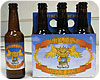
Upland Brewing Co.'s re-named Helios Pale Ale.
She asked to see the company’s natural gas bills. The brewery was spending thousands to heat water not only for the brewing process but to supply hot water for the growing Tap Room, which now included an outdoor dining-and-music biergarten.
In the spring of 2008, Mann Plumbing wrote up its proposal on the concept of supplementing the brewery’s hot water needs with solar thermal power. Armed with the facts - both energy and monetary savings - it was a relatively easy sell. “Upland was really receptive,” McCarty says.
To offset costs for the project, Upland decided to apply for a state grant from the Alternative Power and Energy (APE) program. Mann Plumbing shepherded Upland through the grant process. “They had to apply for the money themselves,” McCarty explains. “We helped with the financial proposal, design requirements, projected energy savings, etc. However, Upland had to impress the grant panel with their marketing plan - and they did!”
The APE grant is a 50/50 situation, where money is matched by the grant recipient up to $25,000. Upland was awarded $24,000 in grant funds and the project was a go.
“Going green is just part of being in Bloomington,” brewmaster Staton says. “It’s a very green-focused city; it’s had a big recycling push. As a company, we’re in the same line of thinking as the community.”
As we mentioned earlier, the Upland solar thermal system consists of 10 Apricus AP30 evacuated tube panels, which Mann Plumbing secured as a dealer for Solar Usage Now. The panels provide a rated production of 350,000 Btu per day. The solar-heated water is stored in three 200-gallon A.O. Smith Mfg. hot water tanks, with the first tank designed as a priority tank meant to heat to 150 degrees F before it heats the other two tanks piped as one.
“This control strategy allows the large panel array to quickly charge the priority tank for use in the brewery’s kitchen by late morning,” Mann says. With about 600 gallons of storage, Upland is also able to pull solar-heated water from the tanks a couple times a week as a preheat for the mashing process, which requires 175-degree F water.
Staton is impressed by the continuous supply of hot water he’s seen in the few months the system’s been operational. “We pulled the data logger integrated into the solar controller. One way or another we’re heating water,” he says. Staton also doesn’t rule out further solar expansion. “This current array is working well, but it also gives us a chance to expand it in the future - adding panels and reservoirs. The groundwork has been laid.”
Upland's beer distribution reaches all 92 counties in Indiana.
Looking Ahead
As a recipient of an APE grant, Upland now must become an example for the renewable energy community (a stipulation in the funding contract). That’s just fine with the company - it has been very enthusiastic about showing off its green power.The brewery will be part of the American Solar Energy Society’s national solar tour, which will take place nationwide Oct. 3. In addition, Upland hosts open houses several times throughout the year called “Green Drinks” where it opens its doors and shows visitors the new solar thermal system. Especially interested in tours are alternative power groups, students and other green enthusiasts.
“The change to solar has been very well received by our customers,” Staton says. Plus, renaming the Helios ale gave Upland an opportunity to spruce up that brand. “It’s always been a summer-type beer, so it’s great that fell together that way.”
But all warm-fuzzy environmental feelings aside, without matching grant money, the brewery admits it would’ve had to think long and hard about completing a project like this. Mann Plumbing knows this all too well, as it’s seen its pursuit of the residential market fall a bit flat but has found success with commercial.
“I think the key for residential sales is further state incentives of some form,” Mann says, though he’s not optimistic about the time frame. “It was wonderful that the $2,000 federal cap was lifted for solar thermal - it needed to happen, certainly. It’s going to help us a little bit. But right now I think it’s just a manner of education with the state of Indiana.”
Mann doesn’t know what’s going to happen with the solar industry. For him, it all seems to be in transition. “As the United States gets a little bit more on the ball and things start to really roll, there’s going to be so many players involved it’s going to be really confusing for a while. But it’s all going to settle out.”
For now, Mann Plumbing’s solar thermal adventure is all about promotion. “We’re always looking for ways to make the solar package more attractive to our clients,” McCarty says. Mann Plumbing now markets dual-systems for heat, whether hydronic or forced air via a fan coil, and domestic hot water, maximizing the use of the solar collector.
“We’re absolutely in it for the long haul,” Mann says. “It’s important to us. The future is bright for solar in Indiana and the U.S.”
We’ll drink to that.
Looking for a reprint of this article?
From high-res PDFs to custom plaques, order your copy today!