
Fire Sprinklers Protect Homes At Risk
Numbers don’t lie. More fire deaths
occur in homes than anywhere else.

 A national survey commissioned by the Society of Fire
Protection Engineers and conducted in 2008 by Synovate reveals that 79 percent
of Americans feel safer from fires at home than in a public building. Yet statistics show that the fire problem in
the United States is overwhelmingly a home fire problem.
A national survey commissioned by the Society of Fire
Protection Engineers and conducted in 2008 by Synovate reveals that 79 percent
of Americans feel safer from fires at home than in a public building. Yet statistics show that the fire problem in
the United States is overwhelmingly a home fire problem.
Homes account for about 80 percent of all fire deaths in a typical year and more than 95 percent of all deaths in structure fires in a typical year, according to the National Fire Protection Association. Fire is the largest single cause of property loss in the United States. The NFPA reports $5.7 billion in direct property loss from fire in one- and two-family dwellings. This data suggests any improvements in overall fire safety must be improvements in home fire safety.
Fire sprinklers provide a level of protection that no other fire protection technology can offer, according to the nonprofit Home Fire Sprinkler Coalition. A residential sprinkler will activate from the heat of an early-stage fire (135 degrees F-165 degrees F). Only the sprinkler closest to the fire will operate, spraying water directly on the flames.
This quick action immediately controls and often extinguishes the flames, slowing the spread of deadly heat and toxic smoke and providing occupants with more time to safely escape. In 90 percent of fires in sprinklered homes, only one sprinkler was required to contain the fire. Sprinklers release about one tenth the amount of water that is applied by fire department hoses, which pump more than 200 gallons of water per minute, per hose.
Data shows that occupants cause most residential fires. Today’s larger homes, with open designs, allow a fire to grow quickly and spread throughout the house. The expanded use of synthetic material along with other modern contents and furnishings provide a powerful fuel source. Research conducted by the National Institute of Standards and Technology has shown that home fires become deadly in as few as three minutes.
“Fires today seem to burn faster and kill quicker, because the contents of modern homes can burn faster and more intensely,” says NIST Researcher Richard Bukowski. New and old homes alike are filled with these newer contents and furnishings, which provide less margin for success for smoke alarms and add to the need for fire sprinklers.
Nationwide, the installation of home fire sprinkler systems installed in new construction of one- and two-family homes has increased. According to the Residential Fire Safety Institute, about 300 municipalities require fire sprinkler systems in all new homes. In California, more than 85 communities have this requirement. In Illinois, 61 municipalities passed ordinances. In Maryland, eight counties and 19 municipalities have adopted some type of residential legislation.
The 2006 editions of NFPA 1, Uniform Fire Code; NFPA 101, Life Safety Code and NFPA 5000, Building Construction and Safety Code all contain a sprinkler requirement for one- and two-family dwellings.
In September 2008, the International Code Council modified its International Residential Code in favor of fire sprinklers in single-family homes.
In one- and two-family dwellings, NFPA 13D only requires sprinklers in an occupied space. Sprinklers are not required in smaller bathrooms or closets, garages, attics or attached open structures, such as carports or porches. This helps keep the systems affordable. Statistics show that fires rarely start in these areas, and so the standard takes cost and practicality into consideration by not requiring installation there. In today’s building codes, garages are usually separated from the living quarters by some noncombustible materials like gypsum board.
As for design and installation, NFPA 13D recognizes two different approaches: stand-alone and multipurpose. A stand-alone system is a dedicated sprinkler system that doesn’t share piping with domestic plumbing fixtures. Multipurpose systems have piping that serves both sprinklers and domestic plumbing fixtures. Each approach has unique advantages, which you can learn more about by reviewing NFPA 13D.
With respect to piping materials, plastic and copper piping are most commonly used. The two types of plastic that are permitted are chlorinated-polyvinyl chloride (or CPVC) and cross-linked polyethylene (or PEX). Plastic pipe has simplified installation and made sprinkler systems cost-effective to install.
In areas where freezing is a concern, NFPA 13D provides guidance for proper insulation and freeze protection, similar to other water piping in the home. A common approach to avoid installing pipe in the attic is the use of sidewall sprinklers in areas beneath an unfinished attic.
Sprinklers typically operate off the household water main. When the water supply is a well, or there is not enough water pressure, a 300-gallon tank will be enough to supply the required 10 minutes of water.
Fire sprinklers can be roughed in anytime after the plumbing and HVAC installation and trimmed at the same time other contractors are working. In a large home, an entire sprinkler system can be installed in a day or two.
The insurance industry banks on the fact that installing fire sprinklers not only protects against fire injuries and deaths, sprinklers also protect against fire damage. As an incentive for customers, insurance companies offer discounts ranging from 5 percent to 30 percent off the fire portion of homeowner premiums.
No one knows better than first responders how quickly a home fire grows and spreads, becoming lethal to occupants as well as to firefighters. Since publication of the 1973 watershed national report “America Burning,” the fire safety field generally - and the fire service in particular - have been vocal advocates for increasing home fire sprinkler installations as a means to reduce residential fire injuries and deaths.
A version of this article appeared previously in PM Engineer, PM’s sister publication.
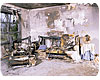
Photos of the same living room after fires with a sprinkler...
... and without a sprinkler system. (All graphics courtesy of the Home Fire Sprinkler Coalition.)
Homes account for about 80 percent of all fire deaths in a typical year and more than 95 percent of all deaths in structure fires in a typical year, according to the National Fire Protection Association. Fire is the largest single cause of property loss in the United States. The NFPA reports $5.7 billion in direct property loss from fire in one- and two-family dwellings. This data suggests any improvements in overall fire safety must be improvements in home fire safety.
Fire sprinklers provide a level of protection that no other fire protection technology can offer, according to the nonprofit Home Fire Sprinkler Coalition. A residential sprinkler will activate from the heat of an early-stage fire (135 degrees F-165 degrees F). Only the sprinkler closest to the fire will operate, spraying water directly on the flames.
This quick action immediately controls and often extinguishes the flames, slowing the spread of deadly heat and toxic smoke and providing occupants with more time to safely escape. In 90 percent of fires in sprinklered homes, only one sprinkler was required to contain the fire. Sprinklers release about one tenth the amount of water that is applied by fire department hoses, which pump more than 200 gallons of water per minute, per hose.
Data shows that occupants cause most residential fires. Today’s larger homes, with open designs, allow a fire to grow quickly and spread throughout the house. The expanded use of synthetic material along with other modern contents and furnishings provide a powerful fuel source. Research conducted by the National Institute of Standards and Technology has shown that home fires become deadly in as few as three minutes.
“Fires today seem to burn faster and kill quicker, because the contents of modern homes can burn faster and more intensely,” says NIST Researcher Richard Bukowski. New and old homes alike are filled with these newer contents and furnishings, which provide less margin for success for smoke alarms and add to the need for fire sprinklers.
Nationwide, the installation of home fire sprinkler systems installed in new construction of one- and two-family homes has increased. According to the Residential Fire Safety Institute, about 300 municipalities require fire sprinkler systems in all new homes. In California, more than 85 communities have this requirement. In Illinois, 61 municipalities passed ordinances. In Maryland, eight counties and 19 municipalities have adopted some type of residential legislation.
The 2006 editions of NFPA 1, Uniform Fire Code; NFPA 101, Life Safety Code and NFPA 5000, Building Construction and Safety Code all contain a sprinkler requirement for one- and two-family dwellings.
In September 2008, the International Code Council modified its International Residential Code in favor of fire sprinklers in single-family homes.
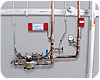
A typical riser found in a Chicago-area home from a stand-alone system. The fire sprinkler system does not go through the water meter, but a backflow is required.
NFPA 13D - The Installation Standard
NFPA 13D is the installation standard for fire sprinkler systems in one- and two-family dwellings. It is referenced by the IRC and by other model codes as the guide for installing residential sprinkler systems. The primary purpose is to save lives, and the goal is to provide 10 minutes of sprinkler flow to allow occupants time to escape and the fire department to respond.In one- and two-family dwellings, NFPA 13D only requires sprinklers in an occupied space. Sprinklers are not required in smaller bathrooms or closets, garages, attics or attached open structures, such as carports or porches. This helps keep the systems affordable. Statistics show that fires rarely start in these areas, and so the standard takes cost and practicality into consideration by not requiring installation there. In today’s building codes, garages are usually separated from the living quarters by some noncombustible materials like gypsum board.
As for design and installation, NFPA 13D recognizes two different approaches: stand-alone and multipurpose. A stand-alone system is a dedicated sprinkler system that doesn’t share piping with domestic plumbing fixtures. Multipurpose systems have piping that serves both sprinklers and domestic plumbing fixtures. Each approach has unique advantages, which you can learn more about by reviewing NFPA 13D.
With respect to piping materials, plastic and copper piping are most commonly used. The two types of plastic that are permitted are chlorinated-polyvinyl chloride (or CPVC) and cross-linked polyethylene (or PEX). Plastic pipe has simplified installation and made sprinkler systems cost-effective to install.
In areas where freezing is a concern, NFPA 13D provides guidance for proper insulation and freeze protection, similar to other water piping in the home. A common approach to avoid installing pipe in the attic is the use of sidewall sprinklers in areas beneath an unfinished attic.
Sprinklers typically operate off the household water main. When the water supply is a well, or there is not enough water pressure, a 300-gallon tank will be enough to supply the required 10 minutes of water.
Installation, Insurance Issues
In general, fire sprinkler systems require very little maintenance. The sprinklers themselves require none at all. While NFPA 13D does not require a flow switch, it is recommended that systems with a flow switch and/or alarm be tested annually by the home-owner or the sprinkler contractor. Backflow prevention devices are not required by NFPA 13D.Fire sprinklers can be roughed in anytime after the plumbing and HVAC installation and trimmed at the same time other contractors are working. In a large home, an entire sprinkler system can be installed in a day or two.
The insurance industry banks on the fact that installing fire sprinklers not only protects against fire injuries and deaths, sprinklers also protect against fire damage. As an incentive for customers, insurance companies offer discounts ranging from 5 percent to 30 percent off the fire portion of homeowner premiums.
No one knows better than first responders how quickly a home fire grows and spreads, becoming lethal to occupants as well as to firefighters. Since publication of the 1973 watershed national report “America Burning,” the fire safety field generally - and the fire service in particular - have been vocal advocates for increasing home fire sprinkler installations as a means to reduce residential fire injuries and deaths.
A version of this article appeared previously in PM Engineer, PM’s sister publication.
Links
Looking for a reprint of this article?
From high-res PDFs to custom plaques, order your copy today!