
Social Networks: What's In It For Me?
Tired of being a best-kept secret? Social media is all about
customers connecting with you and your brand.
 While we can’t promise a magical increase in
sales, this month’s introduction to social media networks will explain why a
well-maintained Facebook or Twitter account can help your company’s traditional
means of word-of-mouth business explode.
While we can’t promise a magical increase in
sales, this month’s introduction to social media networks will explain why a
well-maintained Facebook or Twitter account can help your company’s traditional
means of word-of-mouth business explode.
“Many people get on, get overwhelmed and get off. They’re scared,” says Melissa Galt, interior designer and marketing consultant with five-plus years’ experience with social media (www.facebook.com/melissagalt). She offered several teleseminars on the subject this year, and PM sat in on a few. Galt discovered this marketing medium the “long, hard way,” but she says the connections she’s made online have opened up her networks and her life.
For her, online networking is all about making those tiny bonds of connections with potential clients. “If you’ve found that your list of contacts has stagnated, social networking can get it moving again,” Galt explains. “Educate, relate, excite. These are some of your aims for social media.”
In the United States alone, total minutes spent on social networking sites have increased 83 percent year-over-year (Nielsen Co., June 2009). Your customers - of all demographics - have turned to the Internet for their information and lately have preferred to do the searching themselves.
“Instead of continuing to push marketing messages out, effective marketers adapt to this consumer behavior by creating marketing campaigns that pull people into their business. This strategy is called inbound marketing,” say the marketing researchers at HubSpot.com. “Inbound marketers offer the public useful information, tools and resources to attract people to their site, while also interacting and developing relationships with consumers on the Web.”
“The change in the economy pressured me to look toward different marketing ideas,” he tells PM. “We are reaching friends of friends. Some people are clicking on our paid ads and reaching our Web page.” However, they’re not booking calls, he admits. “It’s only name building for now.”
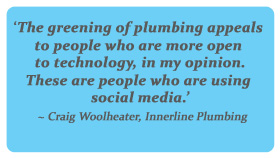
Craig Woolheater of Innerline Plumbing in Dallas agrees: “It is another avenue to get your company’s name out there at little to no cost.” Woolheater, a member of PHCC’s Quality Service Contractors, has been using social networks on a personal basis for several years, and only in the past year has he used it for his business. He didn’t have any expectations for the venture, but hopes it eventually leads to revenue. “We profile projects and company news. We’re connecting with customers, both new and existing,” he says.
Industry manufacturers, too, have watched social media grow in popularity and are not letting a chance to increase their brand awareness pass them by.
Decolav recently held a month-long contest at its new Facebook fan page (www.facebook.com/decolav) and gave away a bathroom suite of fixtures to one lucky winner. Director of Marketing Brian Brigham uses his growing fan base to connect with potential customers by offering décor and design tips, educating on shape and color trends, and launching industry and company news to devotees. “Facebook is reenergizing our marketing efforts,” Brigham says.
He’s seen the most positive results from posting photography of Decolav’s extensive product catalog. “I get calls from designers and retailers referencing certain photos and requesting product information,” he explains.
As of this writing, American Standard is requesting consumers share their “Favorite Toilet Stories” for the chance to win its Champion 4 fixture. The company has used Facebook to promote the contest and its new fan page, and through Twitter (@AmercanStandard) it educates followers by linking to news they can use.
Check out news aggregator sites such as Mashable, Alltop, StumbleUpon and Digg, and follow popular posts at YouTube and Twitter.
Offering comments about yourself is a good idea, too; however, take note: Social does not mean personal. Avoid TMI (too much information) situations that could turn your customers off or make things uncomfortable for you and your company.
A good guide to follow is educational consultant Angela Maiers’ 70-20-10 rule:
“Don’t pitch and sell the whole time. It’s a turnoff,” Galt warns. “You hate it when it happens to you. Don’t do it to your online friends.” She instead suggests you keep it interesting and actionable.
“Posting one marketing message after another isn’t effective. It doesn’t attract prospects or engage customers,” notes Debra Ellis, founder of Wilson & Ellis Consulting. “If you are not going to use it to establish relationships, stay away - far, far away.”
Sometimes social media is a lesson in what not to do. “These are your fans; you have to make it worth their while,” says Brigham.

“My time is precious,” says Galt, who spends roughly five to seven hours per week monitoring her various online accounts. “Plus, I’m old-fashioned.” She likes to take her online network to the next level; she writes them a direct message or e-mail, picks up the phone or meets them face-to-face. To realize the opportunities, you have to make contact in the “real world” too.
The key point to remember is that sites like Facebook and Twitter are tools, not toys. It is important to understand your target audience before you climb on board. The Internet is unfathomably expansive, so stay focused and selective. Deep, not wide, Galt suggests. Otherwise, you’ll take anyone’s business … and anyone will show up. “Scattered efforts get scattered results,” she warns.
Ellis urges newbies to start the Twitter Test: “Consistently tweet for a minimum of 30 days; 90 is even better. Watch your traffic and sales to ensure you’re receiving a return on your investment. At the end of the trial, decide whether to continue or quit.”
Customers and sales aside, social media sites can connect you with people and businesses relating to your industry. It is a good way to help your company grow and educate itself about today’s issues, and even help you develop relationships with reporters, bloggers and other media people, who can aid you in getting your name seen even further.
“I started out with zero friends, just like everybody else,” Galt says encouragingly, whose fan base is now in the thousands. “Social media can revolutionize the way you do business. Be proactive. Find your ideal clients and work with them.”
Become a PM fan (www.facebook.com/PMmagazine) and follow us on Twitter (@PnMmag).
2. Tagline. Keep it short and sweet. This is your “elevator pitch” that sums up your company philosophy in a few sentences. “People don’t read; they glance and skim,” consultant Melissa Galt says.
3. Profile. Don’t ignore your bio page. Fill it in with details - schools, hobbies, favorite movies, interests and involvements. Not only is this the place to display your “humanness,” it’s the way customers will find and form connections with you through similarities.
4. Regular Interaction. Treat your social media accounts like a pet. You have to walk it and feed it and give it attention. “What happens to your pet if you leave it alone while on vacation?” Galt asks. “The same will happen to your profile. Don’t let it languish in obscurity!”
5. Plan. Don’t wing it. Be selective. Be focused. Know why you’re using the networks and commit.
“Many people get on, get overwhelmed and get off. They’re scared,” says Melissa Galt, interior designer and marketing consultant with five-plus years’ experience with social media (www.facebook.com/melissagalt). She offered several teleseminars on the subject this year, and PM sat in on a few. Galt discovered this marketing medium the “long, hard way,” but she says the connections she’s made online have opened up her networks and her life.
For her, online networking is all about making those tiny bonds of connections with potential clients. “If you’ve found that your list of contacts has stagnated, social networking can get it moving again,” Galt explains. “Educate, relate, excite. These are some of your aims for social media.”
In the United States alone, total minutes spent on social networking sites have increased 83 percent year-over-year (Nielsen Co., June 2009). Your customers - of all demographics - have turned to the Internet for their information and lately have preferred to do the searching themselves.
“Instead of continuing to push marketing messages out, effective marketers adapt to this consumer behavior by creating marketing campaigns that pull people into their business. This strategy is called inbound marketing,” say the marketing researchers at HubSpot.com. “Inbound marketers offer the public useful information, tools and resources to attract people to their site, while also interacting and developing relationships with consumers on the Web.”
- Editor's note: HubSpot.com has an invaluable resource page. Download their free whitepapers and ebooks, especially "How to Use Facebook For Business" and "How to Use Twitter For Business: A Beginner's Guide". Find them here.
“The change in the economy pressured me to look toward different marketing ideas,” he tells PM. “We are reaching friends of friends. Some people are clicking on our paid ads and reaching our Web page.” However, they’re not booking calls, he admits. “It’s only name building for now.”
Craig Woolheater of Innerline Plumbing in Dallas agrees: “It is another avenue to get your company’s name out there at little to no cost.” Woolheater, a member of PHCC’s Quality Service Contractors, has been using social networks on a personal basis for several years, and only in the past year has he used it for his business. He didn’t have any expectations for the venture, but hopes it eventually leads to revenue. “We profile projects and company news. We’re connecting with customers, both new and existing,” he says.
Industry manufacturers, too, have watched social media grow in popularity and are not letting a chance to increase their brand awareness pass them by.
Decolav recently held a month-long contest at its new Facebook fan page (www.facebook.com/decolav) and gave away a bathroom suite of fixtures to one lucky winner. Director of Marketing Brian Brigham uses his growing fan base to connect with potential customers by offering décor and design tips, educating on shape and color trends, and launching industry and company news to devotees. “Facebook is reenergizing our marketing efforts,” Brigham says.
He’s seen the most positive results from posting photography of Decolav’s extensive product catalog. “I get calls from designers and retailers referencing certain photos and requesting product information,” he explains.
As of this writing, American Standard is requesting consumers share their “Favorite Toilet Stories” for the chance to win its Champion 4 fixture. The company has used Facebook to promote the contest and its new fan page, and through Twitter (@AmercanStandard) it educates followers by linking to news they can use.
You Are What You Tweet
Some of the biggest obstacles to businesses taking their brand on social sites are time and content. “What do I say?!” is their concern. Galt says it’s not about what you’ve had for dinner. “There’s some really cool and relevant information out there - share it!” Many of today’s news sites offer “Share” options, making it easy to reuse links and interesting posts from others in the industry.Check out news aggregator sites such as Mashable, Alltop, StumbleUpon and Digg, and follow popular posts at YouTube and Twitter.
Offering comments about yourself is a good idea, too; however, take note: Social does not mean personal. Avoid TMI (too much information) situations that could turn your customers off or make things uncomfortable for you and your company.
A good guide to follow is educational consultant Angela Maiers’ 70-20-10 rule:
- 70 percent of your posts should share
resources (blogs, articles, industry opinions and tools);
-
20 percent should engage conversations and connections; and
- 10 percent of the time you should chat about yourself, your life, your thoughts.
“Don’t pitch and sell the whole time. It’s a turnoff,” Galt warns. “You hate it when it happens to you. Don’t do it to your online friends.” She instead suggests you keep it interesting and actionable.
“Posting one marketing message after another isn’t effective. It doesn’t attract prospects or engage customers,” notes Debra Ellis, founder of Wilson & Ellis Consulting. “If you are not going to use it to establish relationships, stay away - far, far away.”
Sometimes social media is a lesson in what not to do. “These are your fans; you have to make it worth their while,” says Brigham.
- Editor's note:
Don't forget to monitor the overall effectiveness of your social media
profile. Visit http://Facebook.Grader.com or http://Twitter.Grader.com and see where you rate.
Take It Off-Line
As you can guess from the testimonials above, contractors may not yet be experiencing sales through their social media efforts. However, once the connections are made, it’s time to take your online contacts and move them off-line.“My time is precious,” says Galt, who spends roughly five to seven hours per week monitoring her various online accounts. “Plus, I’m old-fashioned.” She likes to take her online network to the next level; she writes them a direct message or e-mail, picks up the phone or meets them face-to-face. To realize the opportunities, you have to make contact in the “real world” too.
The key point to remember is that sites like Facebook and Twitter are tools, not toys. It is important to understand your target audience before you climb on board. The Internet is unfathomably expansive, so stay focused and selective. Deep, not wide, Galt suggests. Otherwise, you’ll take anyone’s business … and anyone will show up. “Scattered efforts get scattered results,” she warns.
Ellis urges newbies to start the Twitter Test: “Consistently tweet for a minimum of 30 days; 90 is even better. Watch your traffic and sales to ensure you’re receiving a return on your investment. At the end of the trial, decide whether to continue or quit.”
Customers and sales aside, social media sites can connect you with people and businesses relating to your industry. It is a good way to help your company grow and educate itself about today’s issues, and even help you develop relationships with reporters, bloggers and other media people, who can aid you in getting your name seen even further.
“I started out with zero friends, just like everybody else,” Galt says encouragingly, whose fan base is now in the thousands. “Social media can revolutionize the way you do business. Be proactive. Find your ideal clients and work with them.”
Become a PM fan (www.facebook.com/PMmagazine) and follow us on Twitter (@PnMmag).
5 Essentials For Every Network
1. Head Shot. Don’t be anonymous. Social media won’t work otherwise. Have a smiling, current photo as your avatar (visual online self) - not an obscure shot taken 20 feet away. It’s called Facebook, after all.2. Tagline. Keep it short and sweet. This is your “elevator pitch” that sums up your company philosophy in a few sentences. “People don’t read; they glance and skim,” consultant Melissa Galt says.
3. Profile. Don’t ignore your bio page. Fill it in with details - schools, hobbies, favorite movies, interests and involvements. Not only is this the place to display your “humanness,” it’s the way customers will find and form connections with you through similarities.
4. Regular Interaction. Treat your social media accounts like a pet. You have to walk it and feed it and give it attention. “What happens to your pet if you leave it alone while on vacation?” Galt asks. “The same will happen to your profile. Don’t let it languish in obscurity!”
5. Plan. Don’t wing it. Be selective. Be focused. Know why you’re using the networks and commit.
Links
Looking for a reprint of this article?
From high-res PDFs to custom plaques, order your copy today!


