A Warm Towel, Please
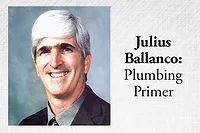
Julius and a colleague banter
the question: Are towel warmers and panel rads 'green'?

A few weeks ago, I was staying in one of those really high-end hotels. You know the ones I am talking about: The ones that if it weren’t for the meeting I was attending, I would probably pay more than $500 a night for a room. Of course, thanks to the meeting, we were paying peanuts.
While having breakfast with a friend, he commented that even in this high-end hotel, they have these little placards that remind you to be green-friendly.
It was the typical note that read, “If you don’t mind, hang up your towel and reuse it. After a few days, leave the towel on the floor and we will replace it.”
Being green conscious, he said that every day he hung up his towel. When he returned to the room, the hung-up towel was replaced.
I told him that it was probably window dressing to make him feel good.
He went on to say that the maids visited his room twice a day and replaced the towels during both visits if he used them.
We started talking about this reuse of towels. I said that I had a problem with hanging the towels up because so many times the towels were still wet the next day. They were uncomfortable to use and since I was paying for it, I put the towels on the floor.
I said that if the hotel wanted to be “green-friendly” it would have a towel warmer in the bathroom. Then I would hang up my towel to reuse.
My friend then said that I had been to Europe too many times. “Towel warmers are a European thing that won’t catch on here in the states.”
He responded that I probably would prefer a warmer bathroom, too.
“Yeah,” I said, “I would!” Just like the Europeans, they could have a panel heater in the bathroom that you could turn on when you are using the room. It is a real nice feature, even in low-end hotels in Europe.
“You just can’t go to your local supply house and pick up a towel warmer or panel heater,” he said.
The easy response was, “Shouldn’t they be available?” Of course, I knew better and said that any supply house could have them in a few days.
Still not sold on towel warmers or panel heaters, he questioned my thought process, saying that he considered them to be anti-green. He asked me if they wasted a lot of energy.
This started a long conversation on green, energy and the benefits of towel warmers and panel heaters. Being a geek like me, he didn’t mind the banter for the next half hour.
A towel warmer is completely inside the building, so it is just another way to add heat (and comfort) to the building. Why not direct the heat to a source that will increase personal comfort?
If you think about it, many times you will see people throwing towels and wet clothes over the radiator or register to dry. This started to make sense to my friend. Then he threw in, “What about during the cooling season? Are you going to keep the boiler going just to warm towels?”
OK, so he had a good point. It would seem inappropriate to run the boiler just to warm the towels. But, I raised the point of the boiler being used for hot water in the building. Still his question remained. “You want to circulate the hot water just for towel warmers?”
This was my chance. I answered, “No, I want the towel warmer to be connected to the hot water distribution system for the plumbing fixtures.”
Think about it, you always have hot water in a bathroom. For most buildings, we recirculate hot water to keep it hot. Have the hot water flow through the towel warmer as it is being circulated.
My friend hadn’t thought about that. But surprisingly, it made sense. Towel warmers operate at low temperatures. Hot water for the plumbing fixtures is circulated at lower temperatures than the boiler water. So the hot water distribution system seemed like the perfect fit.
Next came the concerns about backflow protection. I responded that there is nothing present to contaminate the potable water; it circulates in a closed system. We run the potable hot water system in copper pipes with copper and brass fittings. Just make sure the towel warmer falls into that category - copper, brass and bronze.
After losing all of his points, my friend said, “What about the panel heater during the cooling season?”
I acquiesced that you don’t need to warm a bathroom during the cooling season. The panel heater should be connected to the boiler. But, promoting the European concept, I added that the panel heaters are also better for heating the bedroom than those through-the-wall units.
We need to be thinking more about these applications. Individual control is nice and panel heaters provide that flexibility.
As we finished breakfast, he asked if I really believed so strongly in towel warmers and panel heaters. “Absolutely,” was my answer. I went on to say that our contractors are so intelligent that within the next five years, towel warmers and panel heaters will be the norm, not the anomaly.
Contractors can offer comfort at a reasonable price, plus they make more money installing the systems. Homeowners and hotel proprietors will love them for it.
He asked, “Did you ever consider electric units?”
I responded, “Heresy, never!”
As we left the breakfast room, he looked at me. “You’re probably going to write about this, aren’t you?”
“Yup.”
A few weeks ago, I was staying in one of those really high-end hotels. You know the ones I am talking about: The ones that if it weren’t for the meeting I was attending, I would probably pay more than $500 a night for a room. Of course, thanks to the meeting, we were paying peanuts.
While having breakfast with a friend, he commented that even in this high-end hotel, they have these little placards that remind you to be green-friendly.
It was the typical note that read, “If you don’t mind, hang up your towel and reuse it. After a few days, leave the towel on the floor and we will replace it.”
Being green conscious, he said that every day he hung up his towel. When he returned to the room, the hung-up towel was replaced.
I told him that it was probably window dressing to make him feel good.
He went on to say that the maids visited his room twice a day and replaced the towels during both visits if he used them.
We started talking about this reuse of towels. I said that I had a problem with hanging the towels up because so many times the towels were still wet the next day. They were uncomfortable to use and since I was paying for it, I put the towels on the floor.
I said that if the hotel wanted to be “green-friendly” it would have a towel warmer in the bathroom. Then I would hang up my towel to reuse.
My friend then said that I had been to Europe too many times. “Towel warmers are a European thing that won’t catch on here in the states.”
Not Just For Europe
I disagreed with him. I said that towel warmers were readily available in the United States, that contractors should offer them more often, and that high-end hotels would probably appreciate having them.He responded that I probably would prefer a warmer bathroom, too.
“Yeah,” I said, “I would!” Just like the Europeans, they could have a panel heater in the bathroom that you could turn on when you are using the room. It is a real nice feature, even in low-end hotels in Europe.
“You just can’t go to your local supply house and pick up a towel warmer or panel heater,” he said.
The easy response was, “Shouldn’t they be available?” Of course, I knew better and said that any supply house could have them in a few days.
Still not sold on towel warmers or panel heaters, he questioned my thought process, saying that he considered them to be anti-green. He asked me if they wasted a lot of energy.
This started a long conversation on green, energy and the benefits of towel warmers and panel heaters. Being a geek like me, he didn’t mind the banter for the next half hour.
Green Or Anti-Green
In the simple approach to towel warmers, they appear to waste energy. But do they really? To waste energy, you have to throw the energy away. Inside a building, that would mean throwing it to the outside.A towel warmer is completely inside the building, so it is just another way to add heat (and comfort) to the building. Why not direct the heat to a source that will increase personal comfort?
If you think about it, many times you will see people throwing towels and wet clothes over the radiator or register to dry. This started to make sense to my friend. Then he threw in, “What about during the cooling season? Are you going to keep the boiler going just to warm towels?”
OK, so he had a good point. It would seem inappropriate to run the boiler just to warm the towels. But, I raised the point of the boiler being used for hot water in the building. Still his question remained. “You want to circulate the hot water just for towel warmers?”
This was my chance. I answered, “No, I want the towel warmer to be connected to the hot water distribution system for the plumbing fixtures.”
Think about it, you always have hot water in a bathroom. For most buildings, we recirculate hot water to keep it hot. Have the hot water flow through the towel warmer as it is being circulated.
My friend hadn’t thought about that. But surprisingly, it made sense. Towel warmers operate at low temperatures. Hot water for the plumbing fixtures is circulated at lower temperatures than the boiler water. So the hot water distribution system seemed like the perfect fit.
Next came the concerns about backflow protection. I responded that there is nothing present to contaminate the potable water; it circulates in a closed system. We run the potable hot water system in copper pipes with copper and brass fittings. Just make sure the towel warmer falls into that category - copper, brass and bronze.
After losing all of his points, my friend said, “What about the panel heater during the cooling season?”
I acquiesced that you don’t need to warm a bathroom during the cooling season. The panel heater should be connected to the boiler. But, promoting the European concept, I added that the panel heaters are also better for heating the bedroom than those through-the-wall units.
We need to be thinking more about these applications. Individual control is nice and panel heaters provide that flexibility.
As we finished breakfast, he asked if I really believed so strongly in towel warmers and panel heaters. “Absolutely,” was my answer. I went on to say that our contractors are so intelligent that within the next five years, towel warmers and panel heaters will be the norm, not the anomaly.
Contractors can offer comfort at a reasonable price, plus they make more money installing the systems. Homeowners and hotel proprietors will love them for it.
He asked, “Did you ever consider electric units?”
I responded, “Heresy, never!”
As we left the breakfast room, he looked at me. “You’re probably going to write about this, aren’t you?”
“Yup.”
Links
Looking for a reprint of this article?
From high-res PDFs to custom plaques, order your copy today!