
GPS: The Next Generation
Maurice Maio
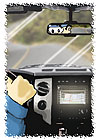
The service and repair business has been one of the benefactors of the satellite-based technology known as global positioning system (GPS). Originally designed for the military to provide for precise navigation for ships, planes, trucks, tanks, etc. (as close as three feet), the possibilities for GPS now extend to a wide range of services. For example, the position of trucks at any given time can be tracked with computer software. In fact, their routes for the entire day can be tracked, plotted and printed.
Knowing the location of any truck offers the company several advantages. It goes without saying that drivers who are aware of the data provided are less likely to plan errands, or stop at ATMs or stores on the way to a service appointment. Even more valuable is the theft deterrent value. A truck is less likely to be stolen if the potential thief knows or suspects the truck has a GPS tracking unit installed. Since the location of the truck could be determined at any moment, law enforcement personnel could rapidly retrieve the missing truck.
Keeping the truck going only where it is supposed to go can produce measurable savings for the business. Trucks will only be driven to service appointments. Less miles on the truck means it will last longer; fuel costs will also be reduced. However, there are more benefits.
Not Just Location
Besides location information, GPS signals provide the ability to match the precise time of day with location. Using software to combine that data and record it offers a level of accuracy for tracking truck movements unavailable in the past.
Going further with the data, a company can maintain records for each truck that could be used to actively monitor all mileage, maintenance and operating condition of the truck. Data can be sent back to the office about all aspects of the truck's operation using a hardware/software combination to provide information such as oil pressure, engine temperature and other data relating to the operational status of the truck.
The software now available integrates all this pertinent data and displays it in a useable format for management decision-making. Just request a report on the data desired and it’s instantly available. Better yet, automatic alerts are available for any items programmed into the system, such as engine problems or maintenance intervals.
With time, location and distance data, any truck’s exact path could be recreated, monitored and printed on paper for review. By integrating all that information into a management report format - even automating some of the alerts - managers have a much simpler task of keeping track of trucks.
Dispatching
The ability to identify the exact location of any truck permits real-time data for decisions by dispatchers about the next job assignment. They can see the time on the jobsite and location of the truck. Computing the best selection of a technician and truck for the next job is simple - even simpler if the software assists.
Data on the technician driving the truck should also be available from the software. That background may be an important part of the decision on which technician may be the best one for the job, given his current location. There are more benefits, too.
Security
In addition to the theft deterrent, it is valuable to have data transmitted to the office on any break-ins from data showing a locked window or if a door is broken into. Even though the truck is not taken, there may be valuable equipment and parts inside that need protection. An instant alert sent to dispatch could help stop a theft in action.
Navigation
Today, most high-end cars sold have not just a GPS system but a database of streets and businesses (“Want to find a Chinese restaurant? Two miles on the right.”)
Some of the newest integrated, GPS-based management systems have expanded with even more benefits and cost savings. Navigation guidance is one of those benefits. Guiding a technician to the job can save many miles on trucks, and lots of fuel. By directing the technician to the customer’s location, the program eliminates wrong turns and false starts.
Integrated Systems
The key here is an integrated system. As you can see, the potential from the combination of a comprehensive software system and all the data available from GPS offers managers limitless potential to save the business money by reducing wasted time, driving miles and better security. Dispatch has never had it so good.
Recently, two companies have partnered with one another to offer another combination of these advantages. Garmin, well known for GPS navigation systems in cars and planes, has joined with Xora, producer of location-based workforce management solutions. Together what they have produced is the user-friendly navigation found in cars for technicians.
It “talks,” too. Upcoming street names are spoken. Shorter routes are selected when traffic delays are detected. Every turn is called out, so no computing, map reading or looking for streets is necessary.
On the management side, time records, job status reports and the data needed for dispatch are provided. Seems like a combination that will offer the industry some money-saving advantages.
More hardware/software combinations are appearing, so you need to keep up with the products that will benefit your business. With rising fuel prices, every mile not wasted saves money.
Cost Analysis
In looking at software and GPS systems for keeping track of trucks, maintenance and assisting with dispatch, the best approach is to do a rough cost analysis. You can estimate the cost savings and the time it would take for you to pay off the investment.
In your calculations do not forget to include the potential for reducing theft, loss, damage and other intangibles that are more difficult to put on a balance sheet. Convenience and ease of dispatching also should be included in the calculations.
In looking at some of the available features, select your desired combination of: mapping, location recording, time records, truck maintenance features and security options.
GPS-based management systems are not just gimmicks any more. They are becoming a required part of your management system for cost savings.
For further information on Xora and its features, visit www.xora.com.
Links
Looking for a reprint of this article?
From high-res PDFs to custom plaques, order your copy today!