Pumping Electrons
Learn the basics of solar photovoltaic
systems.
It’s therapeutic for me to occasionally write about something not involving pipes, circulators and valves. Don’t get me wrong - I’m still as passionate as ever about hydronics. In fact, my mantra has recently become: “Hydronics technology is the glue that holds nearly all thermally based renewable energy systems together.” I see the future of hydronics technology inexorably linked with renewable energy sources.
Over the last few months, this column has demonstrated that belief by discussing the use of hydronics in combination with renewable energy heat sources like solar collectors, solid-fuel boilers and ground-source heat pump systems.
As energy pros, it’s good to occasionally look beyond our daily bread-and-butter approaches and gain a broader understanding of renewable energy and energy use in general. What happens in this broader context will surely influence what we do in years to come. It might even alter our career paths.
In the late ’70s and early ’80s, residential photovoltaic systems were mostly used in off-grid homes with spirited owners willing to adapt their lives around very austere allocations of electricity. Back then, the phrase “solar energy system” usually implied use of solar energy for some type of heating.
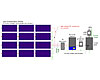
During the last two decades, the relative market size for solar thermal vs. solar photovoltaic systems has reversed itself. Today, the 800-pound gorilla of renewable energy is grid-connected solar photovoltaic systems. They consist of an array of solar PV modules that convert sunlight into DC electricity in a very reliable manner. The DC power is processed through an inverter to create 60-hertz AC power that’s synchronized to the local utility signal and, thus, able to offset utility-supplied power in a home or other building. The basic layout of a grid-connect solar PV system is shown in Figure 1.
The last 30 years have produced many improvements in grid-connected solar photovoltaic technology, improvements that have pushed the technology to where it has become a commonly recognized feature on roofs in the sunnier areas of the United States and worldwide. The market for grid-connected solar PV systems is currently growing at about 17 percent per year. Most predictions have this rate going even higher in coming years.
The inflation-adjusted price of solar PV modules on a dollar-per-watt basis has dropped to about 1/9 of what it was in the early ’80s. The cost of small grid-connected PV systems in 2010 will be about 55 percent of their cost just 10 years ago. The technology used to fabricate solar PV cells and modules has improved to where life expectancies for current generation PV modules is approaching 30 years.
As with other electronics, inverter technology has transitioned from analog to digital. Modern inverters are sophisticated devices with a host of safety and data-logging features, and ultra-efficient circuits that squeeze 95 to 98 percent of the incoming DC power into high-quality AC output.
A number of factors created the “perfect storm” that finally persuaded us to move ahead on this.
First, the barn roof was planned to someday have a solar array added to it. It’s unshaded, faces directly south and has a slope of 45 degrees, which is within a couple of degrees of the slope that yields maximum annual solar radiation at our latitude.
Second, New York State now has “net metering laws” that allow any surplus electrical energy produced by a solar PV system (as well as other renewable energy technologies) to be fed back into the local utility for full retail credit. This eliminates the need for batteries in a grid-connected PV system. In essence, the utility grid now acts as a free, 100-percent efficient, almost infinite capacity “AC battery” for surplus electrical output. Customers can put energy into their grid and take energy out of the grid at the same rate. They only pay for their “net” usage on a monthly basis. There’s even a provision to be paid by the utility if the net usage is negative, which is possible but unlikely, especially in a climate like upstate New York.
 Finally,
the combination of state and federal tax credits, along with a $4-per-watt
rebate from the New York State Energy Research and Development Authority, made
the financials too good to pass up. Our final cost for the installed system,
after rebates and credits, was around $5,900, about a third of the initial
installation cost. The system was impeccably installed, professionally
inspected and has a five-year warranty on all materials and
labor.
Finally,
the combination of state and federal tax credits, along with a $4-per-watt
rebate from the New York State Energy Research and Development Authority, made
the financials too good to pass up. Our final cost for the installed system,
after rebates and credits, was around $5,900, about a third of the initial
installation cost. The system was impeccably installed, professionally
inspected and has a five-year warranty on all materials and
labor.
Thus far I’ve been very pleased with the performance of our 2KW system. The only maintenance I’ve done is occasional snow removal from the array using a roof rake after a significant snow drop.
In its first year of operation, the system produced about 2,300 kilowatt-hours of electricity, almost exactly what Gro Solar predicted for an average year. Our current price for electricity is about 13 cents per KWHR. If one assumes this price will inflate at 4 percent per year, the payback on this system is 14.8 years. Obviously, we can only speculate on how fast the cost of electricity will increase, so the actual payback is yet to be determined.
The “cap and trade” legislation currently pending in the U.S. Congress stands to impact this in a big way. The good news: If this legislation passes, the payback on this PV system will probably get a lot shorter. The bad news: The cost of nearly all energy, and products that are energy-intensive to make or distribute, are likely go up significantly. Your guess is as good as mine...

I kept looking at this steeply sloped lawn area behind a fence that for years has been difficult and somewhat dangerous to mow. Wouldn’t you just know it happened to face directly south and gets fully irradiated from sunrise to sunset. Instead of covering it with shrubs to eliminate the mowing, why not just plant it with another PV array?
A quick check of www.dsireusa.org confirmed the NYSERDA rebate program was still in effect for 2009, but the amounts offered were diminishing. I suspect this has something to do with the sea of red ink New York State is currently swimming in. My reaction - better get it while its there.
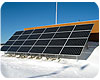
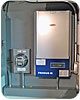
The result is shown in Figure 3. We had the guys from Gro Solar back to install a 4KW-rated ground-mount array. It has twice as many of the same PV modules as the original roof-mounted system. These modules are wired together in three series circuits of eight modules each. These circuits feed another inverter that ties directly to a 20-amp, double-pole breaker in the main panel (see Figure 4).
The second system went online Oct. 1, 2009, and runs like a champ. When the photo of Figure 3 was taken in early January, the outdoor temperature was about 5 degrees F, the wind was blowing and the inverter display was reading 4,080 watts!
Wow, if it performs above its rated maximum power output in January, imagine what it will do during sunny summer months.
This is where things are a bit nonintuitive for us “thermal types.” Being semiconductor devices, PV cells love the cold. The cooler the cells are, the lower their electrical resistance and the greater their power output (for a given level of solar intensity). Anything you can do to keep them cool - such as installing the array in a windy location or ensuring good air flow along the back of roof-mounted modules - will increase energy yield. From what I’ve observed, these systems produce their greatest energy output on sunny fall and spring days when the combination of solar intensity and somewhat cooler ambient temperature is apparently optimal. Too bad solar thermal collectors don’t behave this way.
This spring I plan to install treated lumber borders under the array, then cover the soil with building wrap and a few inches of crushed stone ballast. The lawn mower and string trimmer have made their final passes over this slope.
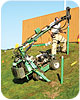
For starters, some of the installation hardware and methods used to mount solar PV modules is easily adaptable to solar thermal collectors. Figure 5 shows the rear side of our ground-mounted PV array. The vertical steel posts, made by Techno Metal Post, are 2-inch schedule 40 galvanized steel, with a single helical auger welded to one end. They’re installed by a small, hydraulically driven machine that literally screws them into the ground, as seen in Figure 6. Each steel post is covered by a loose-fitting, green plastic sleeve before installation. These sleeves prevent surrounding soil from freezing to the posts and, thus, discourage frost lift. A very simple but effective detail.
The remaining ground frame is a collection of more 2-inch galvanized steel pipe, aluminum fittings, braces and stainless-steel fasteners. The finished frame is simple, strong and maintenance-free. This hardware could easily be used to support an array of solar thermal collectors when the next opportunity presents itself.
A grid-connected PV system, net metering and a ground-source heat pump is an intriguing combination. Surplus energy generated by the PV system can be “banked” back to the utility from spring, through summer and into fall, when heating loads are small and cooling is not required. This energy can then be pulled back from the utility from fall through winter and into spring, when the ground-source heat pump is supplying heat.
Net metering allows this with no penalty for “storing” the energy for a few months. With increasing electrical rates, it’s even conceivable that energy sent back to the utility is worth slightly more when recovered at a later date.
Solar photovoltaic technology also can be used, in a much smaller way, to operate the circulator in some solar domestic water heating systems. There are several products currently on the market for this application. They provide proportional speed pumping through the collector array based on solar intensity. They also ensure flow through glycol-based systems during utility power outages, when AC-only systems are likely to stagnate.
In the near future, you may also be plugging in your hybrid truck or car to charge up its batteries. Some of the “juice” that moves you down the road may have been produced by your solar PV system.
Although most of us earn our living using pipes, circulators and other hydronic components, it’s good to have some basic knowledge of other energy systems that will inevitably cross our paths in the future. I encourage you to read up on solar photovoltaic systems. You already know how to pump water; discover more about pumping electrons.
Figure 1.
It’s therapeutic for me to occasionally write about something not involving pipes, circulators and valves. Don’t get me wrong - I’m still as passionate as ever about hydronics. In fact, my mantra has recently become: “Hydronics technology is the glue that holds nearly all thermally based renewable energy systems together.” I see the future of hydronics technology inexorably linked with renewable energy sources.
Over the last few months, this column has demonstrated that belief by discussing the use of hydronics in combination with renewable energy heat sources like solar collectors, solid-fuel boilers and ground-source heat pump systems.
As energy pros, it’s good to occasionally look beyond our daily bread-and-butter approaches and gain a broader understanding of renewable energy and energy use in general. What happens in this broader context will surely influence what we do in years to come. It might even alter our career paths.
Figure 2.
30 Years Later
When I first entered the solar energy industry in 1978, photovoltaics - the technology for directly converting sunlight into electricity - was in its infancy. NASA was using early-generation photovoltaic panels to power spacecraft. In fact, NASA was about the only entity that could afford photovoltaic technology at its nominal $1,000/watt price during the days of early space missions.In the late ’70s and early ’80s, residential photovoltaic systems were mostly used in off-grid homes with spirited owners willing to adapt their lives around very austere allocations of electricity. Back then, the phrase “solar energy system” usually implied use of solar energy for some type of heating.
During the last two decades, the relative market size for solar thermal vs. solar photovoltaic systems has reversed itself. Today, the 800-pound gorilla of renewable energy is grid-connected solar photovoltaic systems. They consist of an array of solar PV modules that convert sunlight into DC electricity in a very reliable manner. The DC power is processed through an inverter to create 60-hertz AC power that’s synchronized to the local utility signal and, thus, able to offset utility-supplied power in a home or other building. The basic layout of a grid-connect solar PV system is shown in Figure 1.
The last 30 years have produced many improvements in grid-connected solar photovoltaic technology, improvements that have pushed the technology to where it has become a commonly recognized feature on roofs in the sunnier areas of the United States and worldwide. The market for grid-connected solar PV systems is currently growing at about 17 percent per year. Most predictions have this rate going even higher in coming years.
The inflation-adjusted price of solar PV modules on a dollar-per-watt basis has dropped to about 1/9 of what it was in the early ’80s. The cost of small grid-connected PV systems in 2010 will be about 55 percent of their cost just 10 years ago. The technology used to fabricate solar PV cells and modules has improved to where life expectancies for current generation PV modules is approaching 30 years.
As with other electronics, inverter technology has transitioned from analog to digital. Modern inverters are sophisticated devices with a host of safety and data-logging features, and ultra-efficient circuits that squeeze 95 to 98 percent of the incoming DC power into high-quality AC output.
Figure 3.
Further Resistance Was Futile
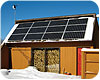
A couple of years ago, my wife and I had an opportunity to do something we had been planning for more than 20 years. We finally had a 2 kilowatt grid-connected solar PV system installed on the south-facing roof of our “barn” (see Figure 2). We hired the company Gro Solar to do the installation.A number of factors created the “perfect storm” that finally persuaded us to move ahead on this.
First, the barn roof was planned to someday have a solar array added to it. It’s unshaded, faces directly south and has a slope of 45 degrees, which is within a couple of degrees of the slope that yields maximum annual solar radiation at our latitude.
Second, New York State now has “net metering laws” that allow any surplus electrical energy produced by a solar PV system (as well as other renewable energy technologies) to be fed back into the local utility for full retail credit. This eliminates the need for batteries in a grid-connected PV system. In essence, the utility grid now acts as a free, 100-percent efficient, almost infinite capacity “AC battery” for surplus electrical output. Customers can put energy into their grid and take energy out of the grid at the same rate. They only pay for their “net” usage on a monthly basis. There’s even a provision to be paid by the utility if the net usage is negative, which is possible but unlikely, especially in a climate like upstate New York.
Figure 4.
Thus far I’ve been very pleased with the performance of our 2KW system. The only maintenance I’ve done is occasional snow removal from the array using a roof rake after a significant snow drop.
In its first year of operation, the system produced about 2,300 kilowatt-hours of electricity, almost exactly what Gro Solar predicted for an average year. Our current price for electricity is about 13 cents per KWHR. If one assumes this price will inflate at 4 percent per year, the payback on this system is 14.8 years. Obviously, we can only speculate on how fast the cost of electricity will increase, so the actual payback is yet to be determined.
The “cap and trade” legislation currently pending in the U.S. Congress stands to impact this in a big way. The good news: If this legislation passes, the payback on this PV system will probably get a lot shorter. The bad news: The cost of nearly all energy, and products that are energy-intensive to make or distribute, are likely go up significantly. Your guess is as good as mine...
Figure 5.
More Of A Good Thing
Based on our experience with this system, I began thinking about where more PV modules could fit on the property. It’s what I do when not writing about hydronics or drawing piping schematics.I kept looking at this steeply sloped lawn area behind a fence that for years has been difficult and somewhat dangerous to mow. Wouldn’t you just know it happened to face directly south and gets fully irradiated from sunrise to sunset. Instead of covering it with shrubs to eliminate the mowing, why not just plant it with another PV array?
A quick check of www.dsireusa.org confirmed the NYSERDA rebate program was still in effect for 2009, but the amounts offered were diminishing. I suspect this has something to do with the sea of red ink New York State is currently swimming in. My reaction - better get it while its there.
The result is shown in Figure 3. We had the guys from Gro Solar back to install a 4KW-rated ground-mount array. It has twice as many of the same PV modules as the original roof-mounted system. These modules are wired together in three series circuits of eight modules each. These circuits feed another inverter that ties directly to a 20-amp, double-pole breaker in the main panel (see Figure 4).
The second system went online Oct. 1, 2009, and runs like a champ. When the photo of Figure 3 was taken in early January, the outdoor temperature was about 5 degrees F, the wind was blowing and the inverter display was reading 4,080 watts!
Wow, if it performs above its rated maximum power output in January, imagine what it will do during sunny summer months.
This is where things are a bit nonintuitive for us “thermal types.” Being semiconductor devices, PV cells love the cold. The cooler the cells are, the lower their electrical resistance and the greater their power output (for a given level of solar intensity). Anything you can do to keep them cool - such as installing the array in a windy location or ensuring good air flow along the back of roof-mounted modules - will increase energy yield. From what I’ve observed, these systems produce their greatest energy output on sunny fall and spring days when the combination of solar intensity and somewhat cooler ambient temperature is apparently optimal. Too bad solar thermal collectors don’t behave this way.
This spring I plan to install treated lumber borders under the array, then cover the soil with building wrap and a few inches of crushed stone ballast. The lawn mower and string trimmer have made their final passes over this slope.
Figure 6.
What's It To You?
So why should you, a hydronic heating pro, care about solar PV systems?For starters, some of the installation hardware and methods used to mount solar PV modules is easily adaptable to solar thermal collectors. Figure 5 shows the rear side of our ground-mounted PV array. The vertical steel posts, made by Techno Metal Post, are 2-inch schedule 40 galvanized steel, with a single helical auger welded to one end. They’re installed by a small, hydraulically driven machine that literally screws them into the ground, as seen in Figure 6. Each steel post is covered by a loose-fitting, green plastic sleeve before installation. These sleeves prevent surrounding soil from freezing to the posts and, thus, discourage frost lift. A very simple but effective detail.
The remaining ground frame is a collection of more 2-inch galvanized steel pipe, aluminum fittings, braces and stainless-steel fasteners. The finished frame is simple, strong and maintenance-free. This hardware could easily be used to support an array of solar thermal collectors when the next opportunity presents itself.
A grid-connected PV system, net metering and a ground-source heat pump is an intriguing combination. Surplus energy generated by the PV system can be “banked” back to the utility from spring, through summer and into fall, when heating loads are small and cooling is not required. This energy can then be pulled back from the utility from fall through winter and into spring, when the ground-source heat pump is supplying heat.
Net metering allows this with no penalty for “storing” the energy for a few months. With increasing electrical rates, it’s even conceivable that energy sent back to the utility is worth slightly more when recovered at a later date.
Solar photovoltaic technology also can be used, in a much smaller way, to operate the circulator in some solar domestic water heating systems. There are several products currently on the market for this application. They provide proportional speed pumping through the collector array based on solar intensity. They also ensure flow through glycol-based systems during utility power outages, when AC-only systems are likely to stagnate.
In the near future, you may also be plugging in your hybrid truck or car to charge up its batteries. Some of the “juice” that moves you down the road may have been produced by your solar PV system.
Although most of us earn our living using pipes, circulators and other hydronic components, it’s good to have some basic knowledge of other energy systems that will inevitably cross our paths in the future. I encourage you to read up on solar photovoltaic systems. You already know how to pump water; discover more about pumping electrons.
Links
Looking for a reprint of this article?
From high-res PDFs to custom plaques, order your copy today!